
Life and Climate in Australia
From Rambles and Observations in New South Wales by Joseph Townsend, 1849.

From Rambles and Observations in New South Wales by Joseph Townsend, 1849.
Note: This article has been excerpted from a larger work in the public domain and shared here due to its historical value. It may contain outdated ideas and language that do not reflect TOTA’s opinions and beliefs.
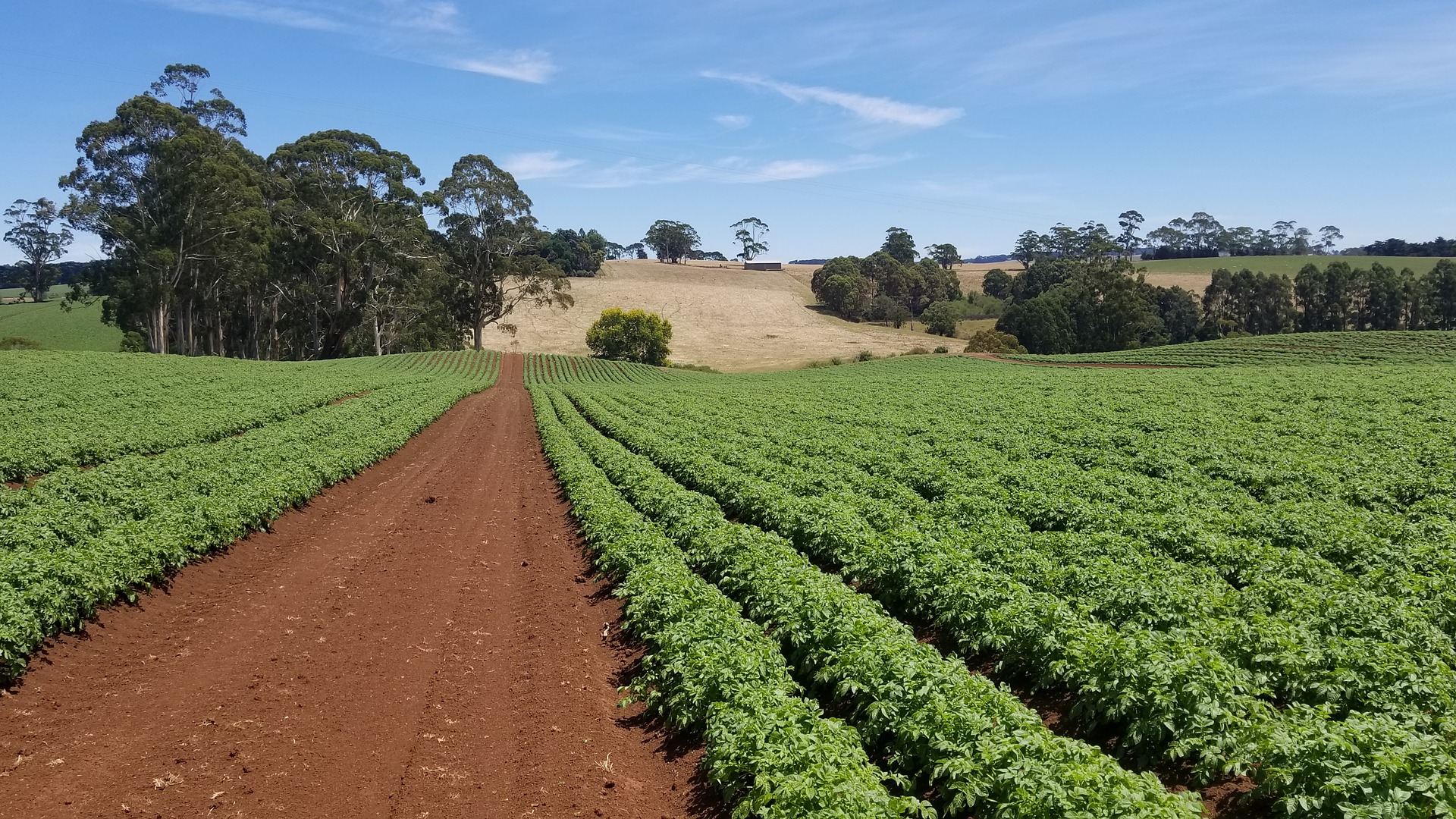
We will now suppose the settler to be fairly established; and we shall find that he has a pretty cottage, a good garden, and numerous wooden outbuildings, erected at little expense; that he has forty or fifty acres of white clover, and the like quantity of land in wheat, maize, and potatoes. In the bush run his breeding mares and his cattle. He has homebred plenty, and consumes his own beef, pork, and poultry; and taxes there are none.
The only absolute necessaries that he has to purchase are wearing apparel, and tea, sugar, and other groceries. His “dumb deserving train” of horses and dogs costs him nothing; and, if he be not in debt, he is perfectly independent, and may set the world at defiance. “A long family,” which makes good English people groan aloud, is not a matter of anxiety; and if, in addition to his farm, he have a small income arising from other sources, he is a rich man. To him, indeed, belongs the panegyric in the second Georgic; and here I may remark, that the Georgics may be said to form the Settler's Handbook. They are, in many respects, remarkably descriptive of country life in New South Wales; and this must be my apology for quotations that may savour of school-boy erudition.
It unfortunately happens, in consequence of the large primary disbursement to which new settlers are subjected,—the amount of which, if shown item by item, would surprise many,—and also of the unhappy spirit of speculation which was once rife in the colony, that the property of most of the landowners is deeply mortgaged, and the gains of farming are not sufficient to enable them to pay the large rate of interest to which they are liable; and, though by farming in the bush, one may certainly make a living, to make money is hardly to be hoped. In the majority of instances, the moderate profits each farmer who is so placed might gain, are eaten into by the expenses of the transit of his produce to a market; so that, often, the balance of his trading leaves him nothing to receive.
Numerous properties contain 2560 acres of land in one block. Of these 100 will be cleared, and the present value of the residue is merely that of its herbage. Land cannot now be purchased of government at a less price than twenty shillings an acre; but farms, with all their buildings and improvements, can be bought of mortgagees at five shillings an acre, taking the bush with the cleared land; and, as is too generally the case in new colonies, many of those who toiled to reclaim the wilderness, will give place to new comers.
Some are both farmers and squatters, having their farms within the boundaries, and their sheep and cattle stations beyond them; and, since wool and tallow are the exports of the colony, the settlers who produce these, and not the mere farmers, are the monied men.
"The squatters,” said the late Sir George Gipps, "are now the most numerous class of our colonists; the squatting interest is becoming the prevailing interest in the country; squatting is superseding settling; and in fact almost every body who has any property (money) at all is a squatter.”
Were the word "drought" unknown, I should consider the fertile spots on the coast of New South Wales unrivalled, and admirably adapted to support a rural population in homely comfort Unfortunately, this is by no means the case. From May, 1842, to May, 1845 nothing could be more smiling than the appearance of the settled part of the coast south of Sydney; but, at the latter period, a dry season commenced; and, when I left the colony, in July, 1846, some of these districts had had no rain for many months, and misery was the portion of the despairing settler.
The cattle were dying in great numbers; the waterholes were choked with dead beasts; and the appearance of the country was wretched beyond description. This drought was also felt severely in the northern districts. On the River Hunter—where I shall ultimately conduct the reader on my way to the squatters—the coming down of the Ibis from the interior, gave notice of its approach, and it was accordingly predicted. These birds, with their reaping-hook bills, strutted about in flocks of about thirty in number, feeding, probably, on the grasshoppers, with painted wings, that abounded in all directions. These insects were also the prey of a small hawk, whose motions in pursuit of them, as they flitted about, were very elegant. In the Hunter River district the grasshoppers rise in clouds under one's horse's feet.
The climate of the coast is delicious during the winter months, and strongly reminded me of Rome; and the summer, though hot, is not oppressive. But, when you remove from the sea-board, a very different report must be given; and here I may remark, that all the meteorological registers that are published, are, I believe, kept on or near the coast, and if so, afford no sure guide to a knowledge of the climate of the colony generally.
Hot winds are not unfrequent, even at Ulladulla. They come on suddenly; the first notice of their approach often being the unroofing of the buildings covered with bark, and an unusual clatter in every part of the premises. Nor is noise their only accompaniment; for—as the grass on the coast grows in thick tufts, between which, alone, the herbage is good, and wattles (or mimosa) and other brush spring up to its great detriment—advantage is taken of the prevalence of a hot wind to set the bush on fire. "The flaming storm, driven by the winds," spreads with great rapidity, and if rain succeed it, excellent tender grass then springs up. But these fires often do an infinity of mischief.
I witnessed one that approached the settlement at Ulladulla, and caused great consternation, and some loss. On the alarm being given, the wife of the overseer flew to the large bell, used for summoning the men to work, and, stationing herself there, rang it without intermission for at least an hour; probably thinking, in her fright, that she was in England, tolling a fire-bell and calling her neighbours to her assistance. The fire came on rapidly. The trees became ignited, and burning bark was blown from them into the wheat, which was nearly ripe, and the men ran about in it beating the fire out with boughs. Very soon, the huts took fire. These were pulled down, and the barn and stables were in great danger. The wind blew a gale; and the thermometer, in the sun, was one hundred and fourteen.
After this warning, the precaution was taken to burn the brush and grass, on the outskirts of the farm, when there was no wind; and thus a bush-fire would have found no food for its flames, if again driven in the same direction.
By means of these fires, the large hollow trees become thoroughly ignited; and, after burning for days, fall with a tremendous crash, which echoes through the woods, especially on a still night. The unfortunate opossums are sometimes sadly scorched; and great perplexity must prevail amongst the kangaroos and other animals. I have been nearly environed by such a fire; and I experienced any thing but pleasant sensations as I beheld it approach, from different points, and did not exactly know the way of escape. Within twenty miles of Sydney, an instance lately occurred in which travellers were thus burnt to death. Still, it is considered the duty of every stockman to set the bush on fire, when opportunity offers: and thus, in a rough manner, to clear the country of scrub and withered herbage. It must be confessed that the settlers have ancient authority for a practice, without recourse to which, the whole country would soon become nearly impervious.
"Long practice has a sure improvement found, With kindled fires to burn the barren ground, When the light stubble, to the flames resigned, Is driven along, and crackles in the wind. Whether from hence the hollow womb of earth Is warmed with secret strength for better birth, Or, when the latent vice is cured by fire, Redundant humours through the pores expire. Or that the warmth distends the chinks, and makes New breathings, whence new nourishment she takes. Or that the heat the gaping ground constrains. New knits the surface, and new strings the veins. Lest soaking showers should pierce her secret seat. Or freezing Boreas chill her genial heat, Or scorching suns too violently beat.” Dryden’s Virgil
Again, in the Æneis, this practice is also mentioned:
"As when, in summer, welcome winds arise, The watchful shepherd to the forest flies. And fires the midmost plants; contagion spreads. And catching flames infect the neighboring heads; Around the forest flies the furious blast. And all the leafy nation sinks at last. And Vulcan rides in triumph o'er the waste; The pastor, pleased with his dire victory. Beholds the satiate flames in sheets ascend the sky;— So Pallas’ troops their scattered strength unite, And, pouring on their foes, their prince delight.:
The course of life, on the farm I have described, was even and monotonous, but varied by occasional excursions to a distance, and by boating and shooting. A few, and but a few, settlers were dotted about in different spots in the forest; and months often elapsed without our being cheered by the sight of a new face. Our rustic dwelling was literally
"A country cottage near a crystal flood, A winding valley, and a lofty wood."
With the exception of the cleared land, the green forest reigned around undisturbed. A freshwater creek, winding through the woods, emptied itself into a large saltwater lake, distant a mile seaward. The latter part of its course was over a rocky bed, and under high banks, clothed with mimosa, and with thick creepers, commonly called “vines."
Townsend, Joseph. Rambles and Observations in New South Wales. Chapman and Hall, 1849.
About TOTA
TOTA.world provides cultural information and sharing across the world to help you explore your Family’s Cultural History and create deep connections with the lives and cultures of your ancestors.