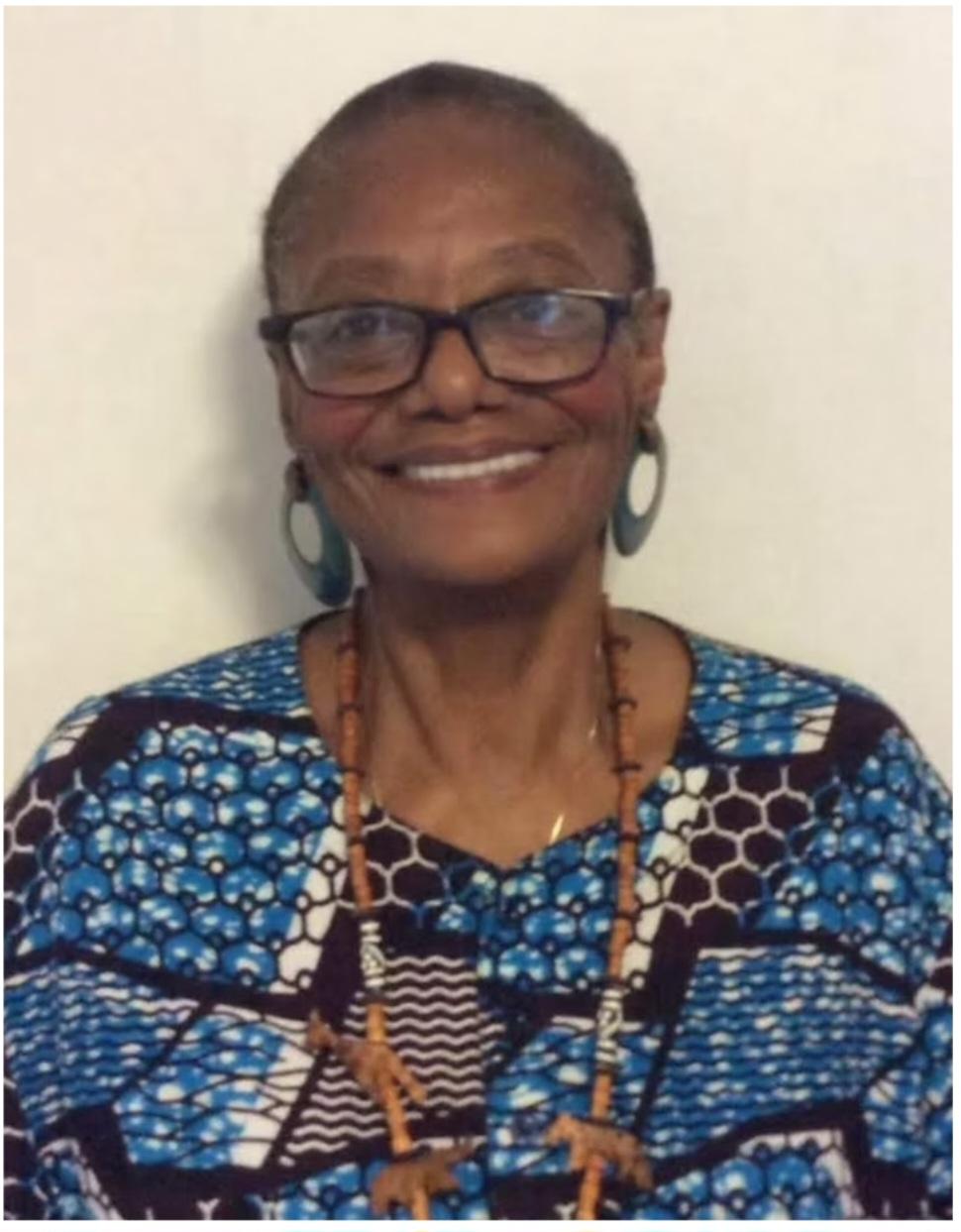
A Local Hero: Ms. JohnnieRenee Nia Nelson
-“I am from Chicago. I moved to San Diego in 1978 after I had finished graduate school at Michigan State and I went to undergrad at University of Illinois, Chicago…

Ms. JohnnieRenee Nia Nelson
Written by: Erica N Berrios Williams
1.Can you tell me a little bit about yourself? Are you a native San Diegan and where were you formerly educated?
-“I am from Chicago. I moved to San Diego in 1978 after I had finished graduate school at Michigan State and I went to undergrad at University of Illinois, Chicago circle campus, and I spent some time back in Chicago once I left Michigan for about three years before I actually moved out here to San Diego.”
2. What accomplishments do you feel make you a recognized leader within the black community?
“I've been a member of the African American writers and artists guild in San Diego since 1981. I am the Area Coordinator for San Diego County for California poets in the schools. I've been affiliated with them since the early 1990’s. I'm Poet Laureate of the World Beat Center in Balboa Park and also known as a Kwanzaa poet and I received that title from Tchaiko Kwayana back in the 1990s because I've written four or five books, Kwanzaa poetry.
The reason I did that was because I was a member of African American writers and artists, back in the day, we were always invited to go to different celebrations, and they wanted us to recite Kwanzaa poetry. For me, this was pre-internet, so I had a hard time finding poetry about Kwanza. I thought, Oh, yeah, you're a writer, just create poetry for Kwanzaa. So that's what I did. The first book I published was in 1988, probably before your day even, called
The Quest for Kwanzaa
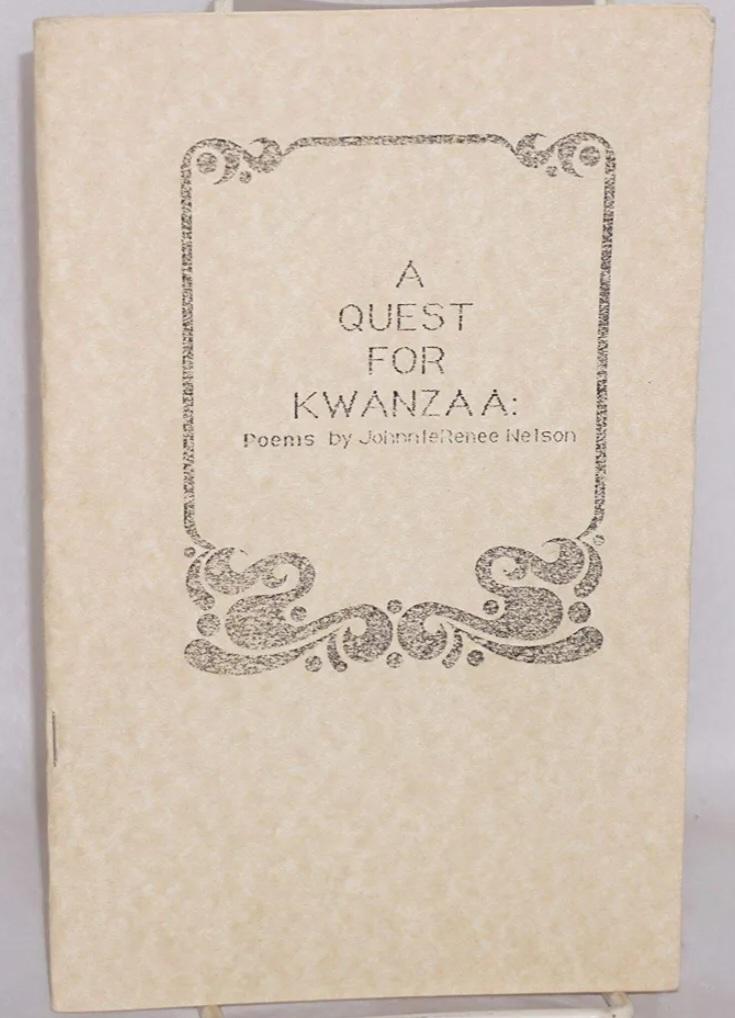
and it has been heralded as the authoritative genesis of Kwanzaa literature.
Then after that, I wrote a few other volumes,
Positive Passage
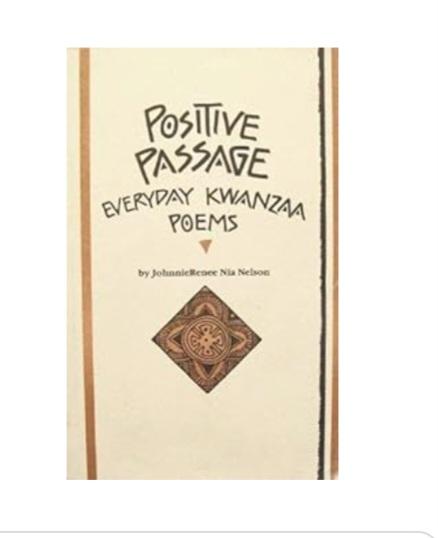
Everyday Kwanzaa Poems and
Kwanzaa Love, and then
Values of the African American Family:
The Kwanzaa Canons
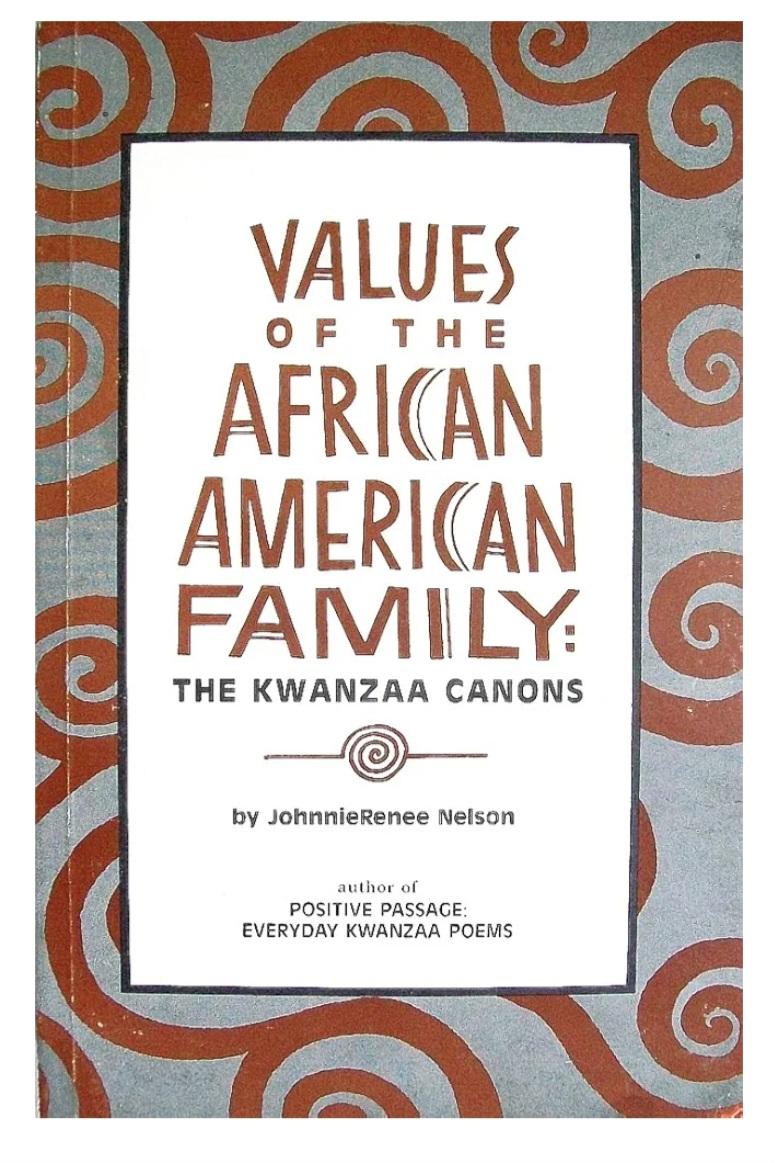
and then the last one I wrote was
Classic Kwanzaa Poems:
New and Selected
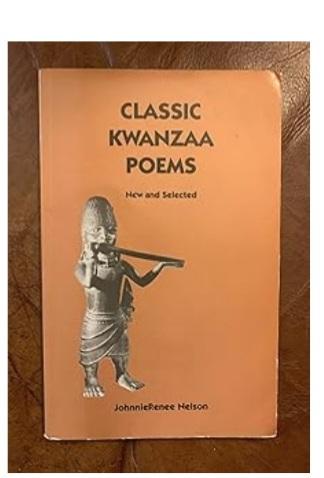
So, I guess in that sense, I could be called a leader, because I have been out there doing the work and filling in the literary gaps. Also, I am a strong advocate for literacy, and I work with students of all levels as well.”
3. What drew you to poetry as a form of expression?
- “I've probably been writing poetry all my life. I remember being published in the second grade, and I just did it, and then I went to school, but I majored in sociology. There was always this push to get our people into the social sciences kind of thing.
I majored in sociology, but I also minored in creative writing, so it's just what I did and what I loved to do. I just loved poetry, and I loved reading poetry and exploring black writers, especially Maya, of course, and I totally loved Lucille Clifton.
Then, I was getting into parenting. In the 1980s, I had three children, so it was just easier to do than trying to write a novel or even a short story. I could write a poem, because poetry is like the language of emotions. I definitely had strong emotions and feelings about what was happening in the larger society, and my personal experiences also. It's just easy to create something about that.”
4.What messages do you hope to convey through your poetry, and how do you ensure they resonate with your audience when you do speak?
-“Well, you know the values of Kwanzaa, that's really important, unity, self-determination, collective working responsibility, cooperative economics, purpose, creativity, and faith. All of them are just so important to our community, for the uplifting of our people.
What messages do I hope to convey, one of never give up, one of hope, one of pride, one of acknowledgement and one of reconnecting to our African roots.
I think that's really important too, and we do that through rituals such as storytelling, our celebrations of Juneteenth and many others such as MLK day, day of community service, our ancestral roll call and our pouring of libation, those African traditions are just really important to reconnect us to the roots of our identity.”
5. Have you ever faced any challenges as a community leader?
- “Of course, you always face challenges as a community person. Identifying as a leader or just as a participant on many levels. I mean, there are gatekeepers out there, and they want to control what it is that you say. I also work with the Border Voices Project, which is a local literary project here in San Diego County, specifically, as opposed to California, poets and schools statewide, organization had, and it was really good for the most part. We had poetry in motion, where the students' poetry was placed on the buses and the trolleys. Throughout the city, we had a TV show, and we did an anthology, and we had special events, like one year we brought Maya Angelou here at Cox arena. So, there were a lot of good things about the program. We just brought a lot of good people and poets to the areas for the kids. It was really an honor to be affiliated with the program, but I do remember one year I had written a poem, and this was maybe five, seven years before, George Floyd incident, about police brutality. I wasn't allowed to recite the poem during the program. Gatekeepers allow all this teaching/witnessing violence and it's okay for this to happen to our people, and for them to see it on national TV, but we can't talk about it in a poem.
So, that's always the challenge, being sensitive, being monitored.
Sometimes you were just kind of passed over, sometimes you just had to demand to be heard.
I'm a resident of National City, and this is my community, and they need to know that people like me, who look like me, are out there doing this work.
Yeah, there are challenges. There will always be challenges, because that's part of the struggle that has to be demanded. I am here, and I refuse to be invisible.”
6. What are your hopes for the future of your community, and what role do you envision poetry playing in realizing those aspirations?
-“My hopes for myself, especially for our youth, and I work with seniors too, I work with a lot of different groups. I work with seniors, I work with youth, I work with neurodivergent individuals. I work with traumatized people. With all ages and with foster youth.
So, my hope for them is that they get to realize their dreams and to be uplifted through poetry, through storytelling or the arts. That they get to say something about agency, that they get to acquire agency in their efforts and realize that their voices are as important as anybody else's.
Their dreams, their thoughts, their ambitions and that they are worthy of whatever it is that they choose. They need to know that the universe will make room for them, and that they belong. That's my hope. Those are my goals, that I try to instill in my workshops when I work with the community.”
8.Can you share an example of a poem that you've written that reflects a significant community issue close to your heart, and then maybe explain a little bit the meaning of the poem?
-“I referred earlier to the poem about police brutality, and I think it has been emboldened recently. There have been some incidents this year involving police on the nationwide basis, not just in San Diego.
You know, we know this is an ongoing struggle kind of thing. I would love to share that poem with you, and it's titled,
How to Get Away with Murder.
I've actually performed that one at Mesa College for Black History Month poetry reading.”
HOW TO GET AWAY WITH MURDER:
A NEVER-ENDING POEM
By: JohnnieRenee Nia Nelson
“Our poem end is not a poems end”
-Amanda Gorman
How to Get Away with Murder, a never-ending poem.
Live in the USA, wear a badge, wear a uniform or wear plain clothes.
Wear White skin.
Make sure your targets are young,
black and brown males, or make sure your targets are middle age or old, black or brown males.
On second thought, any black or brown person, male or female, will do.
Choke, strangle and suffocate your victims.
Press a knee to their neck for nearly nine minutes, break their spine.
Shoot your targets repeatedly from a distance. Shoot your targets repeatedly from up close.
Shoot them in the chest, shoot them in the head, shoot them in the back.
Seven times in front of their children, shoot them in the heart.
Shoot them 16 times in 15 seconds.
And remember, always the damning words of former Chicago Mayor Richard J Daley, shoot to kill.
Shoot them in the park, shoot them in the store, shoot them in the mall, shoot them in the streets, shoot them in their cars, shoot them in their apartments.
Shoot them in their Grandparents backyard. Shoot them in their houses while they're asleep.
Shoot them while they're jogging down a country road in Georgia.
Then create your own narrative of why your thug actions were warranted, present your fabrication to a state level grand jury. When that grand jury grabs
the wishes of the prosecuting attorney, flash a smug smile.
Such indictments will stun, mystify, confuse and perplex certain segments of the American public.
People of Color already know that this is the American way.
PS, I can't breathe…
I can't breathe!
I can't breathe!
“This poem shows the reality of our communities, because these are our sons, our brothers, our fathers, our cousins and our uncles, as well as our sisters and our mothers who are being impacted by this behavior.
So that's one of the heavier points, and I think that's why I like writing about Kwanzaa so much, because I get to really write about the hopes, dreams, achievements, contributions and triumphs of our community. It's a much more positive form of writing.
It's just celebration, celebratory writing. In the midst of all these happenings, we always find a way to have joy and to celebrate in our lives.
I'm so excited about the direction that the next generation's path they're taking. You know, their growth, intellectual development, their enthusiasm and their talent. It gives me much hope.”
About TOTA
TOTA.world provides cultural information and sharing across the world to help you explore your Family’s Cultural History and create deep connections with the lives and cultures of your ancestors.