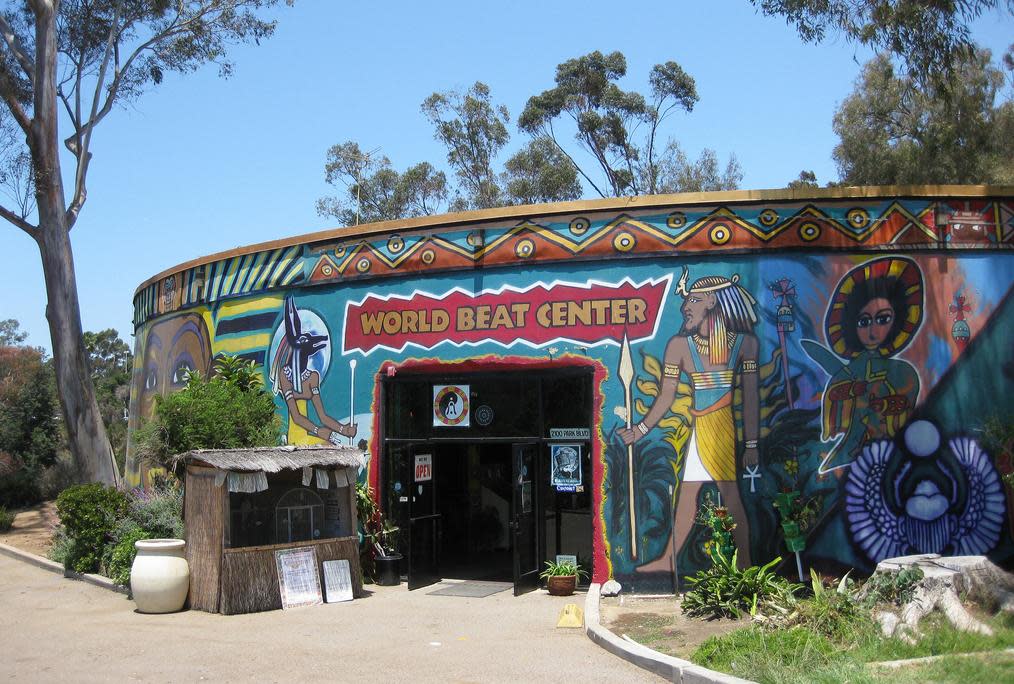
Interview with Makeda 'Dread' Cheatom, the founder and Executive Director of the WorldBeat Cultural Center by Jin
It was a long time ago. I would visualize having my own restaurant. I always wanted to be a DJ, too. Everything I dreamed of, I manifested. That’s why you…

How did you start WorldBeat Cultural Center?
It was a long time ago. I would visualize having my own restaurant. I always wanted to be a DJ, too. Everything I dreamed of, I manifested. That’s why you have to watch your thoughts—because you can manifest the things you’re thinking about. Your dreams will become a reality.
Later on, I became a DJ—on 91x and 92 Star 5. I used to DJ at parties when I was young. And then later on, I went back to school for broadcasting, and I started DJing in clubs, too.
Let me back up a little, I had the first vegetarian restaurant in San Diego. I was a vegetarian, and there was no place for us to go eat. We used to eat at Denny’s. I went to school for culinary arts and food service management. And I had this job where they said, “you cook good—you take the dishes, and you change them around.”
And then I met a guru, and I started meditating. That changed my consciousness.
All the kids who mediated with me would hang out afterward, and I would cook food and do all these different things. So they went, “you should have a restaurant.” God, it was so hard. I found this barbecue pit restaurant on University Avenue. It took so long to clean it and get it ready. We opened on New Year’s Eve— it was kind of stupid. But we were packed. Usually, it takes time for your business to grow, but we were packed.
So I got the next building on the other side. That was where the first yoga classes in San Diego happened. But next to that was a bar, and they tormented us. They said that yoga was communist. We didn’t pay attention to it, but they would try to block our cars and do all kinds of things. But we just didn’t pay any attention. Then the guy had a heart attack, and he went to the hospital. I made him a pie. He said, “I can’t believe it’s you—after all the things that we did.”
That shows you what kindness and love can do.
That’s how we got started. I also met Bob Marley, and I started doing reggae music because I knew this music needed to reach people. We would always get kicked out of places because it was reggae, and people didn’t understand it.
Then I went to a park and they said they didn't have a place for an African American cultural center. I kept looking around and found a building in this park, and I got this old, dilapidated water tower. With a lot of trials and tribulation, we opened the WorldBeat Cultural Center in Balboa Park.
2. I read that the WorldBeat Cultural Center originally operated out of a former water tower, and that the city council recently approved a 25-year lease. That must be like a “I made it” moment.. Are there any other moments along the way that made you stop and think, “wow, I really made it.”?
I had Earth day. I saw African drumming, and Brazilians. I looked down, and thought “wow, this is it. This is what I wanted. This is what’s happening.”
I really feel that none of us are free until all of us are free. I was around when Nelson Mandela was in prison, and I worked very hard against apartheid. I knew the U.S. was supporting apartheid. And the war in Vietnam—I thought it was so unfair. And I did marches and everything. Now, it feels like we’ve gone backwards, and I want to see everyone free. I don't want to see people in pain.
I follow the teachings of the Dalai Lama and a lot of Tibetans from Vietnam. I have a picture with Dalai Lama. They were great teachers, and they taught me kindness and reciprocity.
Again, none of us are free until all of us are free. I might not see that day in my generation, but I will keep working toward it.
3. I’d also love to ask about the Healing Peace Garden. It’s really impressive how the Center is expanding into environmental awareness. Why do you think connecting with gardens and nature can help people better understand not just the environment, but also different cultures?
We’re breathing the same air and living on the same earth. We are going to unify, because this earth belongs to all of us — not just one race or one culture.
It’s so important that we understand our mother. We walk on her body everyday. You are what you eat. We are our ancestors. We have to go back to our ancestors, because they grew their own food, their own vegetables, and didn’t eat much meat. Most of them were vegetarians. Veganism helps the environment so much — It could save the earth.
We need to eat living foods. Our ancestors only ate meat on special occasions, during celebrations. They couldn’t afford to eat it every day. So they ate vegetables, beans, the rice, and grains. On Fridays, we would celebrate. On Saturdays, it was fish or food. On Sundays, we’d have chicken. Then on holidays, we’d barbecue. We are trying to build a conscious society— a conscious universe—where you don’t have to kill to live.
4. The website mentions that WorldBeat Cultural Center serves over 6,000 children and youth each year, teaching unity through diversity. Why do you think it’s especially important for young people to experience diverse cultures early in life?
Our babies are our roots. It’s so important we give them positive consciousness early.
They are on television, on their phones, playing games. And those games are designed to make us violent. I look at some of those games—they are so violent. Those games are there to mess with their minds. During wartime, they had a lot of those games in the army, to make them aggressive and strong.
Look at the drones. The drones are dropping bombs, and murdering people. I can’t understand why the most advanced — supposedly — people on this Earth kill each other. It takes nine months for a mother to birth a child. And you’re going to take that away just like that? That’s precious.
There is a war on our intelligence and there’s a war on our minds. So it’s so important that we teach our children medication at a young age. That’s what we do here at the WorldBeat Center.
It’s important that they go outdoors. We have outdoor classrooms, and we keep them outdoors as much as possible. We have cooking classes — they make spiral zucchini, their own sushi.
I noticed most of them have anxiety. I asked,“who listens to TV late at night?” And a lot of them raised their hands. They said, “Oh, I can’t sleep.” So we showed them how to tap their bodies. A week or two later, one of the kids came up to me, and said, “I don't have that anxiety anymore, and I don’t have bad dreams.”
A lot of kids have anxieties, and our schools are not going to address these issues.
That’s why cultural centers like the WorldBeat Cultural Center will become our village—our people.
When you’re growing up, your neighborhood is there for you. That’s the way it was in the Black community. That’s our culture.
I remember getting in trouble with a lady, named Mama Lucy. She watched all the kids in the neighborhood, because, in our culture, our parents were working — so grandmothers were there. Grandmothers were such an important part of our lives. But we don’t have that anymore. We don’t have that neighbor like that. We had neighbors who were connected.
5. Why do you think it's important for people, especially youth, to learn cultural traditions through hands-on experiences rather than just textbooks or media?
You have to keep your culture. It’s so important to teach kids about their cultures—so they know where they come from. That’s what the WorldBeat Center is about: maintaining our culture, the one that was never taught to us. That’s why you have to hold on to your Korean culture.
You have to maintain that knowledge — like how to grow collard greens. That’s one of our staple foods. It’s important to know our culture, and teach that to our young people, because they get afraid of certain foods. In Africa, millet has more protein. And we teach kids about moringa and its benefits. They need that foundation.
I see people staying here. They’re just in here talking and meeting each other.
Link to the WorldBeat Cultural Center : https://www.worldbeatcenter.org/
About TOTA
TOTA.world provides cultural information and sharing across the world to help you explore your Family’s Cultural History and create deep connections with the lives and cultures of your ancestors.