
Roman Beekeeping: Part 15
"Next comes the management of bees throughout the year according to the excellent system set forth by the same Hyginus."
From: 4 C.E. To: 70 C.E.
Location: Carsoli, L'Aquila, Abruzzo, Italy

Note: This article has been excerpted from a larger work in the public domain and shared here due to its historical value. It may contain outdated ideas and language that do not reflect TOTA’s opinions and beliefs.
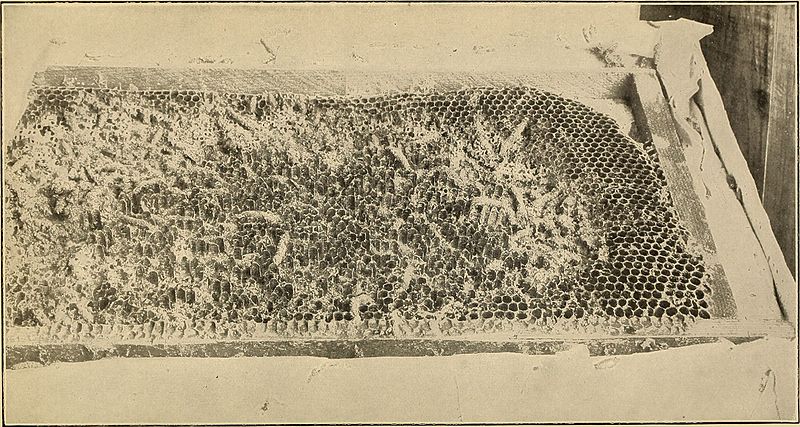
Next comes the management of bees throughout the year according to the excellent system set forth by the same Hyginus. From the first equinox, which takes place about the twenty-fourth of March in the eighth degree of the Ram, until the rising of the Pleiads, there are reckoned to be the forty-eight days of spring. During these days, he says, the bees ought to receive attention for the first time by opening the hives, so that all filth, which has collected during the winter season, may be removed, and, after the spiders, which rot the honey-combs, have been got rid of, the hives may be fumigated with smoke produced by burning ox-dung; for this smoke is particularly well suited to bees as if some affinity existed between it and them. The little worms also which are called moth-caterpillars and also the developed moths must be killed. These pests which generally adhere to the honey-combs fall off, if you mix ox's marrow with dung and, after setting the mixture on fire, bring the smell of burning near them. As a result of this precaution the swarms will be strengthened during the period which we have mentioned and will apply themselves to their work with more vigour.
But very great care must be taken by the man in charge, who feeds the bees, when he must handle the hives, that the day before he has abstained from sexual relations and does not approach them when drunk and only after washing himself, and that he abstain from all edibles which have a strong flavour, such as pickled fish and all the liquids which accompany them, and also from the acrimonious stench of garlic and onions and all other similar things.
On the forty-eighth day after the vernal equinox, when the rising of the Pleiads takes place about the 8th of May, the swarms begin to increase in strength and number; but in the same period of days the swarms also which contain few and sickly bees die off, and at the same time in the extremities of the honey-combs bees are born of larger size than the rest, which some people think are king-bees. Some writers among the Greeks, however, call them oistroi from the fact that they excite the swarms and do not allow them any rest; therefore they recommend that they should be killed.
From the rising of the Pleiads to the solstice, which takes place at the end of June in about the eighth degree of the Crab, the hives generally swarm. This is a time at which they must be very strictly watched, so that the young brood may not escape. Then, when the solstice is passed and until the rising of the Dog-star, a period of about thirty days, the harvests of the cornfields and the honey-combs alike are gathered in. How the combs should be removed will be told presently when we give instructions for preparing honey.
Now Democritus, Mago and likewise Vergil have recorded that bees can be generated at this same time of year from a slain bullock. Mago indeed also asserts that the same thing may be done from the bellies of oxen, but I consider it superfluous to deal in more detail with this method, since I am in agreement with Celsus, who very wisely says that there is never such mortality among these creatures, that it is necessary to procure them by this means.
But at this time and until the autumn equinox, the hives ought to be opened and fumigated every tenth day. This, though it annoys the swarm, is generally considered to be very wholesome.
Then after they have been fumigated and are still heated the bees ought to be cooled by sprinkling the empty parts of the hives and pouring in water which is cold because it is very freshly drawn : then when there is anything which cannot be washed away, it must be cleansed with the feathers of an eagle or of any other large bird which are of a stiff quality. Moreover caterpillars should be swept away and moths killed, which generally linger among the hives and are destructive to the bees; for they both gnaw at the waxen combs and from their dung breed worms which we call "hive-moths."
Therefore, at the season when the mallows flower, when the moths are most numerous, if a bronze vessel of the shape of a milestone is placed amongst the hives in the evening and a light lowered to the bottom of it, the moths rush together from all sides and, flitting round the flame, are scorched because they cannot easily fly upwards from the narrow space or retire to a distance from the fire, since they are hemmed in by the brazen sides of the vessel. They are, therefore, consumed by the burning heat which is near them.
About fifty days from the rising of the Dog-star is the rising of Arcturus, at which time the bees make their honey from the dew-drenched flowers of thyme and marjoram and savory. Honey of the finest quality is at its best at the autumn equinox, which falls before the first of October, when the sun reaches the eighth degree of Libra. But great care will have to be exercised between the rising of the Dog-star and that of Arcturus that the bees are not surprised by violent attacks from hornets, which generally lie in wait in front of the hives for them to come out. After the rising of Arcturus about the time of the equinox, which takes place when the sun is in the Balance (as I have said), the second extraction of honey-combs takes place.
Then from the equinox, which occurs about September 24th, until the setting of the Pleiads, a period of forty days, the bees store up the honey which they have collected for winter food from the tamarisk flowers and woodland shrubs. Of this nothing at all must be extracted, lest the bees, disheartened by continual ill-treatment and, as it were, in despair, should take to flight.
From the setting of the Pleiads till the winter solstice, which falls about December 23rd in the eighth degree of Capricorn, the bees make use of the honey already stored up and are sustained by it until the rising of Arcturus. I am well acquainted with the reckoning of Hipparchus, which declares that the solstices and equinoxes occur not in the eighth but in the first degrees of the signs of the Zodiac; however, in these rural instructions I am now following the calendar of Eudoxus and Meto and the old astronomers, which are adapted to the public festivals, because this view, accepted in old times, is more familiar to farmers and, on the other hand, the subtility of Hipparchus is not necessary, for rustics of less refined education.
On the first rising, of the Pleiads it will be advisable immediately to open the hives and clear away any filth that there is and attend to them with particular care, since during the winter time it is not expedient to move or open the hives. For this reason, while there are some remains left of autumn, on a very sunny day, after the bees' habitations have been cleansed, the covers must be put inside close to the honey-combs to prevent there being any empty space within, so that the narrow quarters of the hives may warm up more easily during the winter. This must always be done also in those hives which are sparsely inhabited through lack of bee population.
Next any chinks or holes that there are we shall daub outside with a mixture of clay and ox-dung, and we shall only leave entrance by which they may come and go. Also, although the hives are protected by a porch, we shall nevertheless cover them by heaping stalks and leaves on the top of them and fortify them, as far as circumstances allow, against cold and bad weather. Some people kill birds and, after taking out their intestines, shut the birds up in the hives, so that in winter time they may provide a gentle heat for the bees which lurk amongst their feathers; furthermore, if the stock of food is used up, they can very well feed on these birds, if they are hungry, and leave nothing but the bones. But if the honey-combs supply their needs, the birds remain untouched, nor do they offend the bees with their odour, fond though they are of cleanliness.
It is better, however, in our opinion, when they are suffering from hunger in the winter time, to provide them with dried figs pounded and soaked in water or with boiled-down must or raisin-wine placed in little troughs at the very entrance to the hives; and it will be advisable to soak clean wool in these liquids, so that the bees, settling upon it, may draw up the juice as through a small pipe. We shall also do well to give them raisins sprinkled a little with water after we have broken them up. With these foods they must be sustained not only in winter but also at those seasons, when, as we said just now, spurge and also elms are in blossom.
When the height of winter is passed, for a period of about forty days, they use up all the honey which is stored, unless an unusually generous allowance is left, and often too, after they have emptied the waxen cells, they lie fasting in the honey-combs in a torpid condition, like snakes, until about the rising of Arcturus, which is on the 13th of February, and by keeping quiet preserve the breath of life; in order, however, that they may not lose it, if too long a fast occurs, it is best to pour sweet liquids through the entrance of the porch by means of small pipes and thus support them during the temporary scarcity until the rising of Arcturus and the coming of the swallow with promise of more favourable weather for the future.
And so, after this time, when the more cheerful weather allows it, the bees venture to go forth to their pastures; for after the spring equinox they are already roaming about everywhere without hesitation and plucking the produce of flowers which are suitable for the production of their young and carrying it into their dwellings.
These are the principles which Hyginus recommends for the most careful observation throughout the seasons of the year, but Celsus makes the following additions. He says that only in a few places are conditions so favourable as to provide different foods for the bees in winter and summer, and that, therefore, in places where suitable flowers are lacking after the season of spring, the swarms ought not to be left without being moved, but, when the spring foods are consumed, they should be transferred to places which can offer the bees a more liberal diet from the late-flowering blossoms of thyme, marjoram and savory. This, he says, is the practice both in the regions of Achaia, where the bees are transferred to pastures in Attica, and in Euboea, and also in the islands of the Cyclades, when they are transferred from other islands to Scyros, and likewise in Sicily, when they are moved from the other parts of the island to Hybla. The same writer says that the waxen cells are made from flowers and the honey from morning dew, and that, the pleasanter the material from which the wax is made, the better the quality which the honey acquires. He gives instructions to examine the hives carefully before transferring them and to remove honey-combs which are old and wormy and falling to pieces, and to keep only a few and these the best, so that as many as possible may be made at the same time from the better flowers. He also says that the hives which anyone wishes to transfer should only be moved at night and without being shaken.
Bibliography
Lucius Junius Moderatus Columella, On Agriculture, trans. E. S. Forster and Edward H. Heffner, vol. 2 (Cambridge, MA: Harvard University Press, 1954), 481-495.
About TOTA
TOTA.world provides cultural information and sharing across the world to help you explore your Family’s Cultural History and create deep connections with the lives and cultures of your ancestors.