Taking a Seat At The Table - Buddy Jones Lessons at Buster's Auto Repair
A recount from a conversation with Buddy Jones about how his dad saved his a seat at the table:

A recount from a conversation with Buddy Jones about how his dad saved his a seat at the table:
In the 50’s, Riverside Unified Schools included 3rd and 4th in one classroom. During the second year my teacher determined that I had a problem with reading that was holding me back. No one knew I was trying to read from right to left. A true mystery to everyone. New labels were whispered between teachers. Slow learner. Dumb. Monikers that can brand a kid for a lifetime. My anger grew when my peers started using these labels.
Although not trained in the diagnostics of dyslexia, Mrs. Powell, my mother’s best friend and my Sunday school teacher, identified my challenges with reading. Every week we were sent home with a religious concept written on a card that we would be expected to memorize for the next session. As you can imagine, I started out failing at this task. After one session she had me stay behind. She read the concept out loud. The next week, I could recite it, word for word. So, it became habit that I would arrive before class to listen to Mrs. Powell read out loud. And that is what I will label stumbling into phonics.

Buster, my dad was and would be considered today, a master of all things mechanical. When in his classroom at Buster’s Auto Repair, he utilized several strategies for keeping me interested in learning about the physics of how things worked and how to identify and fix a problem. Unlike the one-way unified school district, Buster would say,
“When it comes to learning, its different strokes for different folks.”
My teacher recommended sending me to a special ed school for slow/retarded learners. My dad was flustered. How could a nine year-old kid like me who he trusted to successfully change a set of brakes on a customer’s car, be considered a slow learner? Not jumping to conclusions he approached the school principal Mr. White and gained permission to observe my class. After a few sessions, Buster asked to engage the class in a workshop in what I will describe as “applied math and physics”.
Let me take you through that lesson that has stayed with me for 70 years.
Pops rolls out a greasy shop rag on the table at the front of the class. Lined up are a variety of tools. Included were several wrenches, some of which Buster designed for Snap-on Tools. But, that is another story. He instructs me to identify the size of each wrench. I present each wrench, announcing it’s fractional size. I pass this first oral test with flying colors.
Next, he engages the class in a Socratic discussion:
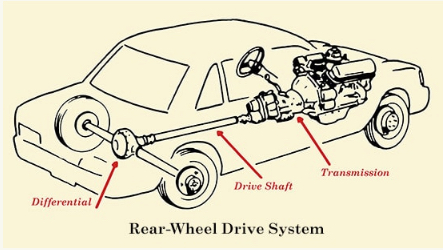
Dad draws the outline of a car on the board. He sketches in several of the key components.
“Who can tell me what makes a car run?”
“The engine”, one student declares.
“And how does that engine get the car to move?”
There are lots of quizzical looks moving criss-cross around the room.
“Buddy, why don’t you come up and take a shot at explaining what makes a car move.”
I went to the board to deliver my first lecture. I explained how the combustion of the engine moved the pistons that were connected to the crankshaft. Then I explained how the crankshaft was connected to the transmission gears to determine the speed and power of the driveshaft. I continued by pointing out how the differential gearbox translated the driveshaft’s rotation 90 degrees to spin the rear axle that was connected to the tires. End of my first fourth grade lecture!
As my dad rolled up his tools, I heard him say to the teacher, “My son does not a problem with learning, you have a problem with teaching him.”
My seat at the table. In later years I received help with my dyslexia that was of tremendous aid through college, starting and running a multi-million dollar construction business and in several other endeavors that challenged my requirements to read. But, it was Buster’s demonstration in front of that class that gave me a seat at the table that I have never relinquished.
Buddy Jones Interview conducted by Andre James
May 2022
In his own words, Buddy’s Story:
About TOTA
TOTA.world provides cultural information and sharing across the world to help you explore your Family’s Cultural History and create deep connections with the lives and cultures of your ancestors.