
Legends of Brittany: Origin of the Bat
It is a sad thing to make a promise without thinking beforehand whether we can fulfil it or not...
From: 1850 C.E. To: 1853 C.E.

“Origin of the Bat.” from Popular Legends of Brittany, translated by Heinrich Bode and A Lady, 1853.
It is a sad thing to make a promise without thinking beforehand whether we can fulfil it or not. In such a case, it is not every one who gets off so well as Tina, the heroine of our tale; for even if there are now-a-days no evil sprites to haunt and torment the faithless one, there are always plenty of other people to look sour at him, and at any rate his good name and his conscience must suffer from his delinquency.
Tina was a pretty girl; she was called the greatest beauty of the six neighboring villages, and all the village lads were striving for her favor. But Tina was a trifle haughty, and prided herself rather too much upon her beauty; one was not handsome enough for her, and another was not rich enough; one was too young, and another too old; in short, she had some objection to them all.
At length a nobleman, from a fashionable city near by, made his appearance. He saw Tina, and was dazzled by her beauty. Of what use was it for him to say to himself, "I am a nobleman, and she only a peasant-girl!" Of what use was it for him to go away, and travel the wide world over, to drive away all thoughts of Tina! Love mounts like the waters of the sea, and submerges its victim, head and ears. Counsel was of no avail, he must see Tina again. Tina received him as if he had been his Reverence, the parish priest. She set before him the finest wheat-bread, and the most delicious wine, and the nobleman asked her if she would be his bride.
Tina gladly said, "Yes"; she longed to be a great lady, and wear silken dresses, as she had seen them do at the Castle. Alan, that was the nobleman's name, gave her a ring, and Tina promised to love him always. So every Sunday they went together to church, and when the services were over, they used to walk together, both in the evenings and at other times; when, one day, a man appeared with two splendid horses, and announced to Alan, that, if he would once more see his brother living, he must hasten to him immediately. Alan promised constancy to his bride, and Tina swore by all that was dear, that, should she ever think of another, all the curses that could be thought of might light upon her head.
So the young nobleman quietly went off on his journey to his dying brother. Tina wept bitterly: but fearful that her tears might spoil her beautiful eyes, she wiped them away, but she still felt very sad. So, to drive away her sadness, she would sing little songs as she went about the house. By degrees her melancholy was entirely dissipated, and she recovered all her former gayety.
So long as Alan stood in the way, the young villagers had kept aloof. But the young nobleman was no sooner gone, than they came as before, and vied with each other in their gallant attentions. Tina accepted their courtesies, and one who knew nothing of her affairs would have supposed that matters stood just as they did before the advent of the young nobleman. To one she gave her horse to hold, to another she handed her party-colored, carved riding-switch, and she allowed a third to steal from her pocket the nuts the baker's little daughter had given her.
In this way, all the young fellows were on excellent terms with her, though in fact no one was any more favored than another; for Tina made use of them all, and when she had got what she wanted from any one of them, she never scrupled to dismiss him with contempt, and call him a Tom Fool into the bargain! Alan had promised to return in three months, with heart unchanged; but a long time had already elapsed, and no news had been received from him, when St. John's day came. St. John's day is a famous festival. Bonfires are then kindled at nightfall, and all the young men and maidens over sixteen years of age assemble for games and dancing. Tina, of course, did not fail to grace the occasion.
The fete was held on a broad, open meadow, not far from the Zwerglocher, where the wicked Kobolde or imps of darkness celebrate their wild orgies. All the girls wore the blue flax-blossoms in their bodices, and the lads green branches in their hats. Before the dancing began, each young man took his betrothed by the hand, and, in long rows, all proceeded to the Big-Stone, a rock which separated the Zwerglocher from the meadow. Here they laid down their rustic ornaments, the bridegroom placing his sprig of green beside the flowers of his bride. He or she who had not broken his or her plighted troth was sure to find twig or flower as green and fresh as when first placed there.
Tina passed on with the others, her ring of betrothal on her finger, and the flax-flowers on her breast, when, as the train approached the Big Stone, she observed close at her side a young man dressed in mourning, an entire stranger to her, who offered her his hand.
"Pardon! noble sir," said Tina, "I never saw you before, and I do not know what you want."
"I beg permission," said the stranger, "to place a green twig beside your little nosegay of flax-blossoms."
Tina laughed aloud. "Ma foi!" she exclaimed, "who does not know that I am Alan's bride? Your lordship must have heard from gray-haired old men, that there are three impossibilities, to uproot the forests, level the mountains, and move the rocks; but now there is one more to be added to the list, and that is just what your lordship asks for."
The stranger said no more. He merely asked her hand for the dance; but after the first round, perceiving that his courtesy afforded Tina pleasure, he continued: "If you will not allow me to place a green sprig beside your nosegay, I can lay a silver sprig on the Big Stone, for my father has left me property enough to keep three carriages and three pairs of horses."
"Alan is just as rich, and refuses me nothing," answered Tina.
After they had danced round a couple of times more, the stranger began again: "Besides the legacy of my father, my mother has left me two forests, that employ twelve coal-burners, and ever so many people making wooden shoes."
"I must not hear a word about it," said Tina, and her heart was no longer quiet.
They danced another dance, and then the nobleman said, "I have only told you of my landed property; but my uncle left me meadows, where every year a hundred bullocks and just as many colts are driven to pasture. To the silver and golden branch, I could also add a sprig of diamonds."
This time Tina exclaimed, "Silence! I dare not listen to you."
The nobleman continued to enumerate what he would give to his bride. She should have a dress such as no mantuamaker on earth could make, a palace such as no other human being could inhabit, and there she should be like one of the greatest queens. Promises like these were more than Tina could withstand.
She gave the nobleman the little bunch of flax-blossoms, together with the ring that Alan had given her. And as night closed in, she suffered him to lead her away from the meadow, to the dwelling he had promised her. The farther they went, the darker grew the sky. The road stretched far away before them, and one little star disappeared after another, till it was very dark. Nothing was heard but a kind of moaning noise in the distance, which Tina thought was the cry of the screech-owl. Then she grew anxious, and said to her conductor, "We have come a long way, and yet I see nothing but a low wall that looks as if it belonged to a churchyard."
"It is the court-yard that leads to my residence," answered the nobleman.
Tina passed through the stone gate, then she stopped short, and said: "I see a cross there, such as there is on the highway where a murderer is buried."
"That is the weathercock on my roof," replied the stranger.
Tina went on a little piece, then she stopped again. "It looks exactly as if down at our feet
was some abandoned stone-quarry, or pit, where they throw dead dogs or horses." .
"That is the entrance of our house," said her companion. With these words, he seized Tina,
in his arms, and bore her with him down into the pit. She had no sooner touched the bottom, than the moon broke through the clouds, and instead of the nobleman in silken attire, Tina beheld a skeleton!
Horror-struck, she sank on her knees, and cried for mercy.
The skeleton answered, "Pray, why do you shriek! I am Alan, your bridegroom. As I was returning to you, to celebrate our nuptials, some vagrant wretches fell upon me, strangled me with the rope you see about my neck, and threw me into a pit. My longing for you was so great as to leave me no peace even in death. I came to you in the form of a stranger, and since you suffered yourself to be beguiled by a stranger into faithlessness to your bridegroom, I will now give you what I promised you, a robe of earth and turf, such as no mantuamaker can make, a dwelling in the damp grave, such as no living person inhabits, and a rank which the greatest queens share with you as soon as they die. Give me your hand, dearest bride, and lie down beside me, for the hour is come when I must go back to the dead."
At these words, the skeleton bound one end of the rope which was around his neck around the neck of the maiden, with a slip-knot such as no mortal hand could loosen.
Tina passed the whole night on her knees beside the skeleton, almost dead with fright, and weeping bitterly. Towards morning, she thought she felt something move at her feet. She looked round and spied a field-mouse, staring fixedly at her.
Almost at the same moment a black point appeared over the grave, and a fluttering of wings soon made her sensible of the presence of a great black raven, which settled upon a withered branch, a few steps from her. Raven and Field-mouse were a wicked wizard and a wicked witch who fed upon dead bodies. They saluted each other.
"Well, gossip," cried the Raven, "we are met in a lucky hour. I suppose you are selecting out the dainty bit of the pretty maiden, that you are to eat first."
"Ah!" said the Field-mouse, "if it were only not forbidden to touch living flesh."
"Bah!" said the Raven, " we’ll wait here till this dear little creature becomes dead flesh."
"Good!" said the Field-mouse, "but I speak for the pretty little cheek."
"And I bargain for the fresh lips," said the jet black Raven.
"I'll gnaw out the fine large eyes," said the Field-mouse.
And I’ll hack off the tender little ears."
This conversation froze the blood in our Tina's veins. However, she mustered courage to say, "I am too young and too little to satisfy you both: ah! I believe it would be more to your advantage to rescue me."
"Rescue you!" cried wizard and witch at once, "how could we do that?”
"O, you could do it well enough if the Field-mouse would gnaw the rope, and you, Raven, would fly with me out of this pit."
"And what will you give us if we will do it?" inquired both the cannibals.
"I will give you two cows and their calves."
Wizard and witch laughed aloud.
"I will add flax and corn besides."
Both laughed still louder.
"If that will not satisfy you, I will give you a silver spoon and some plates."
"No!" screamed the Field-mouse, "I need neither silver, nor corn, nor cattle, but I want you to get me a pair of wings to fly with."
"And I," said the Raven, "want you to get me four feet, so that I can run the better."
"And if you do not do this by to-morrow," they both added, "you belong to us, body and soul."
Tina found these conditions extremely hard; however, she preferred to accept them, rather than remain in the grave bound to a skeleton. Wizard and witch made her take a solemn oath to fulfil the stipulations: then the Field-mouse gnawed the rope, and the Raven took up Tina and flew with her out of the hole, and brought her into a field belonging to her father's farm. There he set her down, under an apple-tree, and told her he would come with his gossip to that very spot, the next evening, to receive their wages.
Tina scampered home as fast as she could, and told the people in the house all that had happened. Nobody knew what to advise, but the old grandpapa bethought himself of a wise woman who lived not far off, and to her he went, taking Tina with him.
He told her the story, and laid on her table three bundles of flax and a fat hen.
"This is a bad business, very bad," said the wise woman," if you had not taken the oath, we could do well enough. I know these two associates. They are wicked magicians, and they know it is impossible to get what they ask for."
Tina wept and entreated, and the grandfather promised to bring as much more flax and a second fat hen.
The wise woman pondered the matter. At length she said, "Listen, my child, and do as I tell you."
Tina promised the strictest obedience.
"Take a knife that has never cut flesh, or any thing that comes from flesh, and walk towards the hedge, and listen to the sound of the wind as it blows through the grass. When you hear a rustling like hail, you'll know that it is the sleep-plant. Cut off the tops and stalks, tie them up in a little bunch, and carry it under the apple-tree. Then come to me again."
Tina did as she was bid. She went to the hedge, she heard the sound of the wind rustling through the sleep-plant like falling hail, she cut off tope and stems with a new knife, made up a little bunch of it, and carried it under the apple-tree. Then she went back to the wise woman, told her she had obeyed all her directions, and asked her what she should do next. The wise woman kept Tina with her until evening, and instructed her as to what she was to do. When night carne, Tina repaired to the apple-tree, and as soon as it was pitch dark, the Field-mouse made her appearance and inquired,
"How is it with the wings? Are they ready?"
"Not yet," said Tina, "but they will come soon."
"Quick, then!" said the witch, "for I am in a hurry, and this very night I must be a hundred miles from here."
"Be quiet a moment," answered Tina, "and you shall see your wish gratified."
The Field-mouse was delighted to see how politely Tina treated her, and thought to herself, I'll wait a minute, Gaffer Raven will be here presently.
She approached the bundle of sleep-weed, which Tina had tied up like a wisp of straw, and laid herself down upon it. In the very next moment, she was sound asleep. It was not long before the Raven came.
"Now, my darling," said he to Tina, "where are the four feet you are to furnish me with?"
"Ah! I could not obtain them for love or money," said the maiden. "Yes, I knew that beforehand," said the Raven, laughing, "now give me the half of your dear little soul, and your dear little body."
"Just wait a bit, dear Mr. Raven, if you will have pity upon a poor little maiden, I will give you a dainty meal."
"What is it ? " asked the Raven.
“I've caught a mouse in a trap, that is full as large as a rat, and I 've laid it down there."
Tina pointed to the Field-mouse. The Raven blinked at it with hungry eyes. " A choice bit, indeed, which I shall not refuse. But still I shall insist upon my rights."
Well, eat, and after that do as you please; take all you are entitled to."
The Raven did not stop for a second thought, he pounced upon the Field-mouse and swallowed it whole. Thereupon the Field-mouse waked up. She found she was in somebody's stomach, and she began to scream, and kick and plunge about most furiously, and scratch so vigorously, that she made with her four feet four holes in the belly of the Raven, so that her legs came out through the holes; but as his plump paunch made a strong barrier to further progress, she could get no farther, and just then the wise woman came running, and with her hazel- wand she touched the Raven with the Field-mouse half in and half out of his body, saying,
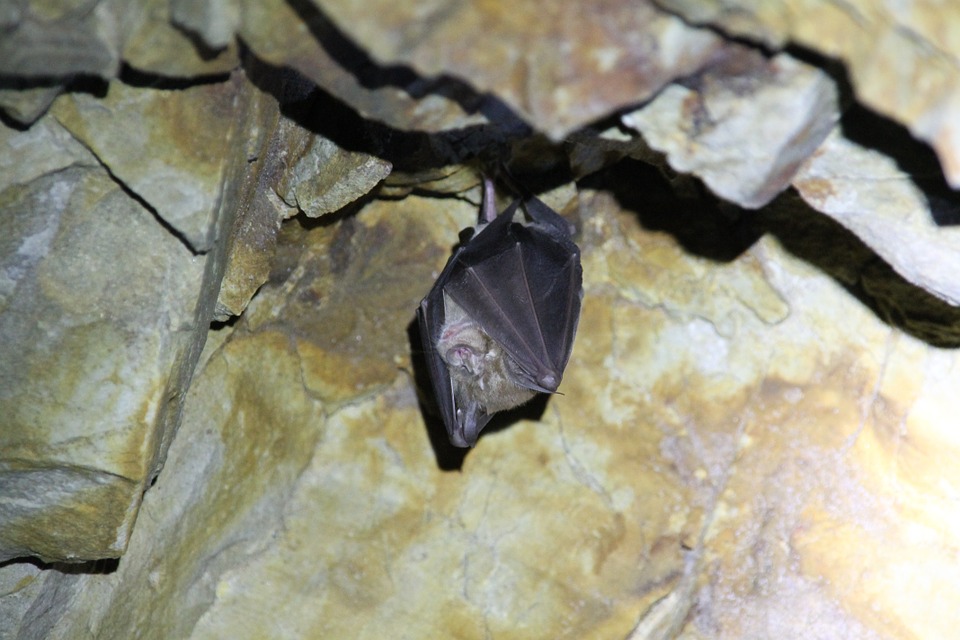
"Begone, spawn of the wicked serpent! Your desires are fulfilled. You, Raven, have four feet for running, and you, Field-mouse, have two wings for flying; so neither of you have any further claim upon the maiden. As a punishment for your diabolical cunning, and as a warning to others, you and your posterity shall henceforth be bird and yet no bird, beast and yet no beast, and neither bird nor beast shall own you."
Thus originated the "Bat."
This story of Tina is not only intended to teach us that we should not break our promises, but also to warn us against being haughty and fastidious, lest we reject what is really good, and make choice of what is any thing but desirable.
Popular Legends of Brittany. Heinrich Bode and A Lady, translators, 1853.
About TOTA
TOTA.world provides cultural information and sharing across the world to help you explore your Family’s Cultural History and create deep connections with the lives and cultures of your ancestors.