
Roman Beekeeping: Part 4
"Therefore let us return to topics which are more suitable to those who have charge of bee-hives, namely, how many kinds of bees there are and which of them is…
From: 4 C.E. To: 70 C.E.
Location: Carsoli, L'Aquila, Abruzzo, Italy

Note: This article has been excerpted from a larger work in the public domain and shared here due to its historical value. It may contain outdated ideas and language that do not reflect TOTA’s opinions and beliefs.
Therefore let us return to topics which are more suitable to those who have charge of bee-hives, namely, how many kinds of bees there are and which of them is the best.
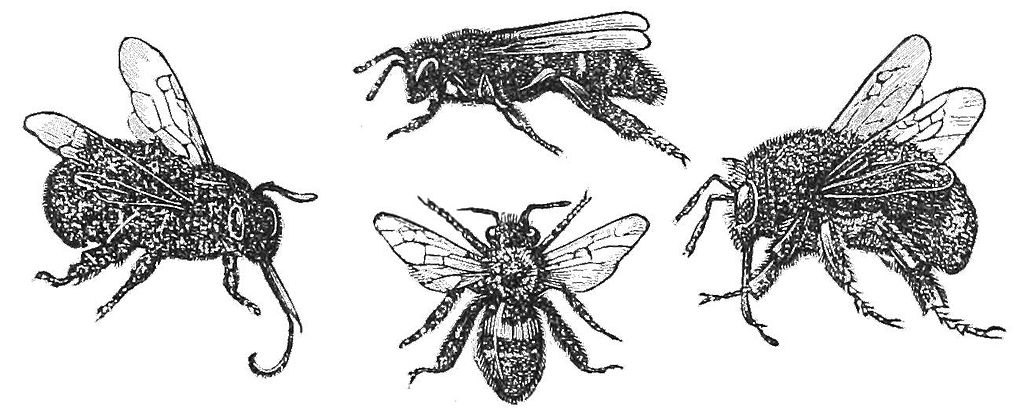
Aristotle, the founder of the Peripatetic School, in the books which he wrote about animals, shows that there are several kinds of swarms of bees, some of them having bees huge and globular in shape and at the same time black and hairy; others smaller but equally round and of a dusky colour and with bristling hairs; others still smaller but not so round, but nevertheless fat and broad and of rather a better colour; some very small and slender with bellies which end in a point, striped of a golden colour and quite smooth. Vergil, following Aristotle as his authority, approves most of bees which are very small, oblong, smooth and shining, calm, too, in disposition; for the larger and rounder a bee is, the worse it is, and if it is unusually fierce, it is by far the worst kind of all.
However, the irascibility of the better kind of bees is easily soothed by the frequent intervention of those who look after them; for when they are often handled, they quickly become tame. If they are carefully looked after, they live for ten years; but no swarm can exceed this age, even if young stock is substituted yearly in place of those which have died; for usually in the tenth year all the population of the whole hive is destroyed and exterminated. In order, therefore, that this may not be the fate of the whole apiary, fresh stock must be continually propagated and care must be taken in the spring, when the fresh swarms issue forth, that they are intercepted and the number of dwelling- places increased; for bees are often overtaken by diseases. The methods by which these ought to be cured will be dealt with in their proper places.
Lucius Junius Moderatus Columella, On Agriculture, trans. E. S. Forster and Edward H. Heffner, vol. 2 (Cambridge, MA: Harvard University Press, 1954), 431-433.
About TOTA
TOTA.world provides cultural information and sharing across the world to help you explore your Family’s Cultural History and create deep connections with the lives and cultures of your ancestors.