
Easy At-Home German Recipes
A collection of simple, modern German recipes like spaetzle, potato salad, jaegerschnitzel, and more!

Intro to German Cuisine
Traditional German cuisine is known for its rich, heavy ingredients and combined sweet and sour flavors. The many cultural regions that make up modern Germany each possess their own culinary customs and staple dishes. That said, these are a few of the most well-known German recipes that are simple to prepare at home.
Staple Ingredients
German cuisine boasts any number of ingredients, but these basic pantry items will give you the freedom to cook many classic German recipes without running to the store:
Eggs
Flour
Butter
Potatoes
Sausage, or wurst
Pork
Apples
Cabbage
Mustard
White or Apple Cider Vinegar
Quark, a fresh cheese comparable to yogurt or cottage cheese
Fresh herbs such as parsley
Easy At-Home German Recipes
Jaegerschnitzel
Jaegerschnitzel, or “hunter’s cutlets,” is a type of fried pork chop served with a rich mushroom gravy. This classic is surprisingly easy to make!
Ingredients:
4 tbsp. Butter
1 medium onion, diced
3 slices bacon, cooked and chopped fine
1 pound fresh mushrooms, or 8oz. canned, sliced
2 cups beef broth
½ cup water
2 tbsp. cornstarch
¼ cup sour cream or plain yogurt
2 tbsp. vegetable or other cooking oil
4 pork chops or cutlets, beaten to about ¼” thick
2 eggs
1 cup bread crumbs
½ cup flour
Salt and pepper to taste
Parsley to taste
Instructions:
Heat 2 tbsp. butter over medium heat
Add the onion and bacon and stir gently until the onions are lightly browned.
Add mushrooms and cook until tender, 3 to 5 minutes
Add beef broth and allow to simmer until the sauce thickens, about 5 minutes. Use cornstarch as necessary to thicken.
Add sour cream to the gravy and salt and pepper to taste, then set aside.
Heat 2 tbsp. butter and 2 tbsp. vegetable oil over medium-high heat.
Beat the eggs together in a small bowl.
Mix the bread crumbs, flour, salt, and pepper.
Once the oil and butter are melted together, take each cutlet, dip in the egg, and then coat with the flour and bread crumbs mixture.
Cook cutlets in the butter and oil until browned and cooked through, approx. 5 minutes on each side.
Remove the cutlets, plate, and pour over with the mushroom gravy. Garnish with parsley as desired.
Potato Pancakes
German potato pancakes, or kartoffelpuffer, are a starchy, savory alternative to the wheat-based pancake. You can serve these with toppings like sour cream, applesauce, yogurt, or syrup.
Ingredients:
6 large potatoes, peeled and grated, uncooked
1 medium onion, chopped fine
2 eggs
¼ cup flour
Salt and pepper to taste
Vegetable oil as needed
4 tablespoons parsley, chopped (optional)
Instructions:
Place the grated potatoes between two clean towels and press gently to remove excess moisture.
In a large bowl, mix together the grated potatoes and onion.
Add the eggs, flour, and seasons, blending together to form a doughy mixture.
Heat a few tablespoons of vegetable oil in a skillet on medium-high heat. Drop the potato mixture in in heaping spoonfuls, leaving space between each pancake. Press the pancake flat and cook on each side until browned, about 3 minutes. Repeat as necessary until all pancakes are cooked.
Serve with your desired topping and garnish with parsley if desired.
German Potato Salad
There are many varieties of German potato salad, but this is one of the most well known and popular. This dish is traditionally served warm.
Ingredients:
2 pounds red or gold potatoes, diced into bite-sized pieces
5 slices of bacon
1 medium onion, chopped fine
2 cloves garlic, minced
⅓ cup white vinegar
¼ cup sugar
2 tablespoons dijon mustard
Salt and pepper to taste
4 tablespoons parsley, chopped
Instructions:
Cover the potato chunks with water in a large pot and boil until fork-tender, about 10 minutes. Drain and set aside.
Fry the bacon in a large skillet until cooked and browned. Set the bacon aside on a paper towel but save the grease. Once the bacon has cooled, crumble into small pieces.
Add the chopped onion and garlic to the skillet and cook in the bacon grease until tender and browned.
Stir in the white vinegar, sugar, and mustard. Bring to a light boil while stirring gently.
Add the potatoes into the skillet and mix.
Sprinkle in bacon crumbles, salt, and pepper and mix for 2 to 3 more minutes.
Transfer the potato salad to a serving dish and garnish with parsley.
Spaetzle
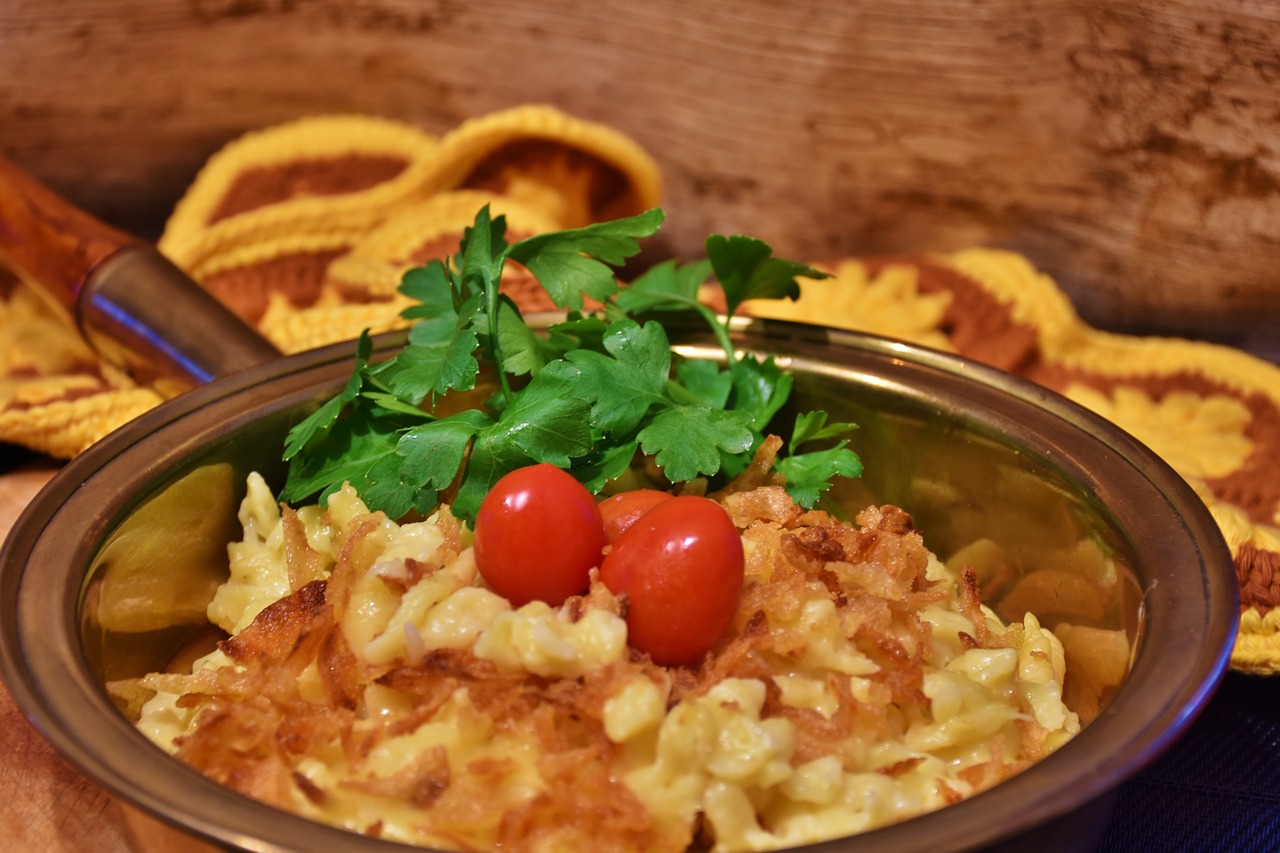
Spaetzle, or Spätzle, is a wholesome egg noodle dish served in a variety of ways around Germany, particularly the Swabian region. This recipe is for making noodles by hand, but you can also use a mixer.
Ingredients:
4 eggs
½ cup milk
2 cups flour
1 teaspoon salt
1 teaspoon sugar
½ teaspoon nutmeg
4 tablespoons butter, unsalted
2 tablespoons parsley, chopped
6 cherry tomatoes, halved (optional)
Instructions:
Heat a large pot of water, 2 quarts to a gallon, on medium-high heat until boiling.
Combine the eggs and milk together in a large mixing bowl.
Slowly blend in the flour, salt, sugar, and nutmeg.
Continue mixing until the dough is smooth, sticky, and airy.
Press the dough through a spaetzle maker into the boiling water. You can also use a wooden spoon to press through a colander, large sieve, or grater, or cut the noodles by hand.
Allow the noodles to boil for about 3 minutes before removing with a slotted spoon. Finished noodles should float. Set aside to dry until all noodles are cooked.
In a skillet, melt the butter on low heat and saute noodles lightly until coated.
Serve hot or cold, with fresh parsley and cherry tomatoes to garnish.
German Red Cabbage
This delightful side dish is simple, flavorful, and a great addition to any meal.
Ingredients:
1 medium-sized head of red cabbage, shredded or chopped
1 onion, sliced thin
1 medium apple, cored and chopped
2 tablespoons butter
¼ cup sugar
⅓ cup white vinegar
¼ cup water
½ tsp ground cloves
Salt and pepper to taste
Instructions:
In a large pot such as a Dutch oven, combine the cabbage, onion, apple, and butter. Saute these together on medium-heat for about 3 minutes.
Add the remaining ingredients to the pot and mix well. Bring to a boil and then allow to simmer, covered, for about 1 ½ hours, or until cabbage is tender.
About TOTA
TOTA.world provides cultural information and sharing across the world to help you explore your Family’s Cultural History and create deep connections with the lives and cultures of your ancestors.