
Banquets of the Nations: Scotland
A selection of Scottish recipes from 1911, including, Roast Grouse, Haggis, Shortbread and more
From: Unknown To: 1911 C.E.

Note: This article has been excerpted from a larger work in the public domain and shared here due to its historical value. It may contain outdated ideas and language that do not reflect TOTA’s opinions and beliefs.
“Scotland“ from Banquets of the Nations by Robert H. Christie, 1911.
A Fitless Hen.
This antique Scotch dish, which is now seldom seen at any table, is made of two parts of suet and one of oatmeal, with a seasoning of pepper, salt, and onions, as for white puddings; the mixture is bound together with an egg, and moulded somewhat in the form of a fowl. It must be boiled in a cloth.
Sheep’s-Head Broth.
Choose a large fat head. When carefully singed, soak it and the singed trotters for a considerable time in lukewarm water. Take out the glassy part of the eyes; scrape the head and trotters, and brush till perfectly clean and white; then split the head with a cleaver, take out the brains, etc., and clean the nostrils and gristly parts; split also the trotters, and take out the tendons. Wash the head and feet once more, and let them blanch till wanted for the pot. Take a cupful of barley and twice that quantity of soaked white or old green peas, with a gallon or rather more of water. Put to this the head, two to three pounds of scrag or trimmings of mutton, perfectly sweet, and some salt. Take off the scum very carefully as it rises, and the broth will be as limpid and white as any broth made of beef or mutton. When the head has boiled rather more than an hour add a pinch of sugar, a sliced carrot and turnip, and afterwards some onions and parsley shred. The more slowly the head is boiled the better will both the meat and soup be. From two to three hours’ boiling, according to the size of the head and the age of the animal, and an hour’s simmering by the side of the fire, will finish the soup.
After making the soup, remove the head, which must not be too much boiled, and serve with the sliced carrot and turnip, with the addition of a good caper sauce and some of the clear soup in separate sauce-boats.
Hotch-Potch.
Cut four pounds of the neck and back ribs of mutton or lamb (the latter for preference) into pieces, and put on to boil in four or five quarts of well-salted water. Be careful to skim as it comes through the boil, adding a cupful of cold water at two different times to accelerate the rising of the scum. Boil slowly for an hour, remove the back ribs, and cut into pieces about an inch square, and lay to the one side. Add the white of three large leeks, one large onion chopped small, a large carrot and half a turnip sliced, and boil for another hour, being careful to skim as occasion requires.
Remove the carrot and turnip; add half a dozen small young white turnips, the same quantity of young carrots (both cut in small dice), a cauliflower broken into small branches, two pints of shelled green peas, a third of the quantity of shelled and skinned broad beans, a good handful of French beans cut into inch lengths, and pepper and salt to taste. When all the vegetables are cooked, take out the large pieces of meat, heat in the soup the small pieces, pour the whole into a tureen, strew a handful of finely chopped parsley on top, and serve. If by any chance the old vegetables have given a bitter or hard taste, add a pinch of sugar.
Fish and Sauce.
Put a good quantity of fish trimmings, such as haddock heads, bones, skins, points of the tails, and fins, in a pot of salted water along with some green onions, parsley, chives, and some whole pepper. When all the substance is obtained, strain and clear the stock into another pot, and put in a good piece of butter slightly kneaded in Indian corn flour; bring slowly to the boil (stirring all the time), and then put in small skinned or filleted haddocks cut in three or divided (according to the size), also a large handful of chopped parsley. Boil for ten minutes, and serve the fish and sauce together in a soup tureen. The soup ought to be thin in consistency and transparent in colour,
Partan Bree.
Boil two good-sized crabs in salted water. When cold, remove the meat from the insides, and place in a basin. Boil in milk five ounces of rice till soft; drain, and pass it with the crab meat through a sieve, and pound till perfectly smooth. Mix in gradually two quarts of clear fish stock—made without vegetables—adding salt and pepper to taste. Put in a pot; heat up, stirring all the time. Now add the meat from the large claws cut into pieces; remove from the fire and stir in a large cupful of cream. If on the thin side, put a whipped egg in the tureen before pouring in the soup. The liquid should be of a consistency between a clear soup and a thick one.
Teased Skate.
Take the dried wing of a skate, and after stripping off the skin cut it into lengths of about one inch in breadth. Put the fish so prepared into water, and boil for the space of twenty minutes, after which let it be put into the oven, where it should remain a quarter of an hour, during which time it will become so tender as to permit the bones to be drawn out. The flesh being now detached from the bones, put it into a cloth, and rub with the hands till it puts on a woolly appearance, which it will soon do. In a saucepan reduce half a pound of butter into oil, put the teased fish into it, and keep stirring for za few minutes. When sufficiently heated, serve up.
Baked Stappit Haddies.
Thoroughly clean the insides, scrape the skins, and stuff some small haddocks with a forcemeat made of fish, toasted oatmeal, minced suet, onions, seasoned with pepper and salt (some of the forcemeat may be made into balls for garnishing). Brush the fish over with egg, strew with fine breadcrumbs, minced parsley, etc., and bake in the oven, basting them well with butter. Garnish with sliced lemon, forcemeat balls, and pickled samphire. Serve with mussel or white sauce.
Mussel Sauce.
Make three-quarters of a pint of very strong stock from a pound or more of good veal, onions, and parsley, and thicken with plenty of butter kneaded in flour. Strain and add some mussels, a glass of white wine, the juice of a lemon, salt, and white pepper.
Mutton Collops and Cucumbers.
Pare and slice the cucumbers as thick as a five-shilling piece. Sprinkle them with fine salt and pepper, and pour vinegar over them. Brown the collops (small pieces of mutton the size of a five-shilling piece) in the frying-pan, and then stew them with the drained cucumbers in a little broth. Skim and season the stew, and serve it hot in a ragout dish.
Haggis.
Clean a sheep’s pluck thoroughly. Make incisions in the heart and liver to allow the blood to flow out, and parboil them, letting the windpipe lie over the side of the pot to permit the phlegm and blood to disgorge from the lungs: change the water after a few minutes’ boiling for fresh water. Another half hour’s boiling will be sufficient; but throw back the half of the liver to boil till it will grate easily. Take the heart, the half of the liver, and the lungs, trimming away all skins and black-looking parts, and mince them together along with a pound of good beef suet. Grate the other half of the liver. Have eight onions peeled and scalded in two waters, which chop and mix with this mince.
Toast some oatmeal before the fire till it is of a light brown colour and perfectly dry. Less than two teacupfuls of meal will do for this quantity of meat; spread the mince on a board, and strew the meal lightly over it, with a high seasoning of pepper, salt, a little cayenne, and marjoram, well mixed. Have a sheep’s stomach perfectly clean, and see that there be no thin part in it in case of its bursting. Put in the meat with a half pint of good beef gravy, or as much strong broth and the juice of a lemon or a little good vinegar as will make it a thick stew. Be careful not to fill the bag too full, so as to allow the meat room to swell. Press out the air and sew up the bag; prick it with a large needle when it first swells in the pot, to prevent bursting; let it boil slowly for three hours if large.
Howtowdie and Drappit Eggs.
Prepare and stuff with forcemeat a young plump fowl. Put it into a yetling concave-bottomed small pot with a close-fitting lid, with onions, spices, and at least a quarter pound of butter. Add herbs if approved. When the fowl has hardened and been turned, add a half pint or rather more of boiling water. Fit on the lid very close, and set the pot over embers. A cloth may be wrapped round the lid if it is not luted on. An hour will do a small fowl, and so in proportion. Strain and reduce the liquor; and with it, a little white cullis, and the liver parboiled and grated, make a thick sauce, adding mushrooms, oysters, and forcemeat balls. On a deep ashet make a border of spinach as prepared in Finland dinner. Place the fowl in the middle, and pour the sauce carefully over it, avoiding the spinach. Decorate the border of spinach with neatly trimmed poached eggs or little heaps of buttered eggs.
Buttered Eggs.
Shake a piece of butter double the size of a large walnut in a pan over the fire till it just melts (it must not cook). Break six whole eggs in this, dust with pepper and salt, and place on the fire, and with the pointed edge of a metal spoon held uprightly and edgeways smartly score the eggs backwards and forwards till lightly set. On no account must the eggs be stirred round, as the result ought to produce distinct particles of yellow and white like very small dice. Serve the equivalent of two on a slice of toast, or the whole in a hot breakfast dish.
Dressed Lamb’s Head.
Wash, soak, and blanch in hot water, and split it sufficiently to take out the brains, and cut away the black parts of the eyes. Boil it in a large fish-kettle, with plenty of cold water and some salt to throw up the scum. Simmer gently for an hour and a half. Take up the head, and cut out the tongue; score the head (but not deeply) in diamonds; brush it over with beat egg, and sprinkle with breadcrumbs, chopped parsley, and seasonings. Stick a few bits of butter over it, and brown in a Dutch oven. Meanwhile, wash, scald, skin, and parboil the brains; chop them up; stir them into hot melted butter with parsley and sage first parboiled and chopped, white pepper, salt, the squeeze of a lemon, or a little lemon-pickle, a small quantity of cayenne, and a minced shallot. Skin the tongue, and serve the brains around it as a small dish to accompany the lamb’s head. Serve also parsley and melted butter. Curled slices of toasted bacon, a piece of ham and bacon, a pig’s cheek, or sausage, as well as a border of haggis meat brushed over with egg and breadcrumbs browned in front of the fire, are indispensable with lamb’s head, even when highly dressed.
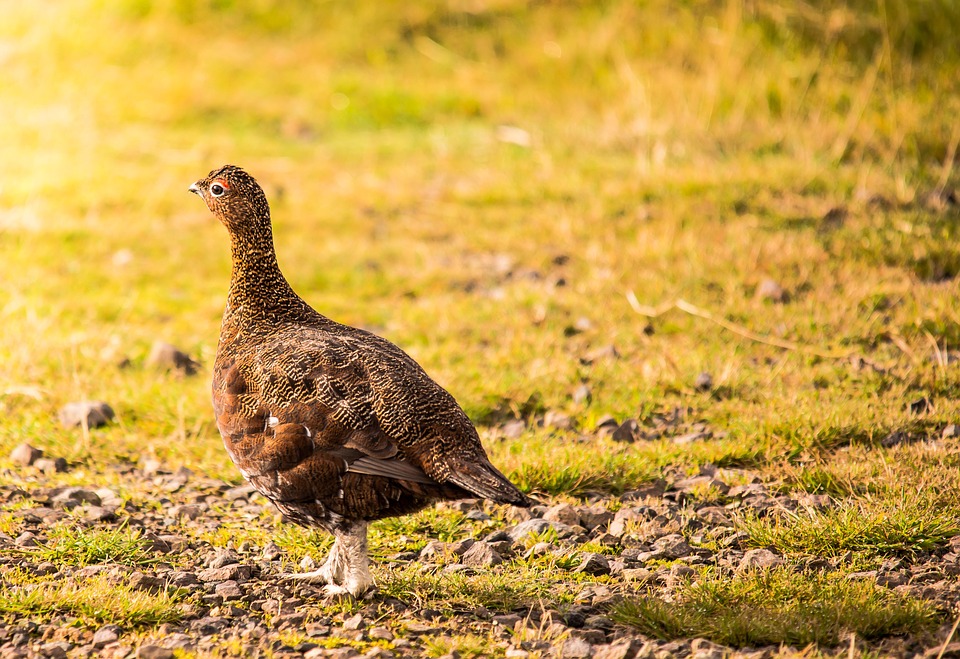
Roast Grouse.
Hang the bird till nearly high, and truss same as for a roasting fowl. Put pieces of fat bacon all round it, with some vine leaves on top; secure with thin string, and place in a sharp oven for thirty minutes, basting well with butter and the dripping from the bird. Ten minutes before finishing, remove bacon and vine leaves, and place a thick slice of toast in a drainer under the bird to catch the rich gravy, but not to touch the gravy in the pan. Do not baste after putting toast underneath bird. Put a little water and some partridge cullis or good stock with a little salt in the pan, and bring to the boil; strain and serve in a separate sauce-boat, accompanied with potato chips, browned breadcrumbs, and bread sauce.
Bread Sauce.
Soak a thick slice from a two days old household loaf in half a pint of very hot milk, but not boiling; add a good bit of butter, a cleaned onion cut through the middle, and twelve peppercorns (six white and six black), and when soft take out the peppercorns (which you have
tied in a piece of muslin) and onion, and with a wooden spoon make a smooth sauce; add a little salt, heat up, and serve in a sauce-boat.
Breadcrumbs.
Grate very finely a thick slice of old bread, which put on an old plate with pieces of butter on top. Place in the oven, and turn them over with a fork so that all the crumbs may be equally browned. See that they do not scorch.
Apple Dumplings.
Make a good plain short crust with flour, butter (minced suet or lard), a small pinch of salt, a good double pinch of sugar, and a little water. Roll out, and line a small bowl; put in a couple of apples cleaned and cut in slices. Put a large tablespoonful of sugar on top, a tablespoonful of lemon juice and some water. Pinch in the paste, tie a floured cloth over the bowl, and boil at least three hours, and turn out. Serve with cream.
Rice Puddings in Skins.
Boil a cupful of rice in milk till fairly soft; add same quantity of roughly shred suet, a beaten egg, and a handful of cleaned currants; sweeten with sugar and season with cinnamon and nutmeg. Fill some well-cleaned skins, cut in equal lengths; secure the ends with thin wooden skewers, and boil steadily for an hour.
Brunt Cream.
Set on the fire in a stewpan two tablespoonfuls of clarified sugar; leave it on till it begins to get brown, then shake it about, and put in an ounce of ratafia biscuits, a small bit of lemon peel, sugar, and orange flower; stir it together, then put in a pint of boiled new milk. When it has simmered by the side of the fire for twenty minutes, beat up four whites of eggs and the yolks of two in a stewpan; take the milk from the fire and mix with it half a pint of good thick cream, then the eggs, which rub through a tammy cloth, and repeat a second time. Butter some small moulds and fill them with the mixture. Have a large stewpan with a little water in it on the fire; when it boils put in your moulds, and cover with buttered paper, and cover close with lid; or they may be steamed in the oven. You may put it in a large mould. When cooked, take out moulds, dry them, and turn out into a dish.
Hattit Kit.
Warm a quart of new milk, and pour it over two quarts of buttermilk. Let the whole stand in a cold place for seven hours. The top being a firm curd, remove it, drain, and set in a china basin with holes in it to allow any additional liquid to get away. Turn out and eat with raspberry or strawberry jam.
Raspberry Jam.
Pick the fruit over carefully, and put it in a preserving pan with a pound of red currant juice to every six pounds of raspberries. Boil till the fruit is tender but not broken up. Skim very carefully; now add three-quarters of a pound of sugar to every pound of fruit, and boil for ten or fifteen minutes, or till it jellies.
Strawberry Jam.
Made the same way as “Raspberry Jam.”
Partan Pie.
From two crabs pick out the meat from the claws and body; mix with a third of the above bulk breadcrumbs, one ounce of fresh butter broken up into small pieces, a small glass of vinegar, a teaspoonful of made mustard (mix the two latter). Season very highly with pepper, salt, and a grate of nutmeg. Fill one of the shells which has been nicely cleaned. Strew some breadcrumbs on top, on which put pieces of butter dotted all over, and brown in a good oven.
Crappit Heids.
Mix a breakfastcupful of minced good beef suet, about a third of its own weight of toasted oatmeal, and a cupful of haddock or cod roe parboiled, skinned, and minced very fine. Season very highly with pepper, salt, and finely-shred scalded onions. Fill the heads of smallish haddocks, and cook in oven.
Croudie.
Set to the one side a large basin of milk until it gets thick and sour. Put in a pinch of salt, and pour some boiling water over the milk, and stir until it curdles. When cold, pour it on to a fine sieve to drain for some hours, or into a cheese-cloth till the curd is dry. Put that into a basin with a little good cream, form into shape in the bowl, and turn out. Eat with scones, or spread it on thin buttered bread, putting some mustard and cress on top.
Auld Man’s Milk.
Beat the yolks and whites of six eggs separately. Put to the beat yolks sugar and a quart of new milk, or thin sweet cream. Add to this rum, whisky, or brandy to taste (about half a pint), and a flavouring of lemon. Slip in the whipped whites, mix well together, and half freeze.
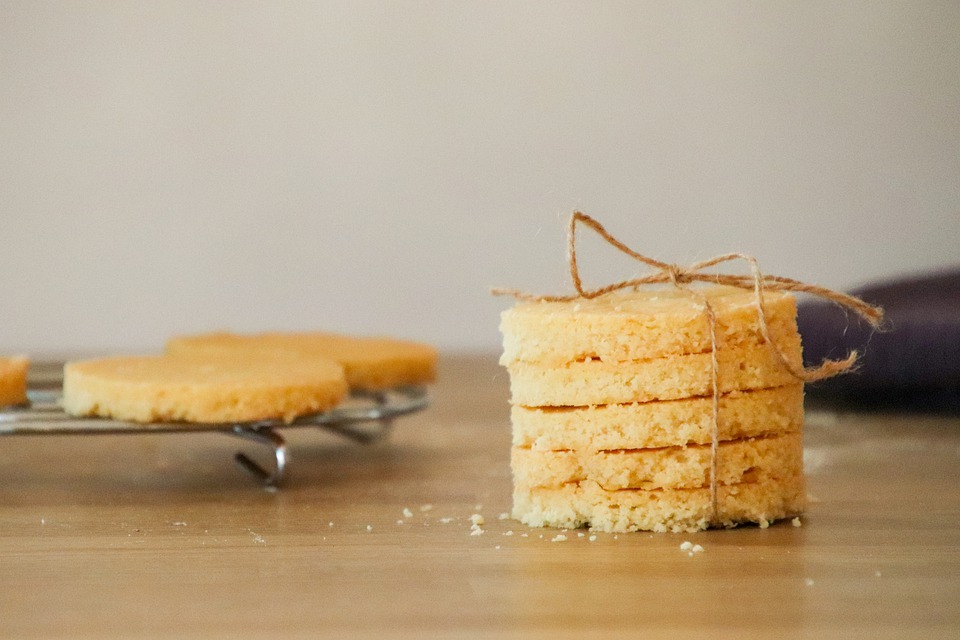
Shortbread.
Four ounces fine sifted sugar, eight ounces butter, and sixteen ounces flour.
Put butter and sugar on a baking board, and rub the one with the other till both are a soft smooth mass. This will take at least half an hour, and you must be careful to see that the butter does not oil. Now add the flour, and knead it till it is thoroughly mixed and smooth. Roll out and fold over; do this several times till the dough does not crack in the rolling. Make into a round or square shape, and pinch the edges with finger and thumb; prick well all over with a steel-pronged fork, slip on to a greased tin, and bake for half an hour or three-quarters of an hour in a good steady oven.
Pitcaithly Bannocks.
These are made the same as shortbread, with the addition of some currants, roughly chopped almonds, and small pieces of candied peel mixed with the dough before making into cakes.
Girdle Scones.
Put in a basin three-quarters of a pound of flour, half a teaspoonful each of carbonate of soda and cream of tartar, a teaspoonful of salt, a pinch of sugar, and a tablespoonful of lard. Mix all together very thoroughly, then pour in sufficient buttermilk gradually, stirring all the time with a knife very lightly till you have a dough easily handled. Turn on to a floured baking board, and roll out into a round half-an-inch thick, and cut it in four. Put a brick on each side of the fireplace, and stand the girdle on them; dust the girdle with flour, and when it browns it is hot enough to cook the scones. Put the four on at once, and when they get a light brown turn them; and when done, place them between several towels as long as they are hot, to keep out the air till quite cold. Repeat the process till you have made as many scones as you wish.
Oatmeal Cakes.
One pound of oatmeal, half ounce butter or lard, a pinch of salt, and sufficient boiling water to make into an easily handled dough. Mix all together and knead thoroughly; take a small portion and roll it into a ball; flatten it out with a rolling-pin into a very thin round cake; cut this in four and toast on a girdle which you have standing several inches above the fire. When one side is done, toast the other side in front of the fire till light brown. Stand them upon their ends till cold.
Another Way.
Two pounds of fine oatmeal, quarter pound of butter or lard, half-ounce of baking soda, a little salt, and sufficient buttermilk to make an easily handled dough. Mix all the ingredients thoroughly, then knead for some little time. Stamp them out into rounds, squares, or triangles; slip on to a baking tin, and shove into a good oven till finished.
Another Way.
Proceed as above, only substituting coarse oatmeal and water for the fine meal and buttermilk.
Household Bread.
Put three pounds of flour in a basin, make a bay in the middle, add one ounce of salt, and two ounces German yeast, dissolved in warm water; now put in a full pint of water heated up to 100° to 110° Fahrenheit (just hot enough to keep your hand in easily without burning; if over 110° Fahrenheit the bread will have a bad colour), and gradually mix the flour, etc., together. The dough should be sufficiently stiff to handle. Cover it up with a cloth and put in a warm place (not hot) for two hours. When well risen, knead thoroughly on a floured board; put back again into the basin, cover up, and let it rise for another half hour. Then break it up into size and shape of loaves desired, about one pound weight in each. Stand for ten minutes, and place them on the sole of a sharp oven (350° to 400°) for three-quarters of an hour.
Pan Loaf.
Make a dough same as above. Grease some tins and half fill with the dough; stand for three-quarters of an hour, and fire in the same heat of oven as above.
Currant Loaf.
Currant loaf is made by adding three cupfuls of plumped currants.
Milk Bread.
Milk bread is made by substituting milk for the water, with the addition of a teaspoonful of sugar.
Christie, Robert H. Banquets of the Nations: Eighty-Six Dinners Characteristic and Typical Each of Its Own Country. J. & J. Gray & Co. 1911.
About TOTA
TOTA.world provides cultural information and sharing across the world to help you explore your Family’s Cultural History and create deep connections with the lives and cultures of your ancestors.