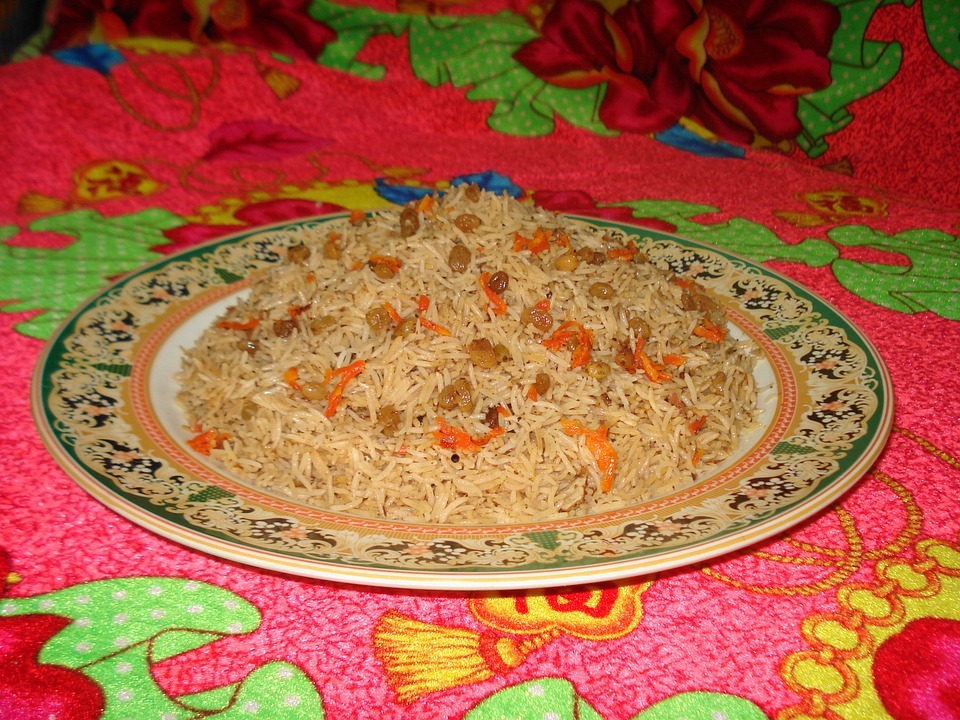

Banquets of the Nations: Afghanistan
A selection of Afghani recipes collected in 1911, with recipes for Stewed Venison, Buttered Beetroots, Arrowroot Pudding, and many other dishes.
From: 1911 C.E. To: 1911 C.E.

Note: This article has been excerpted from a larger work in the public domain and shared here due to its historical value. It may contain outdated ideas and language that do not reflect TOTA’s opinions and beliefs.
“Afghanistan” from Banquets of the Nations by Robert H. Christie, 1911.
Kakullah Chai. (Cardamom Tea.)
Infuse some Indian tea along with a few cardamoms, and at same time put in plenty of sugar syrup. The tea has to be very weak, very sweet, and very strongly flavoured with cardamoms.
Two cups have to be taken, thereafter a cup of plain tea is taken to correct the palate.
Leavened Brown Bread.
Prepare a sponge with four pounds of whole meal (half wheat and half rye), two ounces of butter, a little salt, and three ounces of yeast, and sufficient luke-warm water to make a nice size of dough. Set the dough to rise for one hour; then knead it well, form it into shapes (if for this country, put into tins), and bake in a good oven If for Europeans all the meal must be wheat.
Yeast.
Boil half a pound of flour, 2 ounces of brown sugar, and a little salt in one gallon of water for an hour. Remove from the fire, and when blood-warm put it into bottles and close tight for future use. Half a pint will make 9 pounds of bread.
Unleavened Brown Bread.
Mix well half-ounce of soda, half-ounce of cream of tartar, with two pounds of whole wheat meal; put it out on a table or baking board, make a space in the centre, and put into it a teaspoonful of salt, add about a pint of water, then mix all together into a smooth dough, form it into shapes, and bake in a good oven.
Omit soda, cream of tartar, and salt for Eastern bread, if for Afghanistan, use rye instead of wheat.
Pillau-i-Rarah. (Pillau of Lamb.)
Slice a couple of onions (medium) and fry in half a pound of boiling butter. Cut two pounds of lamb in bits about the size of a square inch, fry these in the butter for a few minutes; then put the onions, butter, and meat in a stewpan along with half-a-dozen dried apricots and a handful of pistachio nuts, a teaspoonful each of ground turmeric, cummin, coriander, and half that quantity of ground caraway and cloves, and a large chilli sliced, with salt to taste. Pour in one cupful of water and one of milk curds, and stew very slowly for four hours. Serve in a dish surrounded with boiled rice.
Boiled Rice.
Wash three cupfuls of rice and plunge into boiling water, and boil fiercely for twenty minutes till rice cooked but firm. Drain off the water very thoroughly and put back into the pot with a good piece of butter, first rubbing the pot with butter before returning the rice. Place in the oven or at the side of the fire to dry. Turn over the rice occasionally very lightly, so that each grain may be separate.
Kaurmah-i-Ahu. (Stewed Venison.)
Cut two pounds of vension into small pieces and fry in half a pound of butter in which you have first fried a couple of minced onions. Place the whole into a pan with six stoned peaches, a cupful of raisins, twelve sweet prunes (stoned), a cupful of pine cone seeds, a teaspoonful each of ground cinnamon, green ginger, sugar, two sliced green chillies, and salt and pepper to taste. Mix all well together, and pour in three cupfuls of sour milk and one of melted butter, and stew very slowly for at least four hours. Serve with buttered beetroots and brown bread.
Buttered Beetroots.
Wash two pounds of beetroots very carefully, taking care not to break the skin, or they will bleed. Boil in salted water with some corriander leaves and a couple of bay leaves and a teaspoonful of whole peppers. When tender, take them out of the water and skin very care- fully. Cut them into nice pieces, heat a pound of butter, and put them into it, and stew for half an hour.
When for European cookery, cut them into thin slices, place in a jar and pour boiling spiced vinegar over, and in a couple of days you have pickled beetroot.
Pillau-i-Habate. (Pillau of Vegetables.)
Boil any kind of vegetables in season, such as potatoes, artichokes, cauliflower, cucumbers, carrots, pumpkins, and vegetable marrows. Strain the vegetables and put to one side.
Melt, say, three ounces of butter, and, when boiling, fry two onions sliced very fine, and when brown, but not charred, make the following into a paste, and fry in the butter, viz.:—A teaspoonful each of mustard seeds, turmeric, and chillies, a quarter of a teaspoonful of garlic, and three corriander leaves. When smoothly made into a paste and fried, put in a cupful of milk curd, 6 ounces of butter, and when all is amalgamated pour the whole over the vegetables, which you have first put into another pan. Mix thoroughly, and simmer for twenty minutes. Dish up and surround with rice.
Kaurmah-i-gusht-i-Gusfand. (Curried Mutton.)
Fry a couple of minced onions in butter. Cut up two pounds of mutton into small pieces and fry in the butter. Place the whole in a stewpan with a teaspoonful each of ground corriander, cummin, cardamoms, green ginger, a point of garlic, and two large red chillies sliced, a dozen stoned sour plums, a handful of raisins, and half a teaspoonful of salt. Stew very slowly for four hours, and eat with new bread, boiled rice, and buttered parsnips.
Buttered Parsnips.
Thoroughly clean the roots and cut into pieces of about two inches long and half-an-inch thick, boil in salted water, and, when tender, drain and put them into another pot with plenty of butter and stew for half an hour.
For European cookery they must be mashed and beaten up with a good bit of butter and some cream. Season with pepper and salt to taste.
Kaurmah-i-Chuchai Murgh. (Stewed Chicken.)
Lightly fry two medium-sized onions sliced very thin in half a pound of boiling butter. Remove the onions and fry in the butter a plump chicken; when brown all over place it in a pan, add the onions, a handful of pounded almonds, four oranges which have been pre- served in sugar syrup, and cut in quarters, a teaspoonful each of ground cardamoms, cinnamon, half a teaspoonful of nutmeg, two bay leaves, two sliced chillies, a teaspoonful of salt, and quarter that quantity of white pepper. Pour into the pan another half-pound of melted butter and a cupful of milk curds. Cover very closely and stew for at least four hours. Remove the bay leaves and eat with brown bread.
Preserved Oranges.
Wash and dry half a dozen oranges. Cut a very thin piece out of the rind, about the thickness of a thin cord, as if you were quartering them. Boil them in plenty of water till they are quite tender, then cut them into the quarters already marked off; cut out the pips and the hard bits of pith; boil in plenty of strong sugar syrup for half an hour; let them steep in the syrup for days, then boil for fifteen minutes, and do this four times; strain into another pot and add more syrup and boil to a crackling point and pour over the oranges. When cold, tie down very carefully.
Halwa Nashashta. (Arrowroot Pudding.)
Half a pound of arrowroot, half a pound of butter, half a pound of sugar, and one pint of water. Soak the arrowroot in half of the water, when nearly soft drain it, and put it in a pot in which you have brought the butter to boiling point; stir continually till all the butter is absorbed with the arrowroot. Having made a clear syrup of the sugar and the rest of the water, add it to the mixture and cook steadily, stirring all the time very carefully, but not shaking the pot. When all has collected into a mass, lift it with a spoon several times till it is quite free and smooth. It ought to be a soft, solid mass. Eat with all kinds of fruits preserved in sweet syrups.
Sharbai. (Sherbet.)
Boil the juice of six oranges and one lemon, also the very thin rind of three of the oranges and one of the lemons with an equal weight of sugar for ten minutes. Strain and set to cool on ice ; dilute with a little rose water and fill up with iced water to taste.
Christie, Robert H. Banquets of the Nations: Eighty-Six Dinners Characteristic and Typical Each of Its Own Country. J. & J. Gray & Co. 1911
About TOTA
TOTA.world provides cultural information and sharing across the world to help you explore your Family’s Cultural History and create deep connections with the lives and cultures of your ancestors.