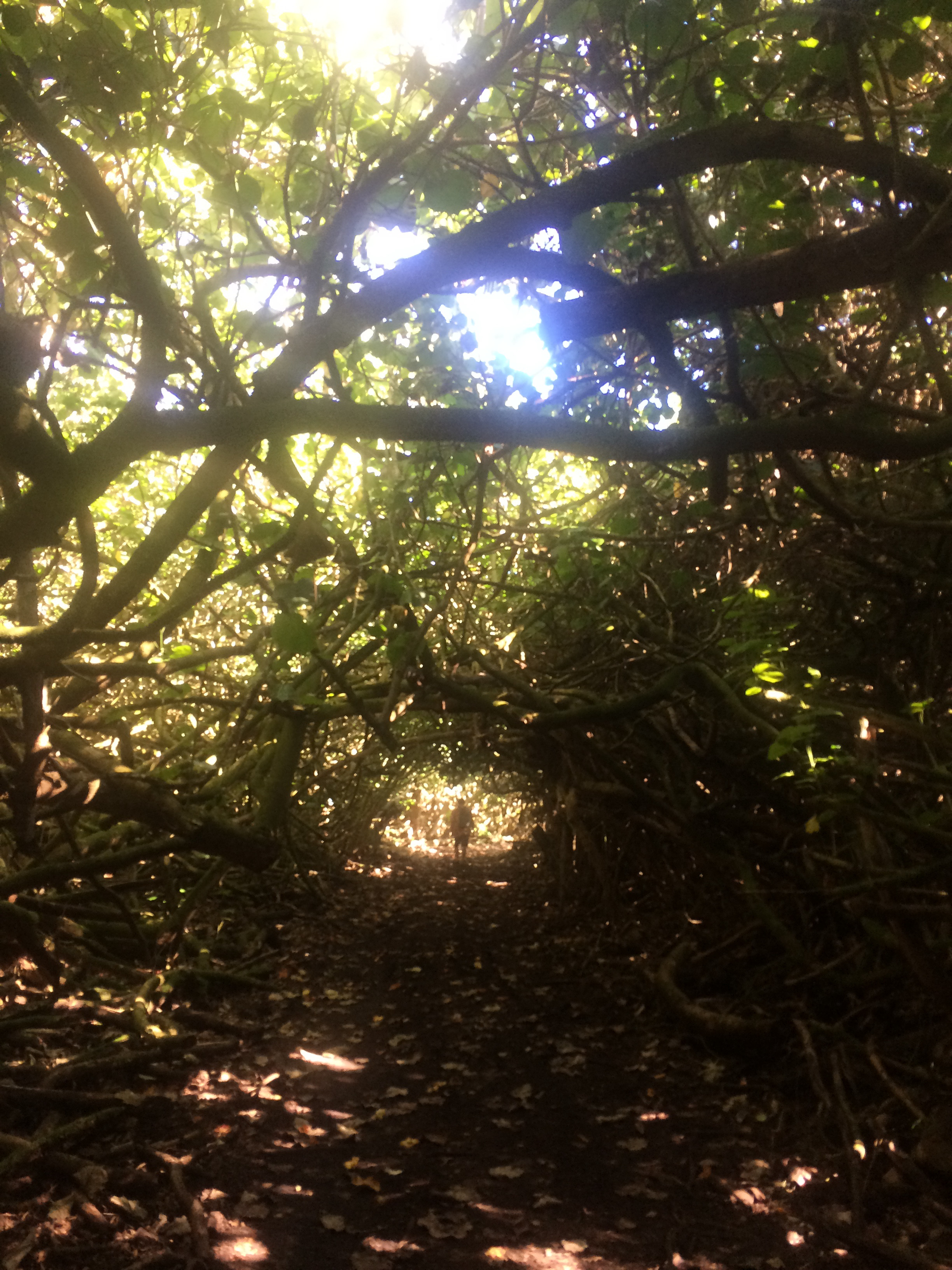
A Contemplation From Within the Tunnel, Part 2
An account of the newest house project in Hawai'i, as well as observations related to travelling during a global pandemic.

Well, we finally did it. For one not so brief and radiant span of time we stepped out of the tunnel and into the light; where we cautiously (perhaps selfishly), endeavored a work in paradise again. I was also blessed to be able to celebrate my 54th birthday there (although it appears the honor was not without sacrifice). The trip’s length, originally planned to span a previously unprecedented 25 days, was extended 4 days further due to closure of all inter-island flights from the looming threat of hurricane Douglas (which thankfully -and against all forecast models- managed to skirt just offshore to the north of the archipelago). During this extended stay, we worked all but 3 days (which included my continued “time zone challenged” remote participation in TOTA): one of these was spent exploring the local shoreline, another involved a trip to the local Maku’u Farmer’s Market as well as the now landlocked Pohoiki boat launch, and the last day was spent on an exploratory trip along the southeastern shoreline in order to find/visit a rumored local hangout…an insider tip which now occurs to be an honor shared with few malihini…
”…mahalo” my friend, “mahalo.”
This new adventure began on the morning of July 2nd, 2020, as my makamaka and myself (sporting crisp new M95 facemasks and each with a pocket stash of alcohol wipes) boarded a Hawaiian Airlines plane in Portland, OR bound for Honolulu, HI. From there, we hopped an inter-island flight to Hilo on the Big Island. En route on this last leg, we discovered a gaping hole in the Aloha State’s approach to stemming the tide of the outbreak, namely: international travelers heading to their chosen island destination (and before beginning their 14 day ‘in situ’ quarantine) coming in direct contact with residents not restricted from such mixed inter-island travel (nor required to quarantine afterwards). This revelation brought a queasy feeling akin to mild panic for me, as the possible implications for each island-hopper’s ohana became fully realized…the Asian woman and grandaughter we spoke to were heading straight to a wedding ceremony upon disembarking. Even screened as we were for fever before boarding, what if either of us were asymptomatic? What of the hundreds of potential carriers one came into contact with simply navigating the airport itself? Add to this the rather bitter truth that an airplane flight is the very antithesis of ‘social distancing’ and one cannot help but be left with the feeling that we had found ourselves stumbling into fissures between the “good intentions” but as-yet vetted “best practices” of this new normal.
Realize that during the long discussions in preparation for this trip, we had formulated a plan where, during the first 14 days after arrival, we would operate under what we deemed “best practices:” a concerted effort to conform to the letter of CDC recommendations. Arrangements were made for needed groceries/supplies to be delivered directly to the house (first confirmed by phone then dropped off on the lana’i and/or driveway). We had also packed (as a carry-on, no less) a soft sided cooler packed with frozen mainland meats to provide for us through the quarantine period (and yes, we were held up getting through DHS inspection because of it…they should know us on a first name basis at this point). We planned the trip for 25 days so as to ensure we had enough time to squeeze in all the expected trips for lumber, hardware, dump runs, socializing, and any sightseeing indulgence…but for those first 2 weeks at Kaloli Point we were to remain isolated without access to even a rental car. We would stay busy cutting back and then further thinning the encroaching jungle using a chainsaw on loan from another of our local friends residing down the Government Beach road…the cuttings would then be chipped to help facilitate future landscape projects (composted soil is in high demand on the island, so having some ‘cooking’ on site could be considered quite a boon). During this time of isolation we also planned on completing any preparatory tear-out to the structure so as to make our release back into society (and subsequent purchase of materials needed for finishing the next stage of the remodel) most efficient and the completion of scheduled construction tasks much more expedient. It was an extensive list: our only chance to complete the majority was through careful planning and due diligence.
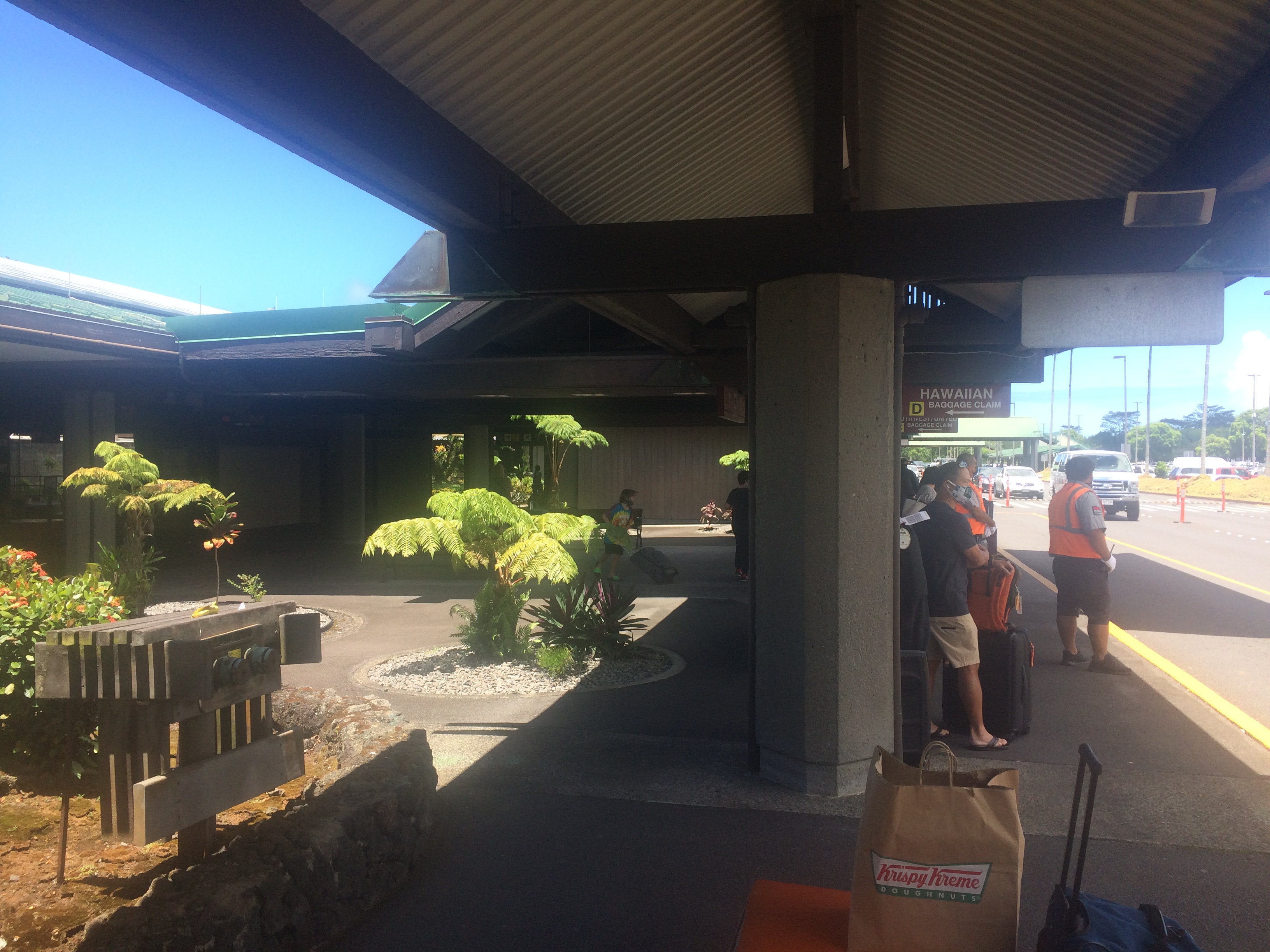
After enduring a long (and surprisingly crowded) flight and layover where “best practices” found us wearing our protective face coverings for a nearly uninterrupted 8 hrs, we were greeted upon our final arrival at Hilo airport by two dear Kapoho friends driving their somewhat battered (and blue?) Ford Ranger work truck. After loading our luggage in the bed we also set up a lawn chair each, and as we settled in for the ride were informed we needed to make one necessary stop before continuing on to the house…after negotiating the local side-streets we arrived at a door and window supplier where we were handed (amid much amusement) a 4x6’ window screen to hold onto during the remaining 20+ mile transit…in midst this unlikely (mostly highway) journey we shared similar memories we had experienced while growing up in rural America during the 1970’s.
Once at the house, we quickly unpacked (toasting our arrival with the first of countless beers to be consumed in the following month), made a quick tour of the house/property and then immediately began coordinating the work itinerary for the next couple of weeks. First item on the agenda: the aforementioned clearing and thinning of the lot (in order to increase light and airflow in/around the house) via removal of invasives and the restoration of native Ohi’a trees. Select examples of either pristine and/or unusual species would be saved if possible. Potential hazards were also to be considered and eliminated. We began this rather daunting task the very next day, as then weeks followed dedicated to this unrelenting routine of heavy labor: our initially modest stacks of “chippables” grew into massive piles. Blisters formed into callouses, became blisters and then turned back into callouses again. The now familiar burn of fireants became a near constant state, with each encounter thankfully washed away anew by a near-constant outpouring of sweat (produced in such volume that if one leaned down, one’s safety glasses would immediately fill up). “Wear and tear” was also an ever present concern, perhaps best exemplified by the toll paid by our footwear…if we hadn’t purchased a known “miracle cure” (in the form of a particular brand of contact-cement), we would have been falling/hauling trees in footwear that had degenerated into glorified flip-flops! When we came to the completion of each day, that first (and often second) celebratory beer was generally consumed faster than it could be tasted (…when laboring in the tropics one becomes so deprived of hydration its as if the bewitching brew is simply absorbed through proximity). This ritual officially marked the end of each day’s labor, and the requisite setting aside of all powertools until the next day’s resumption of duties.
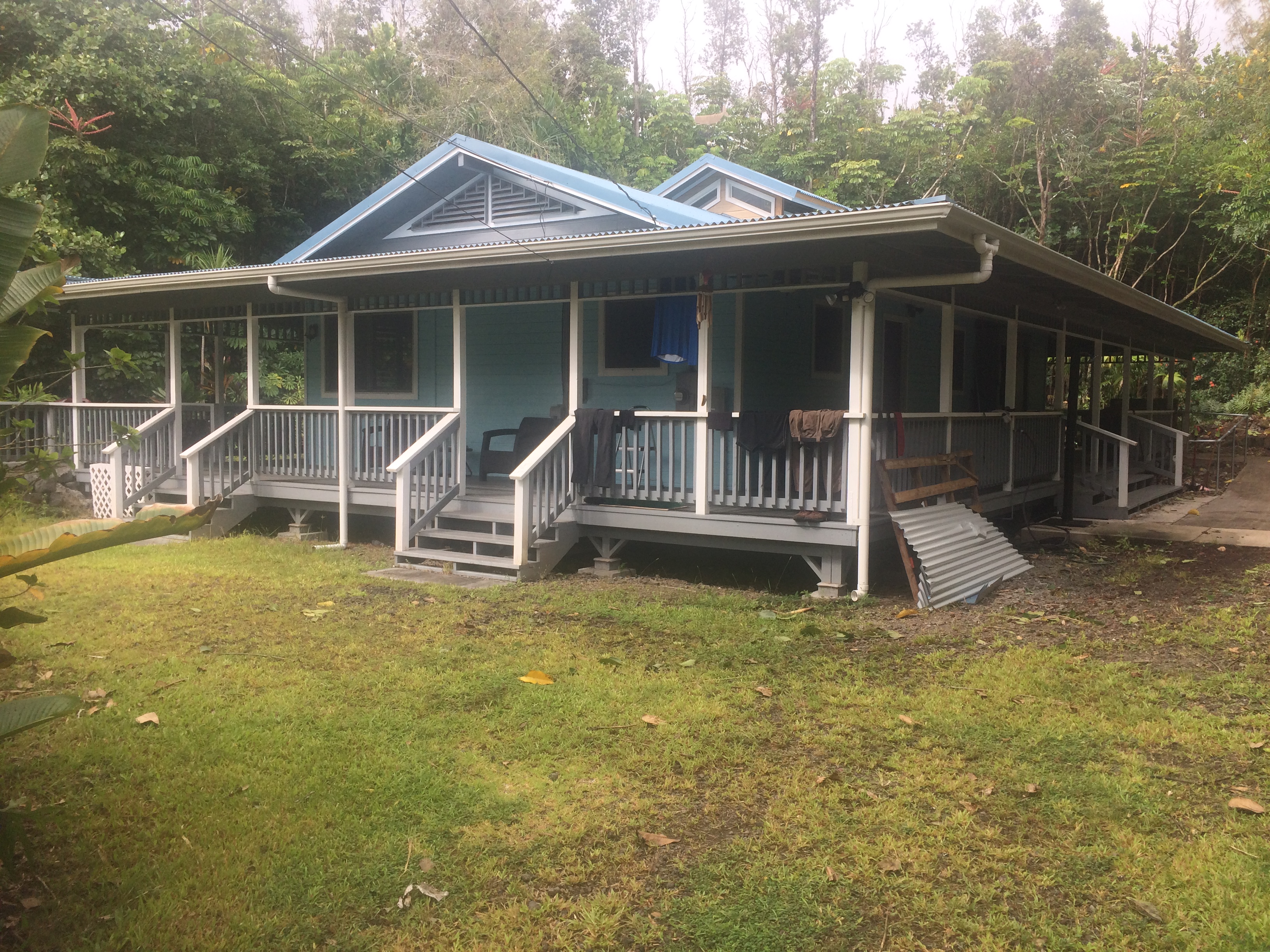
During these more restive early-trip moments a list of basic construction materials (dimensional lumber, plywood, nails, screws, etc) was composed and then called into a local lumberyard where delivery was completed within the now familiar “Hawaiian workweek.” On odd days when fatigue (perhaps hangovers) rendered even the mere thought of such heavy labor too painful, we ‘changed it up’ a bit by endeavoring the preliminaries for remodel, such as: removal of the recently installed but all too cliche’ barn doors (for a bathroom…really?), removal of a functionality-defying, uselessly low countertop (an overambitious attempt at wheelchair accessibility?), removal of a generally offensive cupboard in the kitchen, tear out of the old, time-worn, undersized “owners closet” and tool shed, some preliminary hardscaping, and finally, the stubborn extraction of all the junk and garbage that had been discarded in the surrounding jungle during the previous remodel (a surprisingly common occurrence wherever one might travel). Meanwhile, representatives from the Hawaiian Covid19 task force became regular “tele-prompters” asking about our current state of health, reminding us of our social responsibilities, and acting as the gatekeepers for our return to social freedoms.
On the very night after our official release from social isolation, we went over to celebrate at our (previously mentioned) Kapoho friends (now finished) homesite for a socially-distant dinner party/house tour (during which we agreed to help them -sight unseen I need mention- remove a tree that was blocking their second-story view…at the time it just seemed like the ‘neighborly’ thing to do). The very next day, as if to ‘seal the deal’ on our official release from quarantine, we rose bright and early and headed up to the nearby national home improvement chain-store where we spent most of the day selecting and purchasing doors, interior trim, hardware, replacement plumbing/electrical parts, tools, and anything else we felt might be needed to finish the next series of items on the house “to-do” list. Over the following weeks these tasks would include installing 6 doors(5 interior, 1 exterior), building an outside tool closet as well as a fully finished inside owner’s closet, prepping for a service-line relocation, installation of a new Reverse Osmosis water filtration system, preparatory exterior caulking and painting, as well as a full interior trim-out of windows and doors. In weaker moments, we could still find distraction working in the surrounding jungle…but there was a greater price yet to be paid for my trip it seems (not covered by the ever-growing beer tab or the expense of rental car and/or airline tickets)…
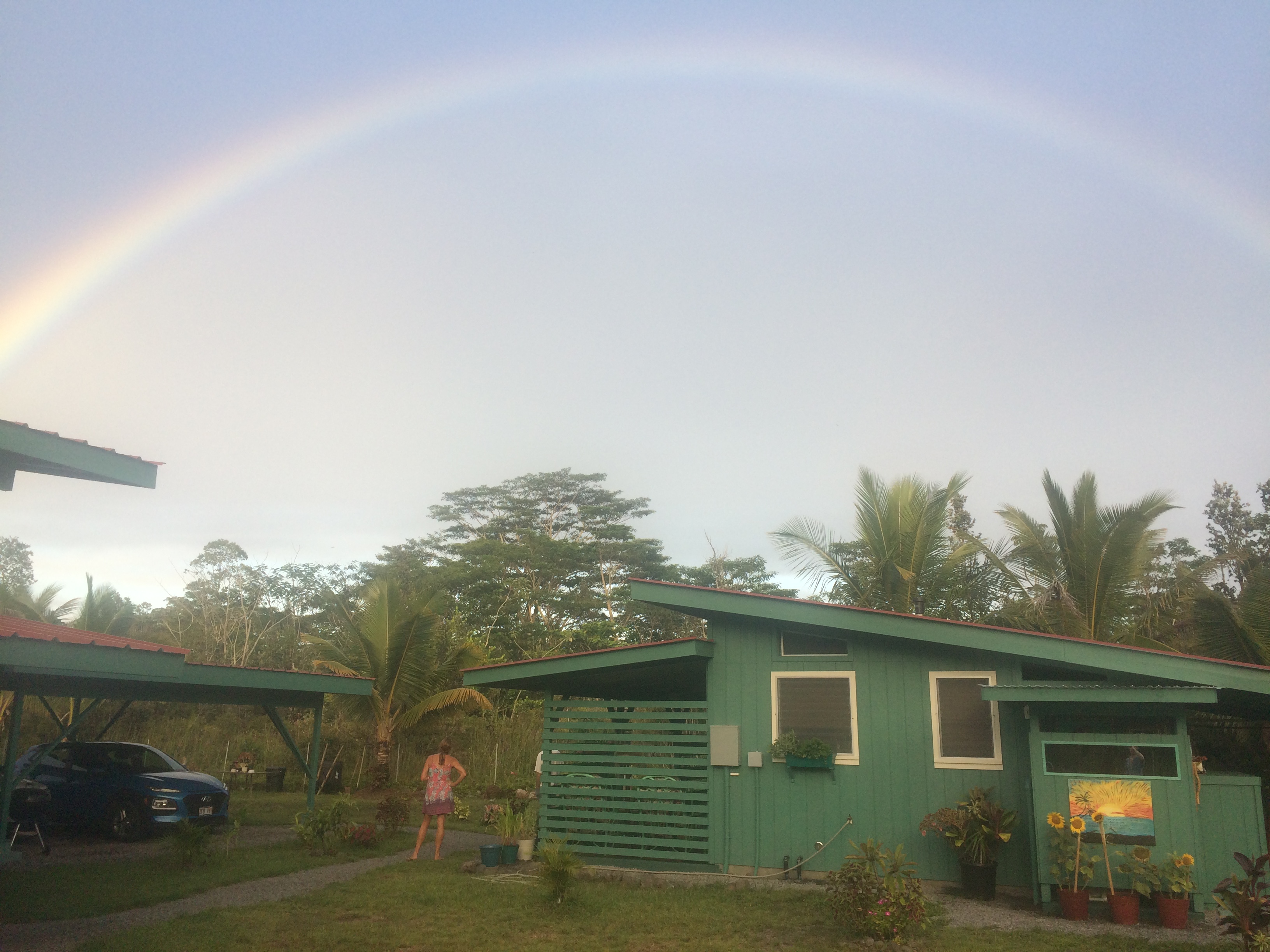
…on the allotted day for the friend-favor (around the 3rd week of our stay), we arrived with a freshly serviced chainsaw and hard learned lessons from our recent jungle-clearing experience (of utmost importance: the thin neck-socks that could be worn both as face covering or over ones head/neck to help keep the fire-ants at bay). Once shown the offending tree(s) in question (a broadly branching and well established multi-trunked 30+ foot ‘autograph’ tree surrounded by a dozen ‘starts’ near equal in height), it was apparent to this arborist that the tree(s) would best be handled by climbing, removing the branches/top, and then falling the remaining trunk…but this would all have to be accomplished w/o the aid of equipment normally available (such as a climbing harness, rope, and rigging). In spite of this deficit things went pretty smoothly, as within a couple hours we had the bulk of it on the ground…all that remained was the dead-falling of the now barren main trunks. However, as I handed off the chainsaw to exit the tree, my attention apparently went into ‘standby mode’ as the branch-stub I then stepped upon broke clean at the trunk; I immediately found myself hyper-extended and after hearing a loud ‘pop’ from my left thigh, fell the final 6’ to the ground. Upon trying to stand I noted something amiss: namely that my left hamstring was in a state of severe spasm…overcome by a rising sense of panic, I massaged it loose and managed to limp out unassisted at the completion of the task, albeit cautiously dragging my now seemingly crippled leg behind. Upon return to the Kaloli house I both elevated and iced it, but after a couple hours rest and a rather heavy dose of prescription-grade Ibuprofen decided that the steady ‘stiffening’ I was experiencing would likely be better managed by remaining active. So, I returned to work. Thankfully, over the following weeks (assisted by self-induced massage therapy and more ibuprofen) it slowly healed, until at the time of this writing it offers only occasional mild discomfort: but rest assured, it certainly put a restriction on extra-curricular activities for the rest of the trip. We did receive a (both sizable and delicious) freshly caught slab of Ahi for our neighborly efforts, as well as the furtherance of our already somewhat infamous “punatic” reputation.
With my injury, most of the presumed late trip adventures were immediately brought into question. Although I was able to remain active, I certainly wasn’t near as “spry” as upon arrival: add to this our rather tight itinerary, and we began to consider the possibility that it might be yet another “hard push” to the finish line…and then we heard rumor of hurricane Roberts, mentioned rather casually during a now-routine neighborly visit. Once made fully aware of the threat, information such as “…it is bearing down to make landfall on the Big Island… a hurricane warning has been posted…it is recommended that locals stock up on staples and make preparations for extended periods without power…” certainly got our now undivided attention. In the days that followed we debated our options, finally deciding to delay our return to the mainland in case we needed render repairs to “our” (or our neighbor’s) house after the hurricane had passed. Come to find out we hadn’t a choice in the matter anyway: the day after our decision we were informed that all inter-island flights had been suspended and the entirety of Hawaiian Airlines fleet flown to California!
So, following “best practices” again, we stocked up on food, water, purchased a camp stove, and secured anything loose and potentially dangerous in anticipation of the hurricane-force winds…which never came. Somehow (and against all forecast models) the hurricane skirted the island chain well to the north, never turning west as expected, never even making landfall…we experienced some modest windgusts on the expected evening of, and then a following day not unlike any other. We accepted this rather ironic turn of fate with a sense of relief, as it would (at the very least) allow us to conclude our stay in a manner which we deemed ‘more proper’ anyway, such as: when returning the loaned chainsaw also volunteering to reestablish their jungle path down to the ocean as a gesture of thanks for the invaluable support and friendship…with a gate and fence already installed along the frontage of the property by a local crew, choosing to also erect a rather primitive (but hopefully still effective) pig barrier around the back of the lot in order to deter the heavy-hoofed swine from the immediate neighborhood…and (as if “saving the best for last”), on the last waning day of the trip managing an excursion to “a place less traveled” down the Red road which, although it left my hamstring a little worse for wear, was absolutely worth the wait and effort (STUNNING is the only word that seems to do the memory justice).
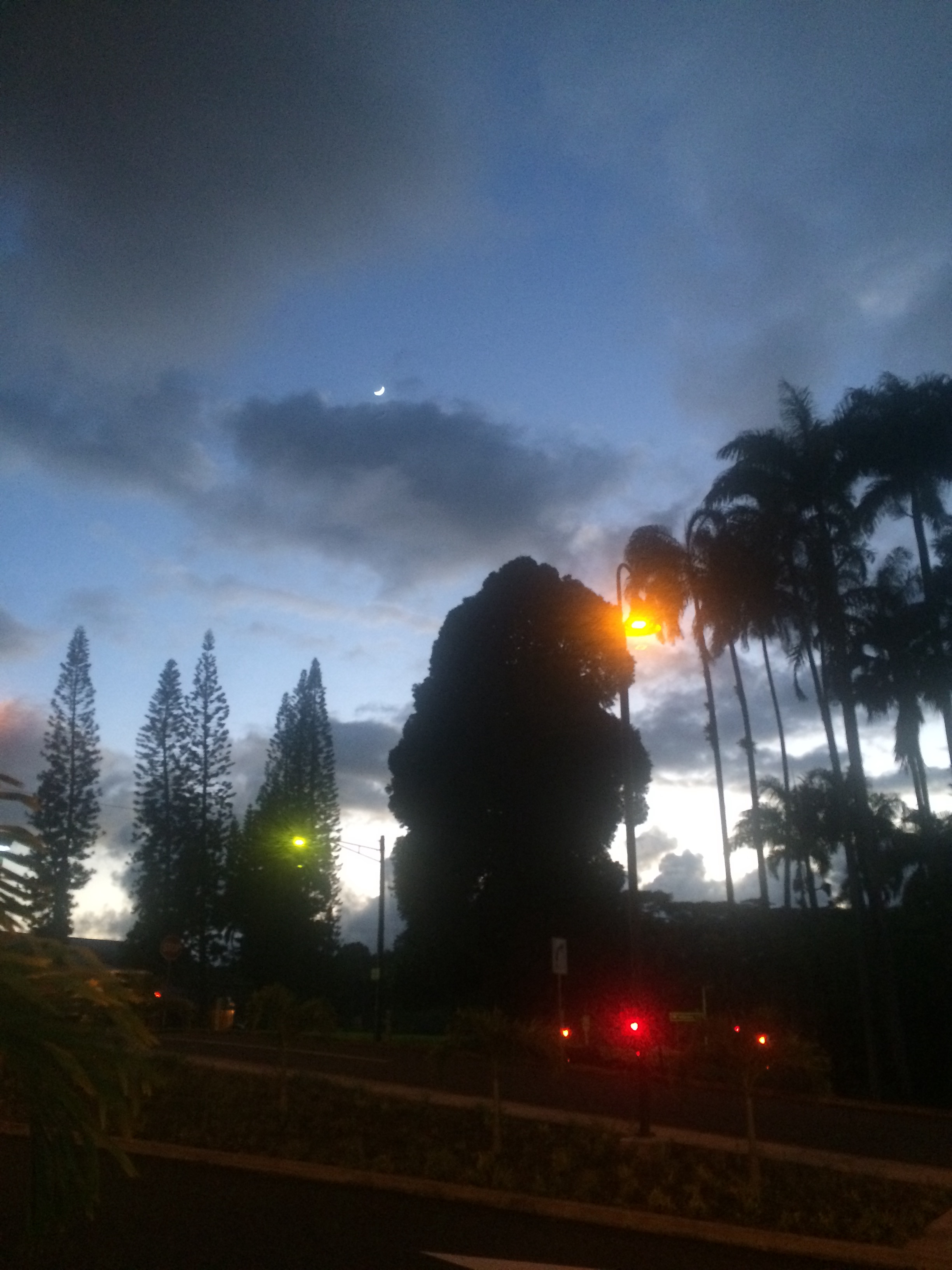
This additional time also granted us more opportunity to muse over the new region/neighborhood we had by then acclimated to…how might it all compare/contrast to that which now lay forever buried? The new locals we met on this trip -specifically those who identified themselves as residents of Kaloli Point- were delightful. A seemingly perfect balance between “social” and “private.” We became welcome participants in a neighborhood where we were included in and updated on local issues such as (the alluded to) efforts to cull the increasingly problematic swine population, and even local gossip regarding candidates for the upcoming local election. All such interactions were relaxed, seemingly effortless, and it didn’t take much time at all before we felt not only recognized in our own right, but also accepted. We were also blessed with several close friends as neighbors a short drive away: they had also chosen to resettle within the Paradise Park community after losing their homes to Aila’Au.
In regards to the general status of the broader region, well, lets just say things are…a bit rough, currently. There is a somewhat desperate feeling one can sense when travelling through Pahoa…the only thing now missing from its semblance of a ‘ghost town’ is the introduction of roaming tumbleweeds (although perhaps there are roaming humans now to serve as stand-ins)? The heart of the old town (its historic theater) is gone, having already burned down before the most recent flows came. Many of the old storefronts are now also closed up, and most of the restaurants which somehow still manage to remain open seem mere waiting rooms for take-out transactions, with “tumbleweeds” ever lingering in the margins. The newly completed (and most assuredly controversial) strip-mall, touted as a means to bring “new life and opportunity” into the community now sits idle; its pristine parking lots empty, its new stores displaying compelling signage with ironically empty shelves inside. Somewhat surprisingly, the town has become a kind of a ‘dead end road’ at this point (the recent flows erased tourist destinations, and imposed pandemic restrictions deter any remaining potential). With a larger percentage of area locals apparently finding either Kea’au or Hilo more convenient for their shopping needs, it’s hard to imagine what will remain if things continue…but then again, the region (or state even) is hardly alone in this regard: its hard to imagine where any of us will end up if current circumstances continue on another year, or two, or…?

And now for some observations on the island’s overall pandemic response (as well as my decidedly-biased take on the attitudes and practices of those currently residing in the Aloha State): it seems that in regards to those living on the southeast end of the Big Island (the only region I can really speak of from experience) they take the Covid 19 outbreak far more seriously than many of those one might find on the mainland. In public settings (particularly the higher density Kea’au and Hilo) I witnessed NO ONE without a mask on…even those of a more “transient” disposition…even in a place normally occupied by those prone to flaunting their “liberties” hereabouts (namely a certain home improvement chain-store I prefer to call “the Despot”). Social distancing was ever the norm in public, regardless: at farmer’s markets, at parks, at drug and hardware stores, even in more intimate settings. As mentioned, downtown Pahoa had essentially become a ghost town, tourist-trade was nigh non-existent on the south end, and although Kea’au had become more congested than I remembered, it now appears to serve as a greater hub for those who were displaced by the last flow (such as many of those now in the Paradise Park area), so perhaps that is to be expected. Regardless, witnessing such diligent ‘best practice’ is perhaps precisely why the Big Island (in particular) has kept their cases so low (in spite of Corona virus tests being available free to the general public)…and it’s also important to realize island tradition still places the welfare of the ohana above that of one’s self, as native traditions and sensibilities (not to mention native islanders themselves) are still very much alive within the public consciousness.
Compare this to the “mainland mixing pot” that is O’ahu, where cases are surging (no doubt helped in part by servicemen being exempt from quarantine when travelling to/from the mainland and/or being redeployed there), and where one regularly hears reports of tourists taken into custody for most egregious defiance of restrictions. Also realize there are business and/or property owners complicit with such actions/inaction: it has been reported that some vacation rental landlords, in blatant disregard of restrictions to fill only long-term rental contracts (I believe it was a 6 month minimum) were agreeing to such contracts with mainland visitors, then allowing them to be broken after as little as 3 days…”rinse and repeat.” One couldn’t fabricate a more antithetical example of “best practices,” and I would be curious to know if these unscrupulous property owners were locals or mainlanders (I certainly have a sneaking suspicion already). Regardless, this loophole was still being debated for closure while our own work-visit was ending. Perhaps its a blessing of sorts (yes, it is quite a grim stretch) that the surge of cases on O’ahu has resulted in the restriction of inter-island travel again. In a response I would deem as “akin to a Hawaiian Thermopylae:” the governor is attempting to stem this newest wave of viral invasion at the loading gate.
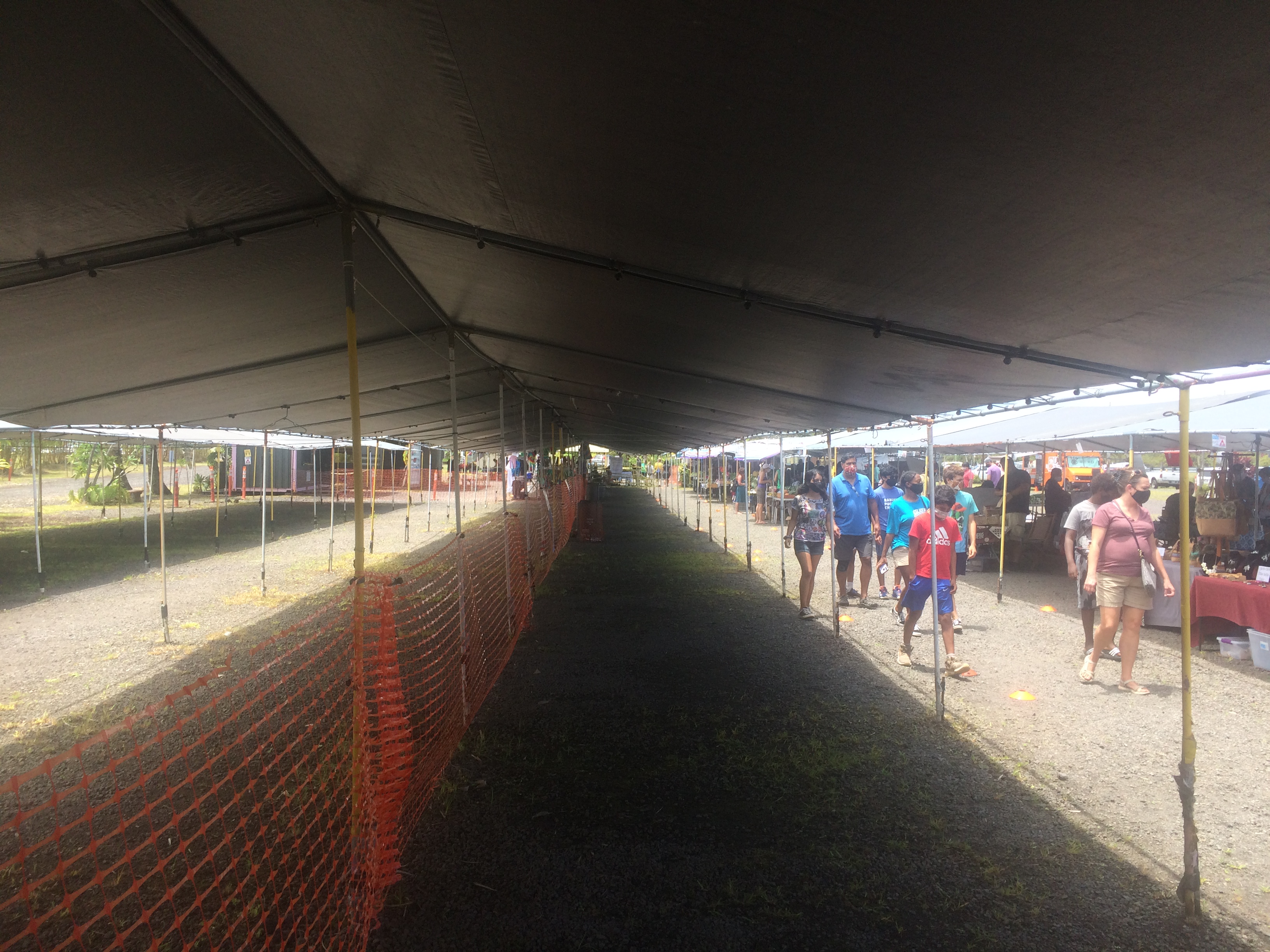
As if to reinforce such distinctions, on our walk up the coastline to the nearby Shipman Beach, and during our visit to the Maku’u Farmer’s Market (even the one night we indulged in a meal at a favorite local restaurant struggling to stay open in Pahoa) we witnessed first-hand a marked difference between the locals and most mainland malihini: these occasional (and blatantly obvious) visitors appeared to believe that being on ‘vacation’ allowed them a reprieve from their social responsibility, while the residents they encountered continued diligently with their strict observance of “best practices” all while appearing to maintain the spirit of Aloha! Again, I think it is the influence of Hawaiian (and perhaps broader Polynesian) tradition placing greater value on the ohana (especially regarding both the keiki and kapuna) which helps reinforce from an early age such social self-responsibly. Consequently, I couldn’t help but feel an occasional twinge of “guilt by association” -even though I am able to pass somewhat convincingly as ‘local.’
Having had weeks now to consider my most recent HI experience as a whole (I underwent a self assigned -albeit limited- 2 week quarantine again after landing in PDX), it seems we haolies could certainly learn from such outstanding examples of broader social responsibility. Many of us now seem to have grown quite selfish…narcissistic perhaps? Even within the supposed “political correctness” of the Pacific Northwest, one can still witness egregious disregard for “best practices” whenever people are granted the opportunity (as soon as restrictions were lifted, people flocked to local beaches: on my recent return from PDX I saw packed parking lots at every beach site I passed). In spite of the best attempts to inform even the most mule-headed among us, one might still encounter (a conservatively estimated) 10% of the population believing they have a constitutional right to endanger others with their preference for “worst practices.” Consequently, I would strongly argue that one’s assumed right regarding “personal liberty” does not usurp another’s: logistically how could it? Such is the contrary nature of many so-called unalienable rights, perhaps: where one’s might contradict another’s. Hence the needed additional conception of a broader, balancing, and binding social contract…wherein as member of a society (any society; whether it be familial, regional, national, even global), certain responsibilities are expected of you if one wishes to reap the benefits/protections granted by the social construct itself: you certainly have the option -the individual freedom even- to opt out of these requirements, but then I would expect it should then be apparent that one is also opting out of the benefits granted by participation…the very protections granted those behaving in a way that has been deemed “socially acceptable” by the greater whole?
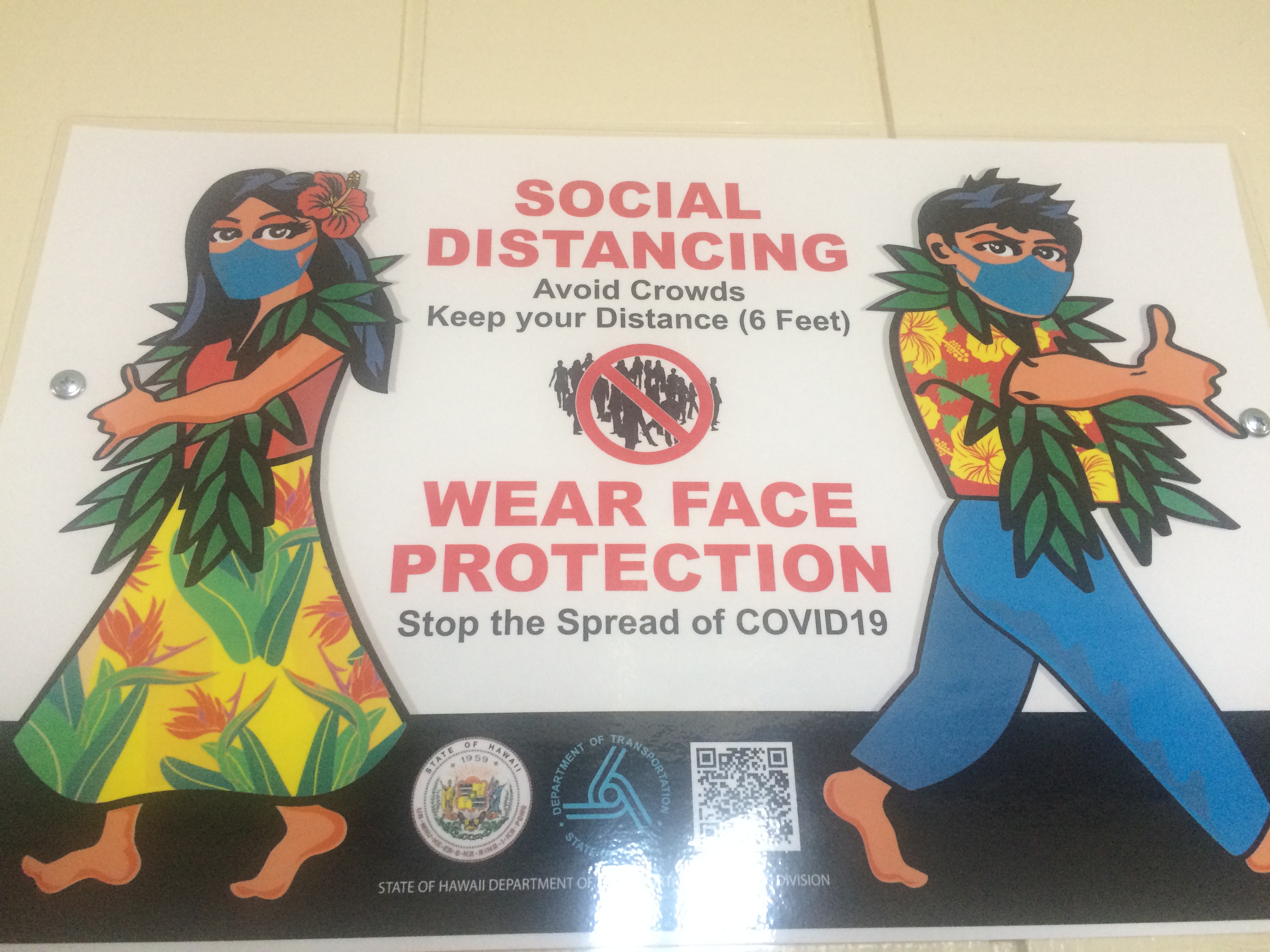
Regardless, it seems to me that these increasingly vocal cries for individual “LIBERTY” are merely juvenile attempts to be freed from consequence, and really have little to do with presumptions of liberty at all. Realize one is only rarely restricted from action, as one is generally ever free to spontaneously act: laws merely impose a consequence to actions deemed, as a whole, ‘unsocial.’ Want to exceed the speed limit? Drive into oncoming traffic? Rob a bank? Commit a murder? Nothing is stopping you from such impulsive action other than your own fear of the consequences (and one can only hope an ingrained sense of moral responsibility as well). One is ever at liberty to defy (or follow) the rules…there isn’t (currently?) a “thought police” who might stop you at inception, and human beings have certainly shown tremendous capacity to indulge our “free will” whenever it suited us throughout the course of known history! Regardless, I find these most recent speculations/protestations relating a much-needed large-scale pandemic response being akin to a “slippery slope toward a totalitarian state” as little more than self-indulgent tantrums (and for those who somehow missed the basic lesson: “I don’t want to” is hardly a compelling argument). We are all in this together (whether we want to be or not), and it’s about time we all start acting like it…
…perhaps a mandatory 2-week ‘time out’ is in order for those who choose to forget their social obligations?
About TOTA
TOTA.world provides cultural information and sharing across the world to help you explore your Family’s Cultural History and create deep connections with the lives and cultures of your ancestors.