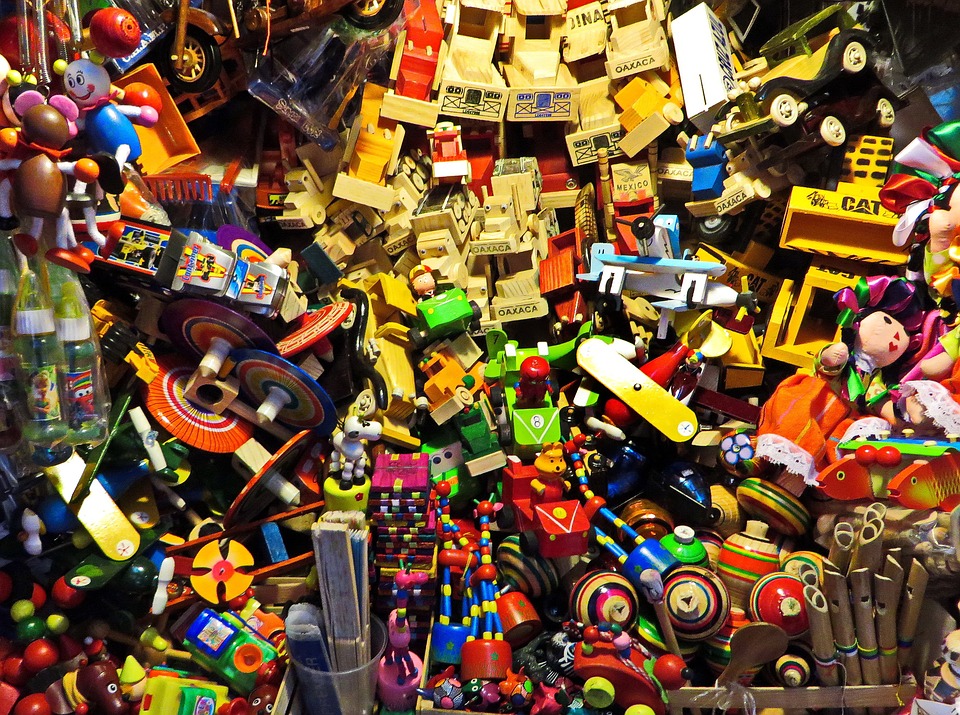

Childhood Amusements of Old Mexico
My favorite amusement when I was a little girl, and until I was in my teens, was to play with dolls, large and small, and even paper dolls. These I…

Note: This article has been excerpted from a larger work in the public domain and shared here due to its historical value. It may contain outdated ideas and language that do not reflect TOTA’s opinions and beliefs.
“Amusements During Childhood” from When I Was a Girl in Mexico by Mercedes Godoy, 1919.
My favorite amusement when I was a little girl, and until I was in my teens, was to play with dolls, large and small, and even paper dolls. These I would cut out from fashion books and magazines, and some I had were made in Mexico of stiff paper or cardboard.
My largest doll had lovely blond curly hair and porcelain hands, of which I was very proud. One day, however, while playing with it in our yard, one of my older brothers who was riding on his bicycle accidentally knocked both the doll and me down. This I remember grieved me very much, as the doll’s head was broken in many pieces, and, as most children do, I cried so much that my mother had to buy another new head, which to me never seemed as pretty as the old one.
My doll-house had a great assortment of furniture, some made by the Indians in Mexico. They make furniture in all sizes, also large and tiny dishes out of earthenware, and the prisoners make quaint toy furniture of quills and wood and put it together with pins. They also carve figures in cocoanuts, and from cherry and apricot stones they make tiny baskets and monkeys; all this is done with any ordinary penknife.
Other amusements of Mexican children which my brothers and I enjoyed were the same that are found here in the United States. We had hide-and-go-seek, blind man's buff, called “gallina ciega" (blind chicken), and kite-flying in the yard at home. This was for boys, still sometimes girls flew kites, too. I used to enjoy helping my brothers make them, that is pasting the tissue-paper on the frame or tying rags together to make the long tail.
I also loved to read, though at that time having but a small number of attractive books in comparison with the great variety to be found in the United States. Of course the "Arabian Nights," "Robinson Crusoe," whose companion Friday is called in the Spanish version ''Domingo" (Sunday), and other books, too, as the usual fairy tales, and stories of "Blue Beard," "Cinderella," etc., were popular among us Mexican children.
During rainy days I would read these books or play dominoes or checkers with my brothers, and on bright sunny days we went with our "nanas" to the parks or squares to hear the band play and I would roll a hoop, or jump rope, or amuse myself in some other active way. Very few baby-carriages were seen at these parks or on the streets, as the nurses always carried the babies in their arms. Servants were to be had at very low wages, so a father or mother was seldom seen carrying a baby. This was true even among people in moderate circumstances or of the middle classes, because they always had a nurse to attend to the children.
Another game that is so popular in the United States among schoolgirls, "Jackstones," is also played by Mexican children, both boys and girls, but there they use apricot stones instead.
A typical toy of Mexico is the "titere," which is like a marionette. This is a figure made of clay, its joints of rags, and dressed up to represent a man, woman, child, soldier, policeman, in fact all kinds of people. They are generally from six to ten inches high, although some that are used in the real "titere" theatres are quite large. These "titeres" have threads attached to their hands, feet, and body, and by pulling these threads one can manipulate them, so as to make them walk, dance, and jump about.
My brothers had a toy theatre with scenery, and our servant boy or " mozo " amused us by making the "titeres" act, representing comical and dramatic acts and also musical ones. He would manipulate the strings from above and at the same time talk or sing, and the "titeres" appeared to us children as real actors and dancers. This would of course amuse us very much and keep us quiet for hours in our playroom.
Among other toys for girls, made by the Indians, are large and small stoves and dishes of earthenware, to imitate the ones used in Mexico. They also make very large and small dolls, all of rags, the features embroidered to show the eyes, mouth, nose, and ears. These dolls they usually dress up in Indian costumes of bright colors, and their hair, made out of black wool, they braid and leave hanging down their backs, as most Indian girls wear it. Children like these dolls, because they never break and can be thrown or dropped and nothing happens to them. They are indeed a practical doll, and some are very pretty and very well made.
At Cuernavaca, a pretty town not far from the city of Mexico, they make the smallest rag-dolls in the world. Some are only one-fourth of an inch in height, and the wonder is that being so tiny, every feature and all the different parts of the body are perfect and in proportion. They dress them up, and some costumes are very elaborate. A well-known woman who makes those dolls in Cuernavaca was getting blind from the strain on her eyesight, from making such very small dolls.
Another tiny toy or article made by Mexican Indians is a dressed-up flea. It does not seem possible, but it certainly is the truth, as we have several that we bought in Mexico. They have to be seen through a magnifying-glass to appreciate the work and patience it must take to prepare them. The dead fleas stand in tiny paper boxes, and are each dressed in various colors and styles.
Even when I was a little girl I was fond of going to the theatre, but the circus did not attract my attention as it did that of other children. I remember that I liked to go to the "Zarzuelas" or Spanish musical comedies, some of them being one-act plays, given at "tandas," which are performances that last about one hour, so that three or four can be given in one afternoon or evening. The Spanish music, which is very tuneful and catchy and is different from any other, has become very popular in Mexico. I must add that in my country there are very good musical composers, whom I have already referred to.
The children there like to sing the popular tunes or songs, some of which like ''Los Enanos" (The Dwarfs), "El Butaquito" (The Little Stool) and others are by unknown authors, but very popular with all classes.
Godoy, Mercedes. When I Was a Girl in Mexico. Lothrop, Lee & Shepard Co., 1919.
About TOTA
TOTA.world provides cultural information and sharing across the world to help you explore your Family’s Cultural History and create deep connections with the lives and cultures of your ancestors.