
Stars and Stripes. I Take an Important Step
Beata Nyholm, my chum Blenda’s older sister, had returned from America the summer I was confirmed. Beata was married to an American business man and was back in Sweden only…

Note: This article has been excerpted from a larger work in the public domain and shared here due to its historical value. It may contain outdated ideas and language that do not reflect TOTA’s opinions and beliefs.
“Stars and Stripes. I Take an Important Step” from When I Was A Girl in Sweden by Anna-Mia Hertzman, 1926.
Beata Nyholm, my chum Blenda’s older sister, had returned from America the summer I was confirmed. Beata was married to an American business man and was back in Sweden only for the summer to visit her parents.
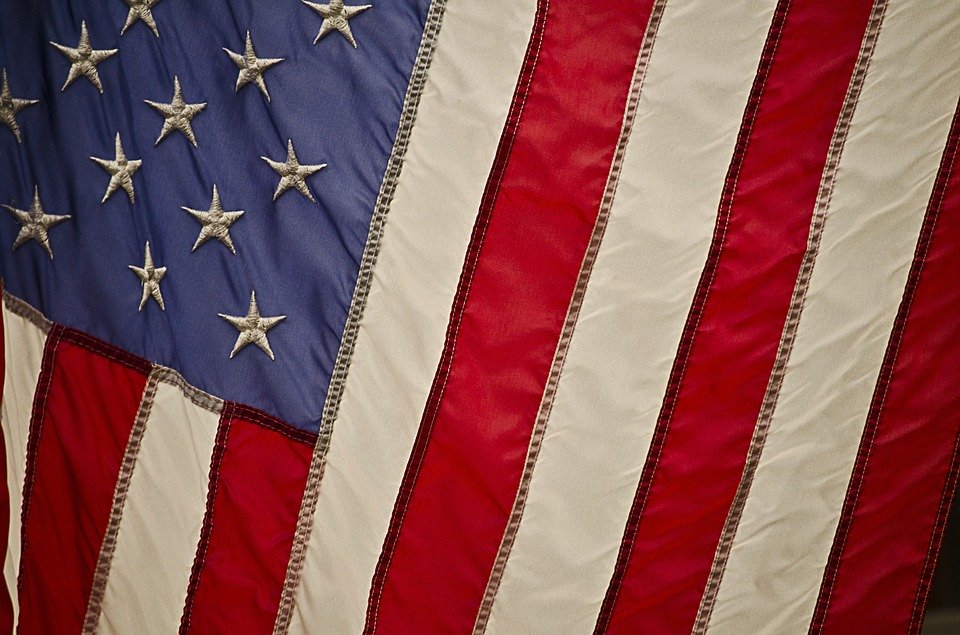
A few days after her arrival, Blenda took me into her sister’s room to show me some English books the two American visitors had brought with them. Strangely enough, I paid scant attention to the books. Instead, a great flag made of bunting and showing red and white stripes and a marvelous blue field with a number of white stars drew my eyes. It was draped beside our own blue-and-yellow flag between the windows and above the sofa-bed.
“Oh, how beautiful!” I cried. “Blenda, what flag is that? ” My hands were clasped, and my eyes were blurred with tears—tears of a queer new emotion. That star-field, those bold red stripes between the white ones, the whole flag—how it stirred me! A strange new unrest suddenly woke in my breast.
Blenda smiled at my entrancement. Then she said:
“Anna-Mia, you are a funny girl. To cry over a flag! To me, our Swedish flag is the more beautiful.”
“But what flag is it?” I persisted.
“The flag of the United States of America,” my friend finally told me. “Beata feels a little bit like you about it, I am sure; else she wouldn’t have bothered lugging it home to show us.”
Somehow, I felt hurt at Blenda’s words. But I made up my mind to have Fru Beata tell me more about that wonderful flag; they were all coming to our house for dinner the following day.
Of course, I had read translated stories of life in America. I was familiar with James Fenimore Cooper and his delightful Indian romances. My cousin Herrman had introduced me to those books. Then, too, we had all wept over Uncle Tom and Little Eva and laughed at Topsy and Aunt Ophelia. To us, Lincoln was the bravest and most wonderful man in the world. Still, I had never, to my knowledge, seen an American flag until I came across this one in the Nyholmhome.
That evening I astonished my parents by asking them to let me go to America. I felt confident that I could do as well as Fru Beata. She had been only seventeen when she left Sweden in search of larger opportunities, and had become a trained nurse, later marrying a well-to-do American.
Father and Mother insisted that I was too young. True, I was only a few months past fourteen, but I felt altogether grown up. I was taller than Mother, and could easily pass for eighteen or twenty.
Father was very patriotic, and expressed his contempt for the ambitious young men of military age who had to petition the King so as to be permitted to migrate to America and escape compulsory military training. One of Father’s best tannery workers had left his employment and gone to New York a few weeks earlier; so he naturally felt very bitter towards any one wishing to leave Sweden.
Mother, however, felt differently about my desire to leave home, but she advised me to be patient for a few months. Intuitively she knew that a way would open whereby my longing to go away would be satisfied. I told her how I had felt when I saw the American flag, and she smiled sympathetically. The Santesons, my mother’s people, had in the grey past been Vikings, so perhaps I carried in my blood the love for freedom and adventure.
But my education was not finished.
Only two years had I attended the Hydbom school, with but one term of English. Strangely enough, I had chosen English in preference to the more fashionable French, or the popular German—the three languages besides a smattering of Latin which were studied in our little school.
Fru Beata—Mrs. White—helped me with my English that summer—conversational English. Impatiently I wanted to learn to talk first; then later I could always learn to read and write. How I
struggled with the th, w, and j which are the chief stumbling-blocks to most Swedish people trying to master English. I would say: “Den Yenny came vid de vouter,” instead of “Then Jenny came with the water.”
One of Father’s objections to my going to America was that he could not spare the passage money just then. His tannery business did not prosper as in former years; his partner was ailing and wanted to sell out his interest in the tannery. Mother explained those things to me in one of our confidential talks. We had to be more economical. Then Lotta was married, and after she left us, we managed without a servant. Constance and I were trained to help with all the tasks
around the house. We had also learned to cook and bake and put up fruit and take care of our own clothes, and I showed a liking for dressmaking and millinery at an early age. Therefore Mother apprenticed me with the leading modiste in our city for one year, where I was to learn
designing, dressmaking, and millinery.
As I already knew considerable about plain sewing, and could make buttonholes and do fancy stitching by hand, as well as manage a sewing-machine, it did not take many weeks before Fru Karlstrom felt justified in paying me some wages. This money was religiously added to my savings in the Postal Savings Bank, and Mother was the only one who knew anything about my thrift. Öre by öre my little savings grew—a crown from Father now and then; the ten-crowns from Uncle Petter (for being butted by his prize ram), some money I had earned by making laces for Tante Herta, and by the sale of a dozen embroidered fancy guest towels besides a few other embroidered articles that had been disposed of for me through the kindly aid of Herr and Fru Erdman who conducted a fancy-goods shop and sold things on commission—all this wealth I accumulated with the utmost joy, in lieu of my objective.
Mother and I kept the secret that I was being paid while still an apprentice at Fru Karlstrom’s establishment. I did not return to the Hydbom school; instead, Constance was enrolled there. I was perfectly content for the present, since I was earning money. Each week’s wages brought
my departure for America a little closer. In my memory lived the inspiring talks I had heard from Beata White’s lips. She had frankly told my parents that it would be a shame to keep me in Sweden since my heart was set on making my own way in America. I wanted to study, learn to
paint, know all there was to know about art and color harmony; and also I wanted to write about all those things that set my spirit throbbing—of beauty, of heartaches and longing for I do not know what. Growing-pains perhaps they were, all those sensations that urged me to seek a broader, freer world in which to grow and work out my destiny.
Hulda, one of our former maids, had migrated to America four years ago; she was already married and had two babies. Hulda’s mother came now and then to the city to spend a day with Mother who was very fond of Mor Lena, and who took a keen interest in all the affairs of the
Johansons. All the letters from Hulda had to be read and commented on. The three older boys, too, had done well after they had been in America a few years, and now their old mother could live in comfort for the rest of her days since the boys sent her little sums of money ever so often.
It was after one of Mor Lena’s visits that I decided to write to Hulda and ask her if she would let me come to her house for a few days if I should come to America; I told her how I had fairly lost my heart to the American flag. When I showed Mother this letter, she smiled at some of the things I had written, but I was allowed to send it.
In due time Hulda’s reply came. I would be welcome to the Ericsons and I could remain as long as I wanted. Hulda was enthusiastic about my coming, and felt sure I would be able to do as well as any other strong and healthy young girl willing to work. Mother was very happy about this letter, and we talked things over at great length after which she began to get my under-garments and other things ready for my departure.
At last my year at Fru Karlstrom’s was over. It had been a profitable one; I felt I could earn my living with my hands, and, best of all, make my own dresses, wraps, and hats. Then I went to have an interview with Father, to ask his permission to migrate. I confess that my knees wanted to fold up like jack-knives; my heart thumped most painfully, my tongue felt dead, and my throat was dry. But somehow, I managed to put my plea before him.
“Anna-Mia, what nonsense is this?” Father frowned, and his voice sounded very harsh. “At present I couldn’t even afford to send you up to Stockholm to visit your cousin.” Suddenly he smiled in a sad manner, and now his voice was softer. “Viking blood, of course. If only you had been a boy! Then we could have put you in the Navy and you would have had a chance to see the world.” It had always been Father’s secret grief that all his living children were girls.
Father’s softer mood gave me courage to go on. “ Suppose, Lilla Far, that I did not ask you for any money to take me to America; would you let me go then? Fru Akeson and her two children are leaving for Minnesota in September. I could go with them.”
“But she would not pay your fare, nor look after you in America, would she?” His voice now sounded merely tired.
“I never asked her to pay my fare, nor look after me after we get there.” I had a close grip on my Postal Bank book as I continued: “Father, please tell me, would you let me go if I did not ask you for a single ore?”
“Perhaps.” Now he laughed. “I suppose you would pester me until I said you could go.” He looked at me keenly with a little twinkle of fun in his eyes. “Intend to walk across the ocean?”
“No, of course not.” With a sweeping curtsy, I held out my bank-book to him. “Look, Father! All mine! Over two hundred crowns! ” How I trembled inwardly, fearing he would say I couldn’t go, after all.
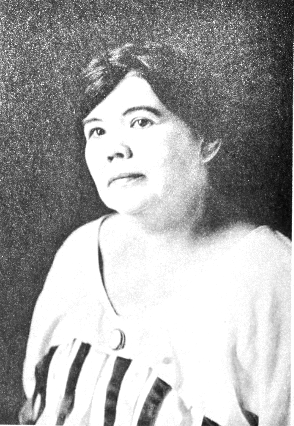
For some minutes he studied those evidences of my thrift—each date of entry and the amount. He looked puzzled. I had been known in my family during this last year as the “miser.” Constance often taunted me in front of Father with my failure to buy little gifts for her and my
small sisters when their birthdays came. Instead, I had made such gifts in my spare time. Now I told my father that Fru Karlstrom had paid me while I was an apprentice, and that Mother had put my earnings into the Postal Bank.
Still, here he stood, gazing out of the store window for many long silent minutes, while I felt like one awaiting a death-sentence. His brows were drawn together; he was deliberating with himself. It did not enter my mind that in less than six years I would be twenty-one—of age; then I could do as I pleased, leave my home without his permission; but absolute obedience had been the keynote of my upbringing.
Finally Father said, “Anna-Mia, you know how I feel about America, but since you already suffer from the emigration fever, go, in God’s name.”
“Thank you, Father.” I kissed his hand as he held out the bank-book to me. My heart was filled with a bursting joy. “Herr Cedergren will make out all the papers. Pastor Dahlberg will need your
written consent before he gives me my prest-betyg; so please, Father, write that out for me.”
A few minutes later I was on my way to the pastor’s house with the precious slip of paper signifying Father’s willingness to let me migrate to America.
Two weeks later, I stood on the deck of Romeo, the steamer that was to carry us to England whence we were to embark on the ocean liner. Not one sad thought had marred my happiness about going away. Mother and I talked about the future, when I would return for a visit—after I had made my fortune, or gained a name for myself. Constance was openly pleased, for now she would be the eldest daughter at home. My two little sisters were content; had they not inherited my picture-books and my many sketches?
I think I was the happiest person who had ever seen the grey rocks of the Bohuslan skerries recede from sight. America, Freedom, and Adventure called me.
Hertzman, Anna-Mia. When I Was a Girl in Sweden. Lothrop, Lee & Shepard Co., 1926.
About TOTA
TOTA.world provides cultural information and sharing across the world to help you explore your Family’s Cultural History and create deep connections with the lives and cultures of your ancestors.