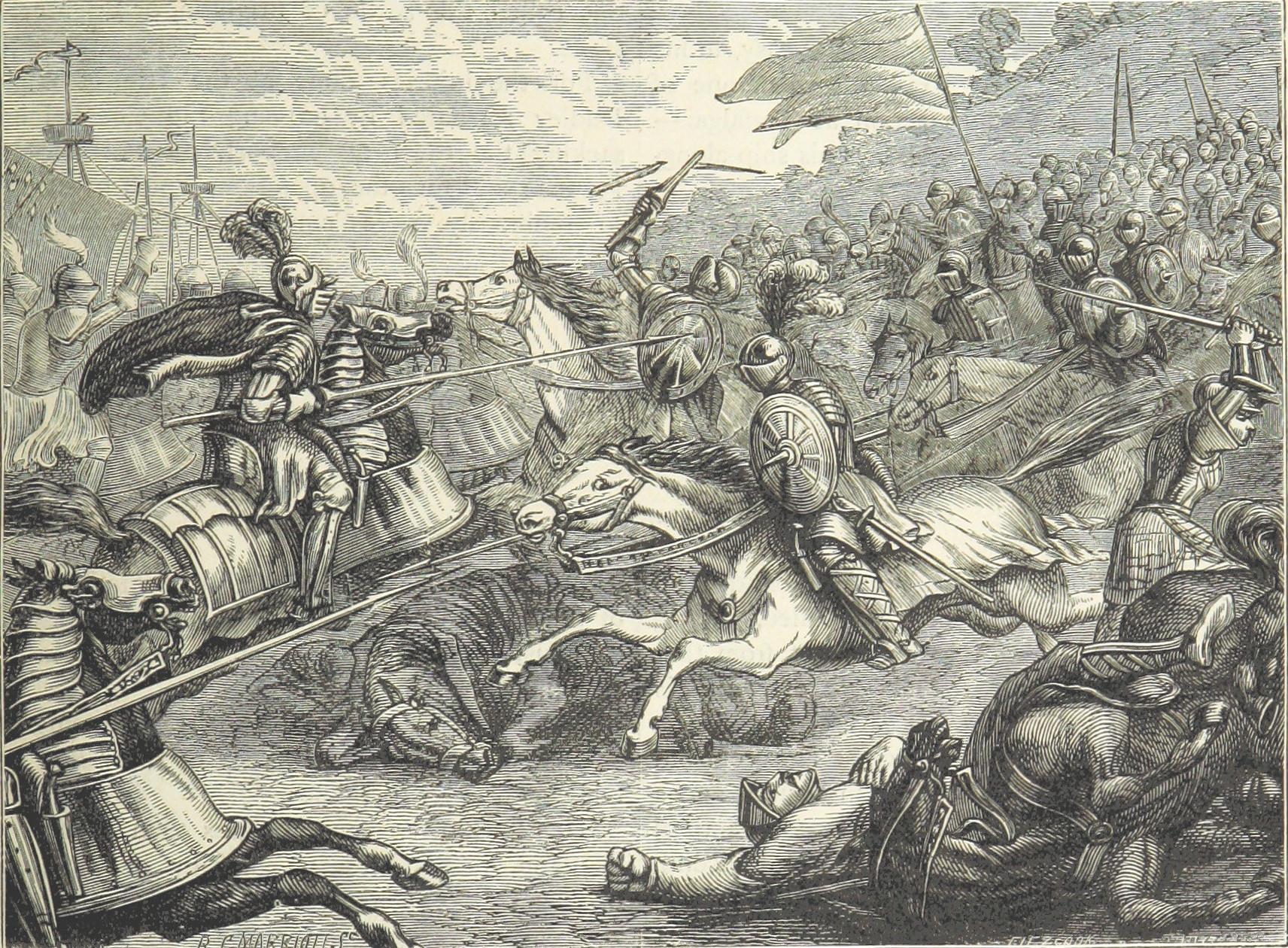

The Low Estate of Scotland, 1548-1549
French historian Jean De Beaugue describes the aftermath of a costly defeat in Scotland, as well as some of its prominent cities and islands.

Note: This article has been excerpted from a larger work in the public domain and shared here due to its historical value. It may contain outdated ideas and language that do not reflect TOTA’s opinions and beliefs.
Jean De Beaugue
From Early Travellers in Scotland by Peter Hume Brown, 1891.
After the battle of Pinkie, 10th September 1547, most of the strongholds in the Lowlands of Scotland remained in the hands of the English; and the invasion of Lord Grey in the following year seemed likely to complete the conquest. As it was always the interest of France to save Scotland from the English, an armed force was despatched to the help of the Scots by the French king (Henry II.) in 1548, under the command of Andre de Montalernbert, Sieur d'Esse. In this expedition d'Esse was accompanied by his personal friend Jean de Beaugue, who afterwards published an account of the war under the title, Histoire de la Guerre d'Ecosse pendant les campagnes 1548 et 1549. Besides its special interest as a painful chapter of Scottish history, Beaugue's book has considerable value as a picture of the methods of warfare followed by the three different nations. In the course of his narrative, also, he occasionally digresses to describe the places in which he was interested as a member of the expedition. Unfortunately, it is but seldom he makes such digressions, and when he does make them, he forgets his usual garrulity, and thus defrauds us of what would have been by far the most interesting portions of his history.
Beaugue's book was printed at Paris in 1556; and in 1707 an English translation was published by Dr Abercromby, author of the Martial Achievements of the Scots Nation. Abercromby, however, takes such liberties with his original that Beaugue's history becomes half his own. In the translation given here the original has been as closely followed as clearness would permit. The edition from which the translation is made is that published by the Maitland Club in 1830. Of Beaugue himself it should be said that nothing is known except what we learn from his own book.
The Scottish Mode of Warfare (Histoire de la Guerre d’ Ecosse, par Jean de Beaugue)
The Scots never take the field unless great and extreme necessity drive them to arms. And, as far as I could see, this is because when at war they are wont to live at their own expense, and cannot protract the war as is the habit with almost all the other nations of Europe. They bring with them as much as they will need for the time they wish to remain in camp or be on the march, which is only a few days. And during this time they seek to meet the enemy face to face, fighting with invincible obstinacy, especially the English, by reason of the natural hatred which comes of neighbourhood, arising in my judgment from their ambition to be masters and their jealousy of the greatness of the English. As soon as they have consumed their provisions, they break up the camp, or gradually withdraw, even though their designs are unaccomplished.
The Low Estate of the Scots
But before I proceed further in my account of the war, it is necessary that I should state to what extremity the Scots were reduced, when their enemies, after having burned their towns, plundered all the low country, and possessed themselves of the best places along the whole frontier, held them so closely besieged that they dared not venture abroad except in very large companies: of which companies the English made so light (for that false heresy of theirs makes a people believe that there is no nation equal to themselves) that about 500 horse, which might be the number of English then in Scotland, had even the audacity to gallop day and night to the gates of Edinburgh, thundering along all that tract of country, and holding in subjection all the adjacent district.
This does not imply that the Scots are less warlike than the English, or any whit inferior to them; but by reason of those leagues and bonds (partialitez) which exist among them, and their mutual distrust, they allowed the English not only to gain authority over them, but suffered themselves to be afflicted with a thousand kinds of tyrannies and oppressions. For, in my judgment, they were abandoned by God, who sometimes creates as ministers of his justice tyrants, barbarians, and the Turks themselves; as he permitted Cam Zoroast to afflict the Italians, Nemroth the Babylonians, Sardauapalus the Persians and Arabs, Pharaoh the posterity of Abraham, Attila the French, and in recent memory, Mahumet Otthoman the Greeks and Eastern Christians.
And not without reason I say was God irritated against the Scots, for if they had known how to appease his anger, very difficult would it have been for the English to reduce them to the point at which I saw them. We must believe, therefore, that the just judgment of God permits that a people should suffer these misfortunes to afford them an exercise of faith and to make them recognise their faults; since when it comes to the last extremity, He declares His will to favour and sustain His own. So has it happened to the Scots: for from the day when the army of France set foot in Scotland, the good fortune of the English, which had long been their companion, began to leave them more and more. Then all at once she declared herself their enemy and turned her back upon them, as I shall show in going through the details of my history.
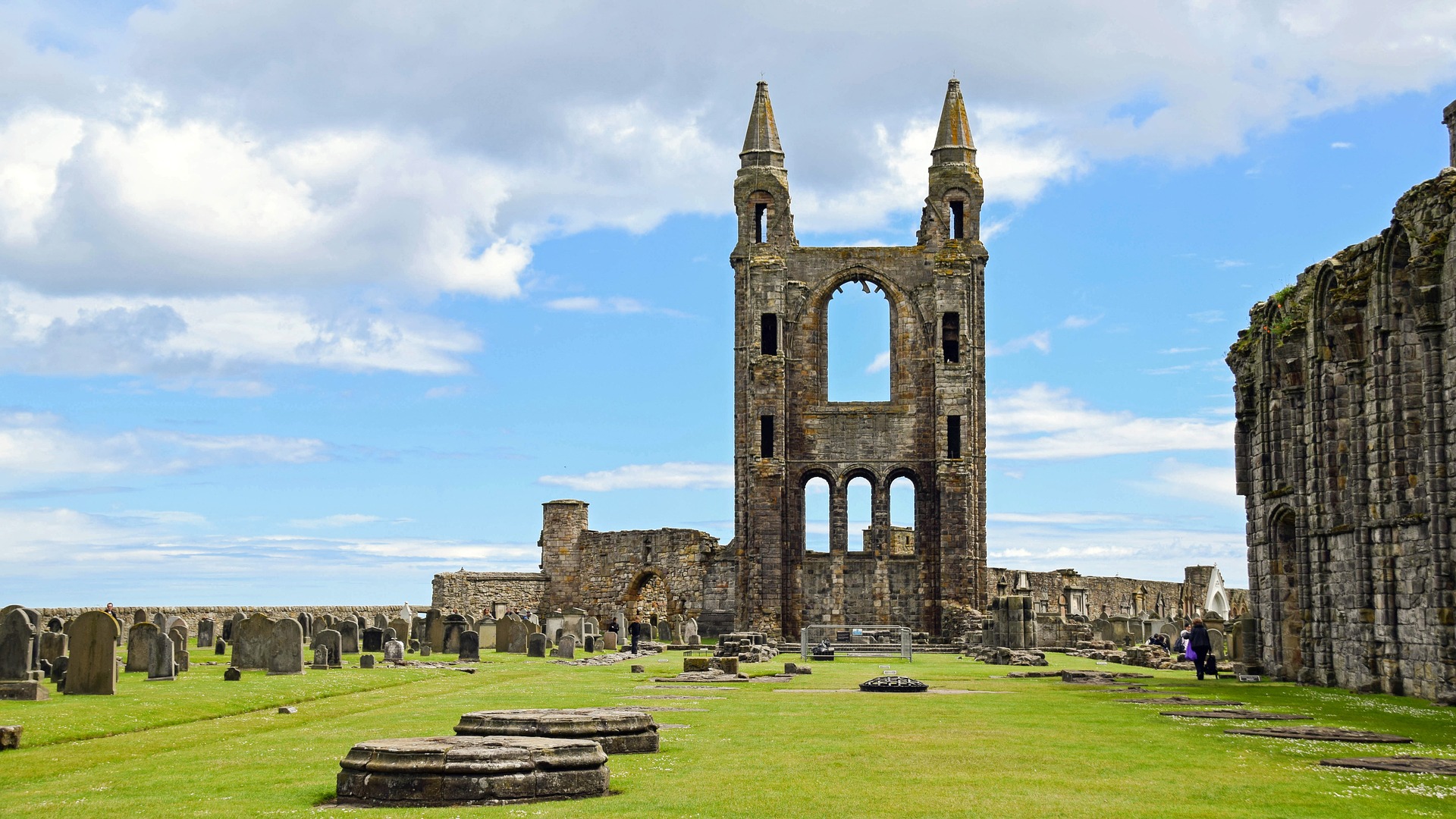
ST ANDREWS. St Andrews is situated on the seashore, and used to be one of the best towns in Scotland. It has the disadvantage of two drawbacks, however; neither its harbour nor its roads are safe, and it cannot be fortified because it is nearly as large as Thurin. Moreover, there is no commodious place for a citadel, which would not risk much damage to the abbey, the seat of the archbishop of all the province of Fife, and a very large and beautiful structure. So true is this, that the castle, which formerly stood there, and was in great part destroyed by the late Prior of Capua, was commanded not only by the said abbey, but even by the whole town.
PERTH. As to St Johnston, it is a very pretty place, pleasant and well fitted to be the site of a good town, which might be rendered secure for its inhabitants by building a citadel where is now the church of the Holy Cross.
ABERDEEN. Aberdeen is a rich and handsome town, inhabited by an excellent people, and is situated on the seashore. It has not a good roadstead, but its harbour is very safe and easy for ships to make were it not for the entrance, which is narrow. It is easy to fortify since it is shut in on two sides by the rivers Don and Dee, both of which are difficult to ford. On the other side it has an open and extensive plain, in which bulwarks and defences could be raised to prevent injury from any battery that might be built on a hill which rises on the side of the bridge. At very little expense a citadel could be raised which might command both the harbour and the whole town. Aberdeen has an episcopal see and a university sufficiently well ordered and equipped.
MONTROSE. As to Monrosts, it is a beautiful town situated in the County of Marne, where the river Hacs enters the sea. Its roadstead is not safe; but it has a very good harbour, easy of entrance and exit in all states of the tide. The town could be very easily fortified; but to avoid greater expense, a fort could be conveniently built which would command all ships that might enter or leave the river. For, as regards the fort which at present exists, it has not the commodity of water, and is so small that it has no space for the stowage of provisions, or for lodging men-at-arms. And besides the disadvantage of being built on moving sand and being constructed of dry turf, it is flanked on none of its sides, nor indeed can be from the nature of its situation.
DUNDEE. Dundee is one of the finest towns in Scotland, is situated on the river Tay, and capable of being easily fortified.
DUNBAR. Dombarre is situated on the seashore ten leagues distant from Edinburgh on the side of Lothian (du coste de Lodient), and in such an excellent tract of country, and accommodated with so many of the good things which profit the life of man, that if the town were enclosed with walls (since a harbour could easily be made and at little cost) we might reckon it among the most beautiful towns in the isles of the ocean. And as for its castle, it is a very handsome and strong place built on a lofty rock on the edge of the sea, very difficult of approach, and on which so much art has been displayed, that few places are to be found anywhere at the present time, which are by nature more commodious, less exposed to battery, and all other methods of storming, than this castle, which, besides, is sufficiently near Ladres, Douglas, Edimton, Esmons, Fauxcastel, and on the road of Berraic, and Roussebroa, in Scotland.
THE BASS ROCK. The place where they made their first attempt was the Isle des Magots, so called on account of the large white birds like swans that make their nests there. The Scots receive it as a fact that the hundred or hundred and twenty soldiers who form the ordinary garrison of the Castle of Bass, which is built on the island, live for the most part on nothing else than the fish daily carried thither by these birds; and burn no other wood than what these wild geese bring in spring to build their nests with, this being sufficient to last them for a whole year.
The position of the castle is as follows: The island on which the castle is situated is an impregnable rock, of small extent, fashioned by nature of an oval shape, with but one approach, and that on the side of the castle, so very difficult that it can only be gained by very little boats, each following the other, the island being surrounded by rocks covered by the sea, which none except those acquainted with the place can avoid.
The island is so little inviting and so uneven that till you come to the castle wall itself you cannot plant the foot on level ground; and this is so much the case that (as I have often myself seen) when the captain's servants wished to enter, it was necessary to throw down a thick rope to help them in the ascent, and when they have reached the foot of the wall with the utmost difficulty, a basket is let down in which they are drawn up, and this is the only means of entering that castle. There used to be a postern, but it is now banked up and built in in an incredible manner, and the rest of the castle is so constructed that it seems to rise sheer from the sea ("qu'il semble etre dresse a plomb").
THE ISLE OF MAY. The Isle de May is of much greater extent than the Isle Dieu, possessing beautiful fountains, quarries of coal and stone, and very good pasture. And since it is pertinent to my purpose, I think I ought not to omit to say that this island has ever been the retreat of all pirates, who have sought to injure the fisheries, trade, and armies of the Scots and their friends; and that a secure retreat for the whole country could be prepared here, as a harbour could be constructed at very little expense, which would easily contain thirty or forty ships. For the rest, possessing as it does all the advantages of which I have spoken, and being suitable besides for gardens and fields, it could be fortified and inhabited. By so doing, the Scots and the strangers who trade with them could sail wherever and whenever they wished, without being forced to wait for winds necessary before they can sail from Petit lict, Brutilan, or the river Fort, which would be a convenience so profitable that all Scotland would be the better for it.
INCHKEITH. Isle Dieu was so named by the Queen Dowager on the day it was recovered from the English: for the French formerly called it Isle aux Chevaux; for it had never been inhabited, as being a place of no account. Nevertheless, it has great natural advantages, and is of sufficient size to be occupied and fortified, seeing it is well provided with fresh water, and with ground suitable for gardens and pasturage, and with spots for salt-pans and harbours. And from its convenient quarries of coal and stones, which are found in abundance there, lime could be made and large buildings erected at little expense, at once as fortifications and dwelling-houses. It is situated in the middle of the river Fort (sic), which is five leagues wide, and so advantageously, that it opens or closes the entrance to those who wish to sail from the best part of Scotland to France.
It is so difficult of access and so strong by nature, that there are only three places suitable for a descent namely, where the sea, which enters the river Fort, is only a foot or a foot and a half deep. And even these approaches are so difficult by reason of the rocks, which the sea never covers, that no vessel whatever can reach the shore; but one is forced to descend on the rocks, and by leaping from one to the other so gain the shore; unless, indeed, you prefer to throw yourself into the water, in which case there is the risk of falling into deep and narrow pools (which are found among these rocks two or three fathoms' distance from the island), if the foot should fail to choose these usually covered by the sea.
On all other sides, the rock is precipitous except on the west, where the rock is cut by nature into steps of more than twenty fathoms high, by all of which, descent is impossible. Thus, the island is very strong and well-situated. For, besides those difficulties which it offers to an enemy, the roads, which lead to the shore of the island, are so narrow, tortuous, and painful, that only with great difficulty could three men go abreast: all of which roads, moreover, are commanded from the summit, on which the English constructed a square fortalice, rendering it capable of defence, in less than fifteen days.
Brown, Peter Hume. Early Travellers in Scotland. David Douglas, 1891.
About TOTA
TOTA.world provides cultural information and sharing across the world to help you explore your Family’s Cultural History and create deep connections with the lives and cultures of your ancestors.