
The Blood of the Russians in Fight for Liberty
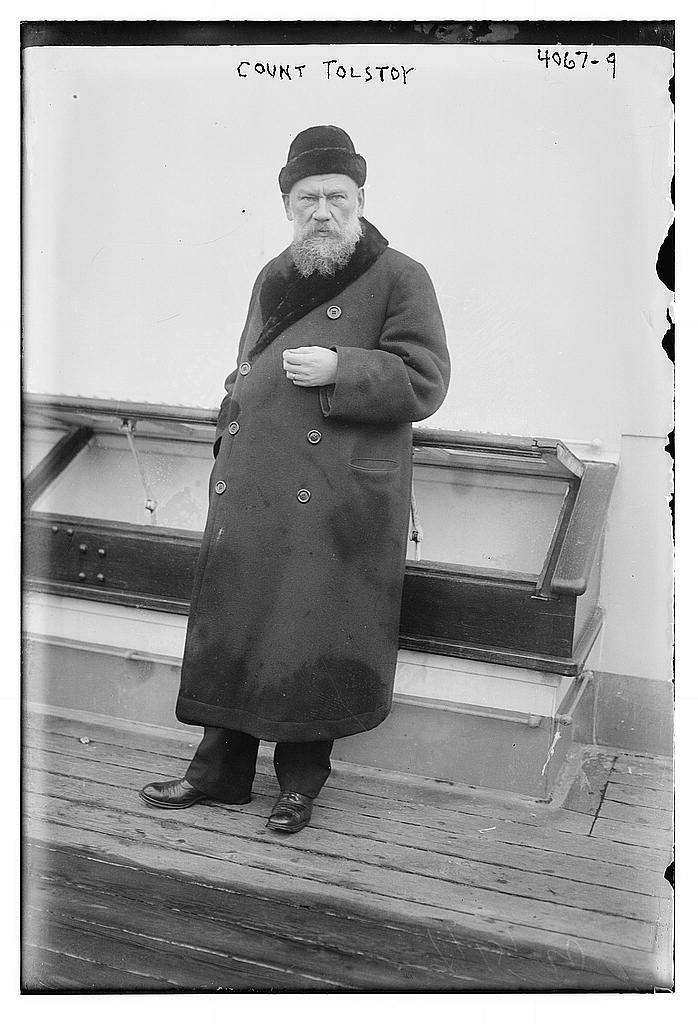
Count Tolstoy has been serving with the Red Cross branch of the Russian Army. During these tragic experiences, he kept a war diary on the battlefields. This is the first…
From: 1914 C.E. To: 1918 C.E.
Location: Russia

Note: This article has been excerpted from a larger work in the public domain and shared here due to its historical value. It may contain outdated ideas and language that do not reflect TOTA’s opinions and beliefs.
“The Blood of the Russians in Fight for Liberty,” by Count Ilya Tolstoy, from True Stories of the Great War, edited by Francis Trevelyan Miller, 1917.
"The Deserted Battlefields I Have Seen"
Told by Count Ilya Tolstoy, Son of the late Count Leo Tolstoy, Famous Russian Novelist
Count Tolstoy has been serving with the Red Cross branch of the Russian Army. During these tragic experiences, he kept a war diary on the battlefields. This is the first English translation of excerpts from this diary, translated from the Russian by Miss I. Rojanskq for Current History—Copyright 1916 by Otis F. Wood.
I—”I Can See the Scene Unfolding Before my Eyes"
The war relics of devastated structures leave a sad and painful impression. Of the many deserted battlefields which I have seen during the two years past, the nameless little graves faintly marked with little wooden crosses, of the deserted trenches, nothing gave me so much food for deep and sad reflection as the bare and lonely chimneys projecting from amid piles of rubbish, melancholy blackened pots, the scattered remnants of domesticity; a smashed pail, a broken wheel, a binding of a torn book, the splinters of what was once a crib.
To think that hereabout dwelt a family; that they were contented and possibly happy! Those walls, stripped and crumbled, what have they not seen!
It always seems to me that an event having occurred at a given place, the memory of the occurrence attaches permanently to it. Whenever I happened to find myself in a locality in which some memorable events had taken place I could not think of those events without at the same time visualizing the surroundings amid which they occurred; and the more recent the occurrence, the more vividly I can see the scene unfolding itself before my eyes.
The vast number of such impressions which the present war has produced make a film, vivid and endless.
II—”I Remember... A Horrible Tale"
I remember one such pile of ruins, which I saw not far from the road leading to Jaroslav. This ruin remained permanently fixed in my memory by reason of a horrible tale connected with it.
Some time ago there lived on a farm a well-to-do Galician gardener. When the war broke out he was drafted into the army. He went forth, leaving behind him a wife and three small children. Shortly following his departure, troops commenced appearing in the immediate neighborhood. At first came small detachments, but these were quickly followed by more formidable bodies. In a short time lines of trenches were dug on both sides of the farm and real warfare began.
The firing was continuous. The family sought safety in the corners of their hut. They hid in the cellar under the heaps of beets and potatoes, but the children soon became accustomed to the hissing of bullets and lost all fear of them.
The wounded soldiers, for the most part Austrians, began crawling toward the farm. There they bound up their wounds. The children looked on and sometimes gave aid, holding with their tiny fingers the blood-soaked cotton, or winding long and transparent bandages around the wounded limbs. They became accustomed to pain and to the groans of the dying, and in their naive and simple way rendered all the help of which they were capable.
At night, when darkness fell and when firing from both sides would cease, the Austrian relief workers would come, place the wounded on long and unsteady stretchers, and carry them to the rear. On one occasion the wounded sent the eldest girl to the pond to fetch some water. She stayed away for a long, long time. Later she was found lying on the grass with a bullet in her slender little shoulder. The pails lay near her empty.
During the night she, too, was placed on a stretcher and was carried away. With her went the mother and the rest of the children. From that night on the farm remained forsaken.
The wounded, however, continued crawling to the hut, their numbers increasing from day to day. At times the litter bearers could not manage to look into the farm, and the wounded lay for days at a stretch without aid.
Ill—"There Was No One to Bury the Bodies"
At the end of October a serious cholera epidemic broke out among the Austrian troops. From that time on there appeared among those creeping toward the lonely farm large numbers of emaciated and pale-blue forms—shadows of men. On reaching the farm they fell on to the straw, coiled and groaned in agony, and for the most part remained lying there, silenced by everlasting sleep.
There was no one to bury the bodies, and they gradually began decomposing. On top of those bodies fell more and more. It became impossible to live amid these hellish surroundings, and if by chance some unfortunate wounded happened to come along most of them would leave the little hut and limp ahead, preferring to dare the firing line rather than be stifled in this horrible atmosphere of death and stench.
The engagements, having lasted several weeks, became more and more stubborn. The trenches crept nearer and nearer, until they resembled two live, gigantic horns about to embrace each other. Presently one of the Austrian trenches came so near the farm that the house became an obstacle to firing, and an order was issued to apply the torch to the incumbrance.
It was a dangerous task; all knew through experience that the Russians keep a sharp lookout on all that transpires in the enemy line and do not allow to pass with impunity the most insignificant move on the part of the enemy. At night the men, while smoking, would lie low at the very base of the trench, as the mere striking of a match sufficed to draw fire from the opposite lines.
As a result of some faint noise or a slight movement, vigorous firing would not infrequently burst out all along the line, and instead of getting the much-needed rest, the soldiers would pass nights on their feet and remain fatigued from sleeplessness and nervous exertion.
A young Second Lieutenant, recently promoted, and clean-shaven, volunteered to apply the torch. Though an ambitious man, he was at the same time limited and cowardly. He always tried to conceal his cowardice under a mark of arrogance, pushing his way forward whenever there was an opportunity to get into the spotlight and have his name mentioned. To brace himself, the officer emptied a large glass of spirits, and, taking along one of the men, left a cozy, sheltered trench and began feeling his way across the fields.
IV—The Torch at the House of Death
The night was dark as a grave, and over the lowland of the garden hung a thick, milky fog. The feet sank deep into the sticky, soaking mud. The Lieutenant's assistant went slowly, bent to the ground and breathing heavily.
They continued on their way without seeing anything ahead. Though the distance between them and their object was only 200 yards, it seemed to them from time to time as if they had lost their bearings and were going in the wrong direction.
Soon they were aware of a heavy, suffocating smell; the next moment there loomed up before their eyes a sombre silhouette of a building. It stood there enveloped in fog.
Reaching a corner of the house, the Lieutenant stopped short, drew from his ulster a big field revolver and whispered to the man to come near.
It seemed that his main care was not to carry out the task he had undertaken, but to hide conveniently from the Russian fire, and then slip off to the rear as soon as the house caught fire. He figured that while the flames were spreading over the structure, and before they had reached the last wall, he could quietly and without the least danger remain under shelter. As soon as the fire enveloped the structure, and before the walls began crumbling, he would run back in time to avoid exposure by the conflagration.
With this in view, he gave orders to his subordinate to pile up straw on the side of the building directly facing the trenches. In the meantime the officer, having taken shelter behind the opposite wall, lit a cigar and remained waiting for developments.
A few moments of long and painful suspense followed the poor Lieutenant was in a state of frenzy. It was not the personal danger alone that now excited his imagination. He was tormented by the mystic fear of that which he was about to carry out. In the darkness he drew a sombre sketch of all that was hidden behind the wall, the inevitable which he was to face within a few moments.
How many of them are there? In what stage of decomposition? How do they lie?
The officer suddenly recalled a conversation in which some one had told him that when the flames touched the dead in the crematory they coiled and twisted as if alive. In his excited imagination he quickly pictured a wild dance of the dead which was about to begin.
"When they calm down," he thought, "after they are burned, as soon as roast meat is scented I will run, and then let the Russians shoot at them. All I have to do is to get away in time. If we were only done with this! Quick! Quick!"
At this moment he became aware of a pleasant smell of straw smoke, and immediately afterward the opposite corner of the structure burst into a bright flame. Almost simultaneously with the flash firing began from the Russian trenches, and it seemed to the officer that a few bullets hissed near him.
The soldier succeeded in pouring a great quantity of kerosene into the interior of the house. The fire spread with unusual swiftness. In two minutes the structure was all ablaze.
V—”There Were the Horrible Visions"
The officer stood at the open door, watching curiously the interior of the main room. Scattered all over the floor there lay contorted and twisted forms. They lay in irregular heaps. It was an appalling and gruesome sight. From somewhere protruded some one's long, bare legs; near the wall lingered a lonely arm, curled, swollen, and slightly lifted, it hung in a threatening posture; from under a tattered old military coat projected a thick brush of black-blue hair; and at some distance, leaning on the furnace, there half sat the mighty figure of a stately corpse. The majestic body was bent in gloom, two huge, rough, and calloused hands supporting a big head.
Suddenly it seemed to the Lieutenant as if he heard some one groan. The sound became more and more audible, coming nearer and nearer; one voice, a second, somebody called, a cry rang out, and suddenly pandemonium broke loose. Air-rending cries came from all sides, and men began to drop, one by one, falling about the officer and stretching at his feet. Some fell straight from the ceiling to the earthen floor, others came creeping down the ladder; they dropped into the flames, choking and writhing in deadly agony.
The officer, half dead from fright, drew his revolver and opened fire. He ceased firing when his supply of bullets gave out. His ammunition gone, the Lieutenant threw down the weapon and ran. No one will ever know the number of unfortunates he thus killed. All I know is that of all the men hiding in the garret of that farm only one was saved. It was he who told me this terrible tale. He did this while lying in one of our hospitals. According to his version, there were at the time in the building a great number of wounded soldiers, who had come there during the last engagement. When fire was set to the house, they endeavored to get down. All perished. Some were burned alive, while others were shot to death by their own officer. Among those who perished was also the soldier who had served as the Lieutenant's assistant.
These were the horrible visions. I saw them every time I chanced to pass the ruined and devastated spot.
The fate of the vain and unhappy officer does not in the least concern me. I am not even disposed to blame him for his weakness. For this we can only pity a man. One is bound to pity also those who met death at his hands.
But for some reason or other I cannot help remembering the wounded little girl. There she lay, dying from loss of blood; there at the turning of the footpath, near the two little birch trees.
Tolstoy, Ilya. “The Blood of the Russians in Fight for Liberty” in True Stories of the Great War: Tales of Adventure--Heroic Deeds--Exploits Told by the Soldiers, Officers, Nurses, Diplomats, Eye Witnesses. Edited by Francis Trevelyan Miller, vol. 1, Review of Reviews Co., 1918.
About TOTA
TOTA.world provides cultural information and sharing across the world to help you explore your Family’s Cultural History and create deep connections with the lives and cultures of your ancestors.