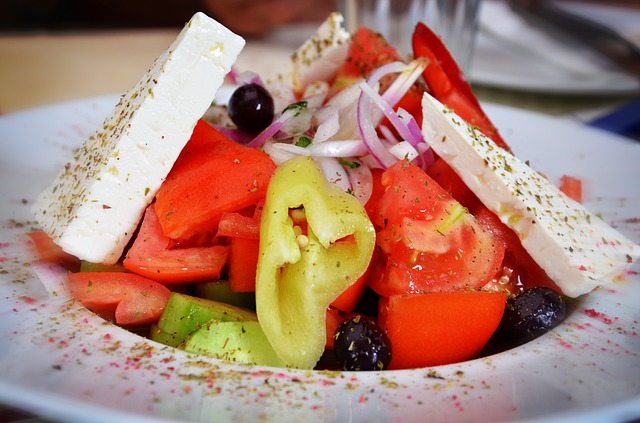

Greek Cuisine, 1911
The Greek cuisine is nearly identical with that of Turkey. The nomenclature is the same, with the addition of a Greek affix—pilaf becomes pilafi, dolma is dolmades.
From: 1911 C.E. To: 1911 C.E.
Location: Greece

Note: This article has been excerpted from a larger work in the public domain and shared here due to its historical value. It may contain outdated ideas and language that do not reflect TOTA’s opinions and beliefs.
From Greece and the Greeks by Z. Duckett Ferriman, 1911.
The Greek cuisine is nearly identical with that of Turkey. The nomenclature is the same, with the addition of a Greek affix—pilaf becomes pilafi, dolma is dolmades.
There are a few distinctively Greek dishes. Perhaps avgo-lemoni may be considered as one— eggs beaten up with lemon juice. It makes an excellent and refreshing soup with rice, and it is used as a sauce with dolmades, minced meat and rice rolled up in young vine leaves, and with sundry other dishes.
Fish plaké may be another. The fish are baked in a large shallow dish together with herbs, tomatoes, and garlic, and sundry other ingredients. The result is a savoury but rather heavy compound.
Practically the only fresh meat is lamb. Beef of inferior quality is to be obtained at Athens and in the larger towns, and pork in winter, when it is largely made into sausages, called lakonika. The flocks appear to be composed entirely of lambs, for one never hears of mutton. It is baked, boiled, stewed, and roasted on the spit, and as a rule it is skinny and flaccid, bearing only a remote resemblance to the viand known to us under that name. But it is usually eaten with vegetables in the form of a ragout.
No matter what vegetable is used, they all taste alike. This is owing to the salsa, a sauce composed of oil and tomatoes. It has an indescribable flavour, not in the least like that of tomatoes, for the fresh fruit is not used, but a preserve made of pounded tomatoes and looking like anchovy paste. This compound and oil are the besetting sins of the Greek cook. He drenches everything in oil, and in this he differs from the Turk. Moreover, he cannot cook rice. The Turk cooks rice as it is cooked in India, every grain is separate, and the result is a light and wholesome dish. The Greek pilaf is a heavy, pasty mess.
Charcoal is the fuel used for cooking purposes, and it is the best adapted to the grill. Get a Greek to grill some lamb cutlets—about half a dozen equal the bulk of a mutton chop—and he will turn out something palatable, as there is no possibility of using oil or salsa. And he will strew the cutlets with dried and pounded savoury herbs—a practice which might be imitated at home, as a variation from the inevitable tomato sauce.
It is wise in Greece to study simplicity in the matter of food. Olives are nutritious; curdled milk—yaoort—is delicious and wholesome. A good point in the Greek dietary is the cooked salad of wild herbs—radikia—an excellent tonic, but be careful to have control of the oil-flask or you will find your salad swimming in a lake of oil.
Then there is fruit in its season—always excessively dear, by the way, in Athens. The flavour of a new potato or of green peas or artichokes you will never know, unless you cook them yourself. The sugar-pea, called by the French mange-tout, for the pod is eaten as well as the seed, is grown extensively for the Athenian market—it ought to be better known in England. I remember seeing it once in a Wiltshire garden. Thinking to renew acquaintance with it in an Athens restaurant, I was served with an amorphous mass which tasted, alas, of naught but rather rancid oil—and salsa.
Sweets in Greece are purely Turkish and are called by their Turkish names, cadaïf, baklava, etc.
Like the Turks, the Greeks eat young cucumbers in large quantities, not in salad, but with the addition only of a little salt. They are grateful and refreshing in the warm weather of early summer. On the other hand, they prize things which the Turks will not touch—snails, for example, and the octopus, and the cuttle-fish, which is very popular, but not tempting in appearance. When cooked it looks like a dish of ink.
The long fasts enjoined by the Orthodox Church lead to a very large consumption of salt fish and caviar—not the Astrakhan caviar, which is as costly as in England—but red caviar, which is imported in tubs. This is pounded with garlic and lemon juice into what is called tarama salata and is eaten with oil. It is a distinctively Greek dish.
The Greeks, like the Turks, have the commendable habit of plucking vegetable marrows when they are quite young. They are eaten as a ragout, or stuffed with rice, or fried in slices.
The bamia—hibiscus esculentus—is an excellent vegetable of high dietetic value. Lemon juice is squeezed into almost every dish and it certainly acts as a corrective to the salsa.
Frugality is the keynote of the Greek household. As stated above, bread and olives form the staple food. The French traveller Tournefoot remarked two centuries ago, "A Greek will grow fat where an ass might die of hunger," and the remark still holds good.
But the Greek feasts sometimes. A dinner of circumstance in the provinces might be somewhat as follows: Tomato soup, made of water and oil, with slices of lemon floating in it. Boiled lamb and pepper pods and rice soaked in oil. A vegetable, young marrows or beans with more oil and lemon. Lamb roasted on the spit. Goat's-milk cheese, hard and salt. Black olives. Fruit, if in season. This would be accompanied by plentiful libations of resinated wine—a beverage whose odour has been compared to various things—furniture polish and melted sealing-wax among others.

A high dignitary of the Church from Constantinople said of it many centuries ago, that it resembled the juice of the pine tree rather than that of the grape, an observation that is strictly true. To the novice it is extremely nauseous, and some people never acquire the taste. To the Greek it is nectar. He lauds its flavour of turpentine on account of its alleged peptic qualities. And it must be said, in truth, that it is the only table beverage in Greece, for Greek wines are either very luscious or strong and heady, and only to be used very sparingly. The Greeks, as a rule, abstain from them altogether, but drink freely of their favourite retsinata.
The red wine is the most highly charged with resin and is acrid. But the white is in universal use. It varies in quality; some of the best is grown in the neighbourhood of Eleusis. It is impregnated with resin; it is said to preserve it, and the practice dates from antiquity. The fact is that Greece cannot produce, or the Greeks cannot make, a palatable light table wine like those of France or the Tuscan wines of Italy.
Ferriman, Z. Duckett. Greece and the Greeks. James Pott & Co., 1911.
About TOTA
TOTA.world provides cultural information and sharing across the world to help you explore your Family’s Cultural History and create deep connections with the lives and cultures of your ancestors.